
A search for a domestic electrician in Cirencester returns long lists of names and very little about what the work actually covers. The more useful question is practical: which of your jobs is straightforward, which needs a certificate, which needs a survey first, and what should you have in writing before anyone starts. This guide sorts a home’s electrical work that way, and then shows how to ask Jack about each job.
It is written for homeowners in Cirencester and the Cotswolds, England, who are deciding whether to call an electrician for a few sockets, a new board, a rewire or a report. It draws on GOV.UK, the IET, the Health and Safety Executive, Electrical Safety First, two directory listings and the JI Electrical service pages, all opened on 16 November 2026. It is general guidance, not advice on your installation, and no figure or promise in it is a JI Electrical price.
What the JI Electrical pages list for a home
Start with what is actually written down. The JI Electrical home page says Jack does EICRs, full and partial rewires, consumer unit upgrades and EV charger installs, and the site also lists lighting and power changes. Each of those has its own page, and each page is careful about what it does not promise.
The lighting, power and alterations page names LED installations, recessed and feature lighting, outdoor and garden lighting, additional sockets, relocating sockets and switches, upgrading existing circuits and dimming and smart controls. The consumer unit page says an assessment looks at the supply, earthing and bonding, circuit condition, access and existing protection, and that the agreed quotation should make clear what is included and how separate defects would be handled. The rewire page says a site visit is normally needed before the scope is confirmed and that timing and price should be set for the actual property rather than inferred from a generic range. The EICR page describes the report as a record of the condition of the fixed installation, with observations coded C1, C2, C3 or FI.
What the pages do not do is just as useful to know. They give no prices, no timescales and no list of trade registrations. That is not a criticism, because a page that quoted a rewire price without seeing the house would be guessing. It does mean the three things most buyers want, cost, timing and proof of registration, are things you ask Jack directly, which is what the rest of this guide helps you do.
Job by job: what is notifiable and what paperwork follows
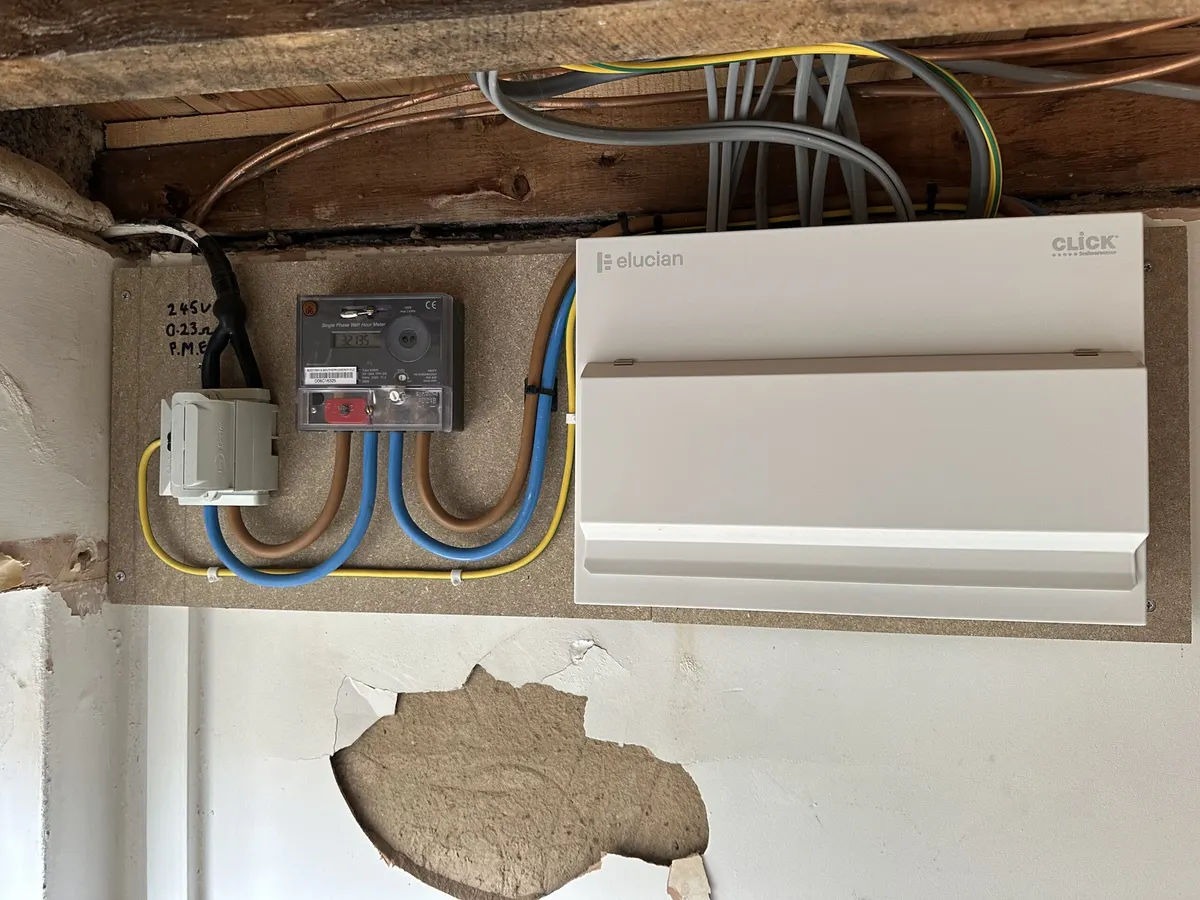
Domestic electrical work in England sits under Part P of the Building Regulations. The IET’s guidance on Part P lists the notifiable work in England: installing a new circuit, replacing a consumer unit, and any addition or alteration to an existing circuit in a special location such as a room containing a bath or shower. It says all other work is non-notifiable, which covers additions and alterations to existing installations outside special locations, and maintenance, replacement and repair work.
GOV.UK describes the route for notifiable work. You can either apply to building control yourself or use someone registered with a competent person scheme, who can self-certify the work. For the second route GOV.UK says the installer should give you a certificate within 8 weeks of completion, and that the certificate can be used as evidence of compliance and shows up in solicitors’ searches if you later sell. The same page says to check that the tradesperson belongs to a scheme and points to the Electrical Competent Person Register for electrical work. The table puts these rules against the jobs a homeowner usually asks about.
| The job | What the sources say | What to ask for |
|---|---|---|
| A new circuit, such as a cooker, shower or EV charger supply | The IET lists installing a new circuit as notifiable work in England | A completion certificate, and for notifiable work the scheme certificate GOV.UK says should follow within 8 weeks |
| Replacing a consumer unit | The IET lists it as notifiable. GOV.UK includes replacing fuse boxes and connected electrics among work that may need approval | An installation certificate and test results. See consumer unit replacement costs for what a quote should cover |
| Extra sockets or lights on an existing circuit, outside a bathroom | The IET treats additions to existing installations outside special locations as non-notifiable | Still ask for a record of the work and the test readings. See extra sockets: cost and scope |
| Any change to a circuit in a room with a bath or shower | The IET lists additions or alterations to a circuit in a special location as notifiable | Treat it like a new circuit and ask about the certificate before booking |
| Like-for-like replacement or a repair | The IET lists maintenance, replacement and repair work as non-notifiable | A note of what was changed and what was tested |
| A full or partial rewire | On our reading, a rewire installs new circuits, so the notifiable rules above apply to it | A certificate for the new work. See certificates after a rewire |
| An inspection of what is already there | The JI Electrical EICR page describes the report as a record of the inspection, not a certificate of completed work | The report, with any C1, C2, C3 or FI codes explained |
Two cautions on reading the table. First, the IET and GOV.UK are not worded identically: the IET gives a short list of notifiable work and treats the rest as non-notifiable, while GOV.UK’s page is a general overview and says you might need approval for alterations such as replacing fuse boxes and connected electrics. If a job does not obviously fit a row, ask the electrician which side of the line it falls on and why. Second, the table is about notification, not about whether a job is worth doing properly. A non-notifiable socket still needs to be wired and tested correctly, and our guide to Part P and the certificate you should receive goes into the paperwork in more detail.
The jobs that sit between the lines
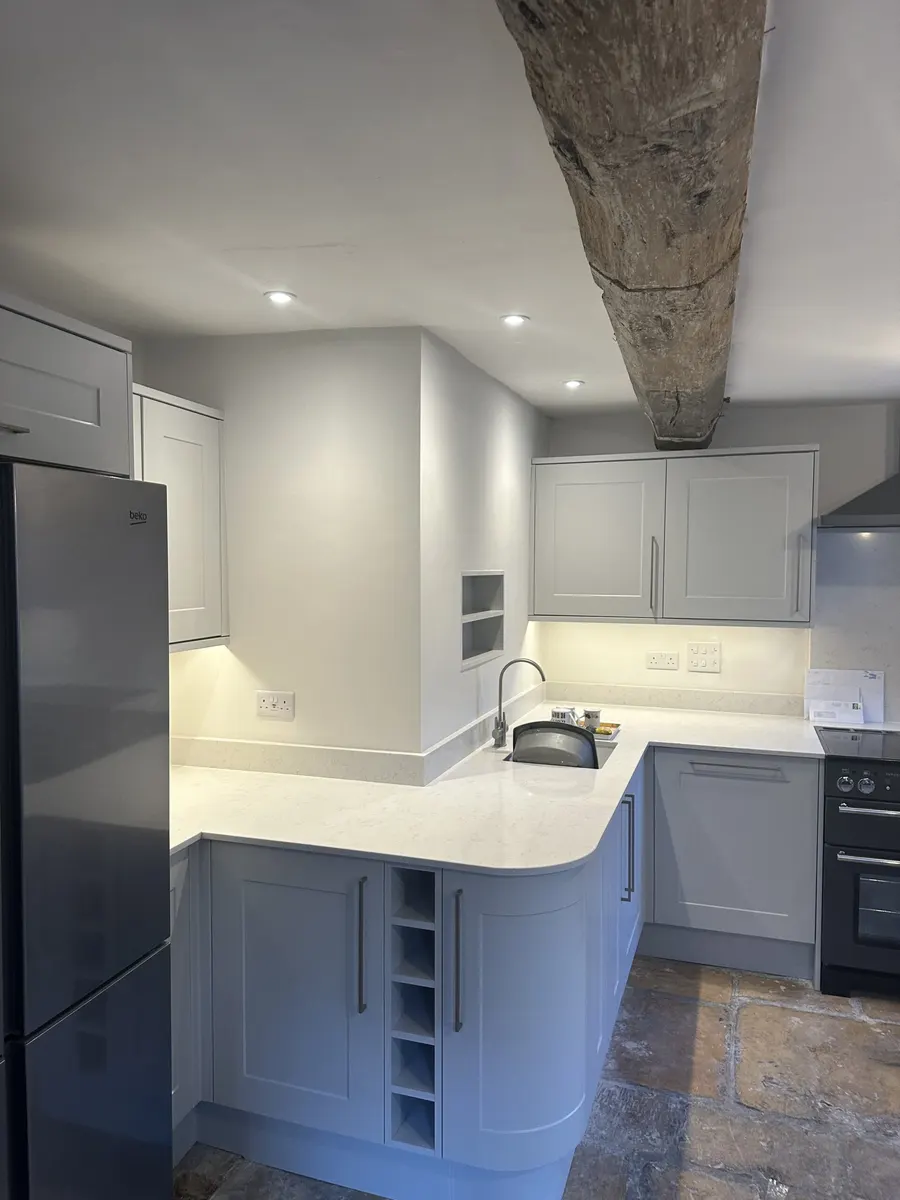
Real homes rarely produce a job that fits one row neatly. A kitchen refit adds new circuits and moves sockets. A garden office needs a new supply, cable routes and protection. The JI Electrical lighting and power page lists outdoor and garden lighting, three-phase upgrades and smart home power solutions, but a list of services is not a statement that Jack will take every version of each job, and the page does not say so.
That is where the wording matters. If your job is a standard one, the question is a short one. If it is unusual, send photographs and ask Jack plainly whether he covers it, whether he needs to see it first and what he would want to know before quoting. Some examples where the scope is genuinely worth confirming:
- Work that spans several circuits, such as a kitchen or an extension. Our guide to planning kitchen electrics and the one on extension electrics with your builder cover the order of work.
- Outdoor supplies, where the cable route, depth and protection need to be agreed. See outdoor socket costs for market figures kept apart from any quote.
- A charger or heavy appliance that may need the board to change. Our EV charger and consumer unit guide explains why the board is looked at first.
- Anything you cannot describe in a sentence, such as lights that behave oddly. A fault-finding visit is a different job from a fixed-price installation.
The point is not to sort jobs into allowed and disallowed. It is to avoid the common mistake of assuming that because a service is listed, your particular job has been priced, scheduled and accepted.
Checking registration before you say yes
Because notifiable work can only be self-certified by an installer in a competent person scheme, registration is not a nicety. It decides who certifies the work. GOV.UK says to check that the tradesperson belongs to a scheme, and says schemes offer insurance-backed warranties and complaints procedures if work goes wrong.
Electrical Safety First says how to check: contact the operator of the scheme the electrician says they belong to, and they will tell you whether that is true. It adds that if a registered electrician will not provide an Electrical Installation Certificate, you can contact their certification body, and that if the installer is not registered, responsibility for notifying the work falls on the consumer through local building control.
That check applies to every electrician you call, Jack included, so do not take a badge on a web page or a listing as the answer: ask which scheme covers the work you want done, ask for the membership number if there is one and check it with the scheme itself. Our guide to seven checks before you hire an electrician covers insurance, references and the written quote in the same spirit.
Before you book anyone
Write the job down first.
Rooms, photographs of the board and any earlier certificates. Send it to Jack and ask for the scope and the certificate in writing.
Ask for a quoteCall 07380 944864
What stays your responsibility between visits
An electrician works on the installation while they are there. The HSE’s electricity FAQ is clear that the rest of the time it is the building owner’s, and it makes a few points that are easy to miss.
It says to have the installation inspected and tested by someone competent, often enough that there is little chance of deterioration leading to danger. It says that if part of the installation is obviously defective between tests it should be de-energised until the fault is fixed. It recommends residual current devices where possible, especially in wet or damp places, and says to test them regularly with the test button and take faulty ones out of use. It also warns that many types of plug-in socket tester cannot detect certain faults, so a green light on a tester is not a clean bill of health.
The HSE page also covers competence. It says a successfully completed electrical apprenticeship with some post-apprenticeship experience is a good way of showing competence for general electrical work, while specialist work will usually need additional training and experience. It does not name a scheme or a card, so treat it as the principle behind the checks above, not a substitute for them.
If the installation is old and you are not sure of its condition, the first booking may be an inspection, not an installation. Our EICR cost guide shows market ranges from other publishers, and whether a fuse box needs replacing explains what an inspector looks at first. Neither contains a JI Electrical price.
Why a directory listing does not tell you who covers Cirencester
Many people start on a directory. It is worth knowing what those pages do and do not show. We opened two on 16 November 2026.
The TrustATrader page for electricians in Cirencester lists services from fault finding and consumer unit replacement to garden lighting and electric gate wiring, which is a fair picture of what domestic electricians do. As we read it, though, none of the traders listed was shown as based in Cirencester: the locations named were Stroud, Cheltenham, Swindon, Witney, Wantage, Bristol, Bath and Devizes, and some traders’ counties looked mismatched. The page’s ratings and reviews come from its own platform, with no independent check shown.
The MyJobQuote page says 474 electricians cover Cirencester, based on 669 reviews, and shows badges such as ID Checked and public liability insurance. It gives no prices and the newest review was dated 15 November 2026. The site says it verifies reviews with “every effort” and advises users to do their own research, which is the right advice.
Neither page is wrong to exist. The lesson is that “covers Cirencester” on a listing can mean a van within an hour’s drive, which affects how soon someone can come and what a call-out costs. Our guide to call-out charges lists what to ask about travel and minimum visit time, and none of it should be assumed from a listing.
Describe the job so the quotes can be compared
A quote is only comparable if the job it prices is the same. Before you ask anyone, settle the following in a short note, which also makes the first conversation with Jack quicker.
- What you want done, in plain words, and in which rooms. Photographs of the board and of each room help.
- Whether the work touches a bathroom, a new supply or the consumer unit, since those are the rows the sources treat as notifiable.
- Whether you have a recent EICR or earlier certificates to hand, and the age of the property if you know it.
- Access and timing: whether the power has to be off, for how long and whether anyone will be home.
- Who is responsible for making good plaster and decoration, which many quotes leave unclear.
- What should happen if the electrician finds a separate defect, a point the JI Electrical consumer unit page raises itself.
Then ask each electrician to put the scope, the certificate they will issue, VAT treatment and what is excluded in writing. If you are budgeting before you ask, the house rewire cost guide and the LED downlights guide set out market ranges with the VAT basis stated. Treat those as other publishers’ figures, and expect the real number to depend on the house.
Asking Jack about your job
JI Electrical is a Cirencester firm run by Jack Innes. His home page lists the domestic work above and says he covers Cirencester and the wider Cotswolds, and asks for your postcode so he can confirm he can reach you. If you want to contact Jack, send the job note from the last section, say where the property is and ask three direct questions: does he cover this job, which certificate or report will you receive afterwards, and how will the visit and the quote be charged. For a landlord or someone buying a property, the landlord EICR guide and the home buyer EICR guide cover the report side, and for work in a kitchen, bathroom or extension the guides linked above show what needs deciding first.
No one can tell you from a web page what your own installation needs. What you can do is arrive at the conversation knowing which of your jobs is notifiable, what paperwork should follow and what to ask, which is most of what separates a clear quote from a vague one.
Customer reviews
What customers say about Jack
Jack did a great job installing new spotlights in our kitchen. He turned up on time, worked efficiently, and everything was finished to a really high standard.
Jack and his colleague Freddie arrived on time, worked efficiently, and everything was completed to a really high standard. The price was fair and they left everything clean and tidy afterwards.
I contacted JI Eletrical within 24hrs with an issue and they came to fix it quickly and not had a problem since!
Domestic electrician questions
What work does a domestic electrician cover?
The JI Electrical pages list EICRs, full and partial rewires, consumer unit upgrades, EV charger installs and lighting and power changes such as extra sockets. Whether Jack covers your particular job is worth confirming with him directly.
Which domestic electrical jobs are notifiable?
The IET lists installing a new circuit, replacing a consumer unit and any addition or alteration to an existing circuit in a special location, such as a room with a bath or shower, as notifiable in England. It treats other additions, repairs and replacements as non-notifiable.
How do I check an electrician is registered?
Electrical Safety First says to contact the operator of the scheme they claim to belong to, who will tell you whether that is true. GOV.UK also points to the Electrical Competent Person Register.
What certificate should I get after the work?
For notifiable work done by an installer in a competent person scheme, GOV.UK says you should receive a certificate within 8 weeks of completion. An EICR is a report on an existing installation, not a certificate of new work.
Does a directory listing show who covers Cirencester?
Not reliably. On the TrustATrader page we read, none of the traders was shown as based in Cirencester, so ask where an electrician is based and how soon they can attend.
Sources checked on 16 November 2026
Sources not opened: Electrical Safety First pages on choosing an electrician and on electrical installation condition reports (the pages returned not found), the GOV.UK Approved Document P publication (only its summary page opened, not the PDF), and the MyBuilder Cirencester page (access refused). Nothing from them is stated here. This is general guidance, not advice on a specific installation, and no figure here is a JI Electrical price.
- GOV.UK: building regulations approval
- GOV.UK: use a competent person scheme
- GOV.UK: when you do not need approval
- IET: Part P, England and Wales
- HSE: electricity at work and in the home, frequently asked questions
- Electrical Safety First: how do I know if my electrician is registered?
- TrustATrader: electricians in Cirencester (directory page)
- MyJobQuote: electricians in Cirencester (directory page)