
Landlords arranging an EICR in Cirencester must follow the electrical safety rules that apply across England. The fixed electrical installation in a rented home must be inspected and tested by a qualified person at least every five years. The report can require an earlier inspection. If it identifies remedial work or further investigation, the landlord must normally complete it within 28 days, or sooner when the report specifies a shorter period.
The landlord EICR deadlines
The report and follow-up paperwork matter as much as arranging the inspection. These are the main operating deadlines in the current government guidance.
| Requirement | Current deadline |
|---|---|
| Arrange inspection and testing | At least every five years, or sooner if the previous report requires it |
| First inspection for social tenancies granted before 1 December 2025 | Before 1 November 2026 |
| Give the report to an existing tenant | Within 28 days of the inspection |
| Give the report to a new tenant | Before the tenant occupies the property |
| Give the report to a prospective tenant who asks | Within 28 days of the request |
| Give the report to the local council when requested | Within 7 days of the request |
| Complete remedial work or further investigation | Within 28 days, or sooner if the report specifies |
| Give confirmation after remedial work | Within 28 days of completion, to the tenant and council as required |
Keep the report until the next inspection is due or completed. Give it to the person carrying out the next inspection so the installation history is available. For a let in Cirencester, the local council that can ask for the report is Cotswold District Council.
What the inspection covers
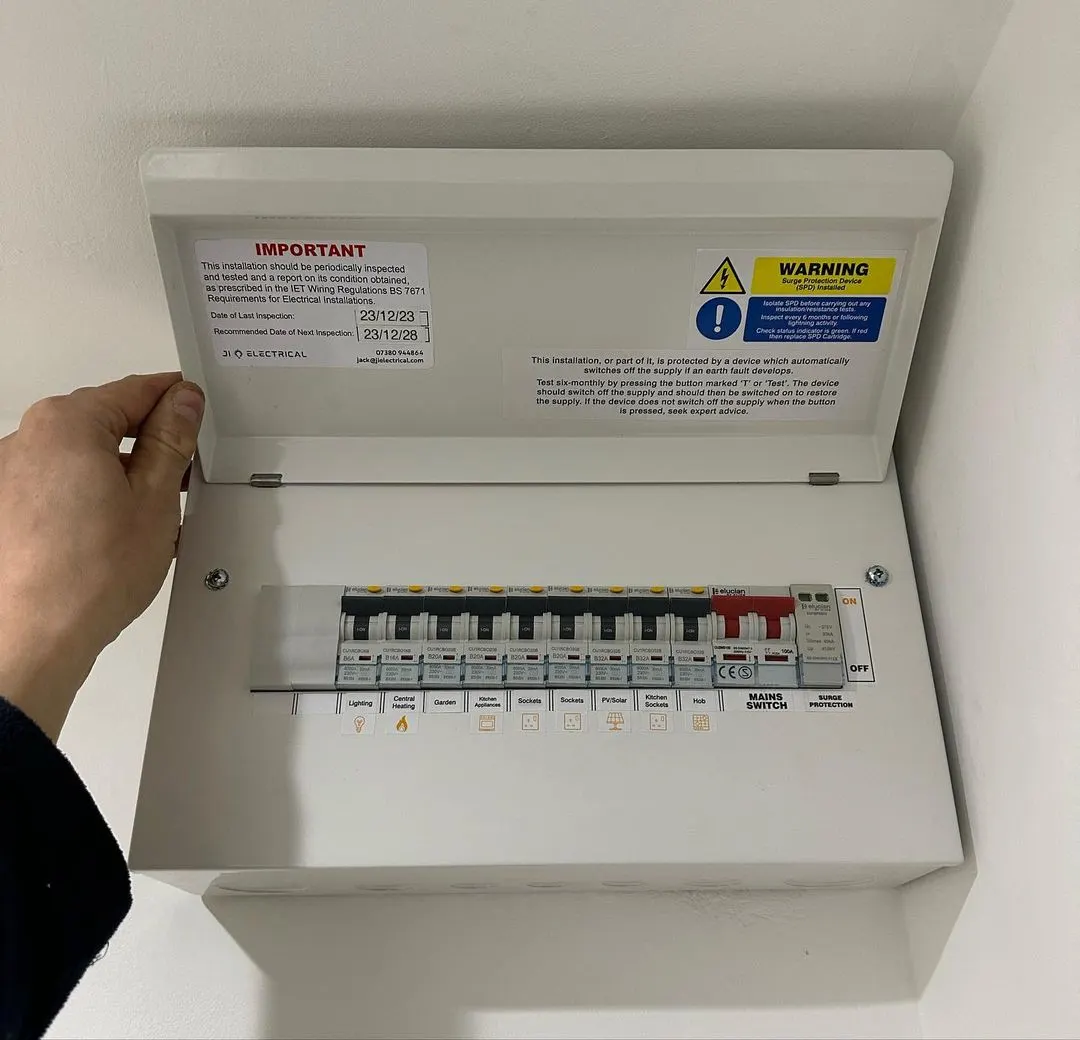
The inspection concerns the fixed electrical installation. This normally includes wiring, sockets, light fittings, the consumer unit and permanently connected equipment. The inspector records the results in an Electrical Installation Condition Report, usually called an EICR, measured against the current edition of the wiring regulations, BS 7671.
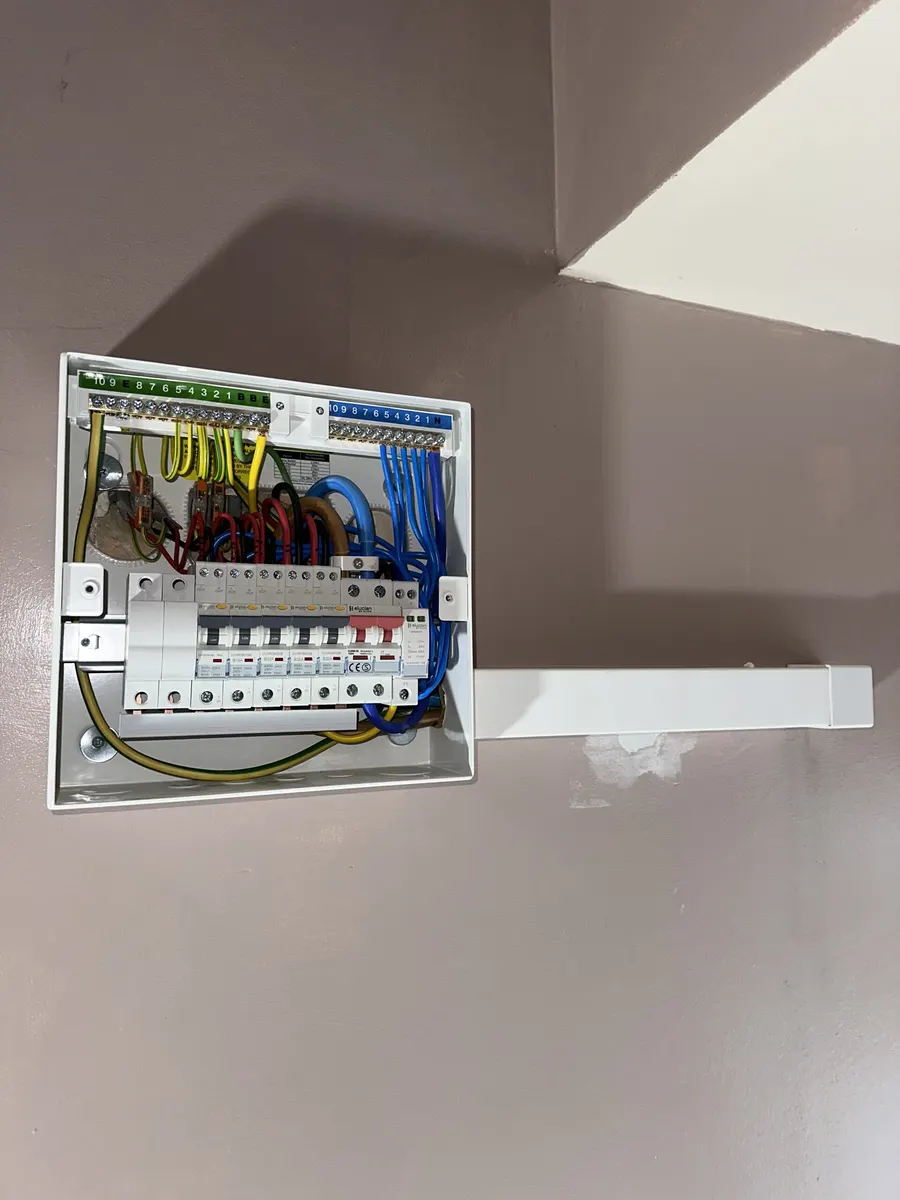
The report records the installation at the time of inspection. It is not automatically a repair quotation, and an older component does not have to be replaced simply because a newer version exists. If the report does point to the board, the consumer unit upgrade guide explains what should be assessed first.
For a property in Cirencester or the surrounding Cotswolds, you can ask JI Electrical about an EICR with the postcode, property type, occupancy and required date.
Who can carry out the inspection
The regulations require a qualified person: someone competent to inspect and test an electrical installation to the national standard, and to judge whether it is safe to stay in use. Qualification matters because the report is the evidence a council, tenant or letting agent will rely on.
Before booking anyone, you can check whether an electrician is registered on the Electrical Competent Person Register. Electrical Safety First's landlord advice recommends using a registered electrician and getting certification that any work meets BS 7671. Ask for a sample report if you have not used the inspector before, so you know how observations will be explained.
What C1, C2, C3 and FI mean
Danger present
Urgent action is needed to remove the immediate risk.
Potentially dangerous
Remedial work is required.
Improvement recommended
Improvement is advised, but this code alone does not make the report unsatisfactory.
Further investigation
More investigation is required without delay.
An EICR with C1, C2 or FI observations will be unsatisfactory and needs the required work or investigation addressed. The observations should be explained in plain language and any remedial work scoped separately.
What to have ready before booking
- 1Address and access
The full property address and the person who can provide access.
- 2Property details
Property type, approximate size and occupancy.
- 3Existing records
The previous EICR and any later electrical certificates.
- 4Restrictions
Known access limits, alarms or equipment that cannot be switched off without planning.
- 5Deadline
The tenancy start date or compliance deadline.
- 6Authority
Contact details for the person authorised to approve remedial work.
Do not wait until the final day of a tenancy deadline. Access, testing and any follow-up work all need time, and the power will be off to parts of the property while circuits are tested.
Report due soon?
Get a date in before the tenancy deadline
Tell Jack the address, the number of bedrooms, who can give access and when the report has to be with the tenant.
Ask for a quoteCall 07380 944864
Does a valid report need repeating for every new tenant?
Current government guidance says a new inspection is not required solely because a new tenancy begins when the existing inspection is less than five years old, remains valid and does not require further work. The new tenant still needs a copy of the current report before occupying the home.
The guidance recommends a visual inspection before a new tenancy. If the installation has been damaged, altered or may no longer be safe, arrange professional advice rather than relying only on the earlier report.
What happens after an unsatisfactory EICR?
The required response depends on the observations in the report. Dangerous or potentially dangerous issues and further investigation cannot be treated as optional improvements. The landlord should agree the required scope, retain written confirmation of completed work and provide the documents within the applicable deadline.
A C3 observation is different. It recommends an improvement but does not, by itself, make the report unsatisfactory. Ask the inspector to explain the practical significance of every observation rather than deciding from the code alone.
Sometimes the remedial list is long enough that replacing whole circuits makes more sense than repairing them one at a time. The guide to full and partial rewires covers how that decision is made.
What happens if the duties are missed
The council enforces these duties. Where a landlord has not carried out required remedial work, the council can serve a remedial notice, and if the work still is not done it can arrange the work itself and recover the cost from the landlord.
Councils can also impose a financial penalty of up to £40,000 on a landlord who breaches the specified duties. For breaches from 1 May 2026, the civil penalty guidance under the Renters' Rights Act 2025 applies. Landlords have a right to make representations and to appeal.
Social landlords: equipment you supply
Social landlords have an extra duty. Electrical equipment they provide as part of the tenancy must be checked by a qualified person at least every five years, with a visual inspection, testing or both, as the person doing the check considers necessary. Equipment found unsafe must be repaired or replaced within 28 days. JI Electrical also provides PAT testing for businesses and landlords.
Customer reviews
What customers say about Jack
Very happy to recommend Jack. He's highly efficient, professional and straightforward to work with.
He replaced the fuse board efficiently, providing all the required certifications within a day.
Work done to a high standard, areas left clean and super polite along with his colleague, Freddie.
Quick answers
Landlord EICR questions
How often does a landlord need an EICR in England?
The electrical installation must be inspected and tested by a qualified person at least every five years, or sooner if the previous report sets an earlier date.
Is a new EICR needed for every new tenant?
Not solely because a new tenancy begins. Current government guidance says a report that is less than five years old, remains valid and requires no further work can be supplied to the new tenant before occupation.
Does a C3 observation make an EICR unsatisfactory?
No. A C3 recommends an improvement but does not, on its own, make the report unsatisfactory. C1, C2 and FI observations require action or further investigation.
What is the deadline for social landlords?
For social housing tenancies granted before 1 December 2025, the first inspection and test must be done before 1 November 2026. Tenancies granted after 1 December 2025 are covered from the start.
Sources
- GOV.UK: Electrical safety standards in the private and social rented sectors, checked 22 September 2026.
- The Electrical Safety Standards in the Private Rented Sector (England) Regulations 2020, checked 22 September 2026.
- The 2025 amendment extending the regulations to the social rented sector, checked 22 September 2026.
- GOV.UK: Civil penalties under the Renters' Rights Act 2025 and other housing legislation, checked 22 September 2026.
- Electrical Competent Person Register, checked 22 September 2026.
- Electrical Safety First: advice for landlords, checked 22 September 2026.
- The IET: BS 7671, the Wiring Regulations, checked 22 September 2026.