
A property's age does not decide by itself whether it needs a full rewire. The useful evidence comes from the wiring type, its condition, inspection and test results, previous alterations, and the electrical demand planned for the property.
For a home in Cirencester or the Cotswolds, the first step is an assessment. That can show whether full or partial rewiring is justified and which parts of the existing installation can safely remain. Electrical Safety First puts it plainly: there are no set guidelines for when a property should be rewired, and old wiring is not automatically unsafe.
What a full rewire means
A full rewire replaces the electrical installation throughout the property. The agreed scope normally defines circuits, cabling, sockets, switches, lighting points, protective equipment, testing and certification. It also needs decisions about the finished room layout and the equipment the home will use.
A full rewire may be considered when defects or deterioration affect much of the installation, when the existing wiring cannot support the planned use, or when a major renovation makes a complete redesign practical. Those are reasons to investigate, not a diagnosis from a webpage.
What a partial rewire means
A partial rewire is limited to defined circuits, rooms or sections of the installation. It can be appropriate when the remaining installation has been assessed and can safely stay in service.
Examples include a renovation limited to one part of a property, replacement of a defective circuit or new circuits for a changed layout. The quote should identify exactly what will be replaced, what will remain and what evidence supports that boundary. Where old wiring is taken out of use, Electrical Safety First says it should be removed where possible, or permanently disconnected from any supply.
What the evidence usually points to
Use this as a way to read an electrician's findings, not as a diagnosis. The test results for your property decide the scope.
| What is found | Usually points toward | What to confirm |
|---|---|---|
| Damage, heat marking or a burning smell | Urgent assessment first. Scope follows the findings | Which circuits are affected and whether they are safe to use meanwhile |
| Rubber, lead or fabric-insulated cable throughout the house | Full rewire | Test results across every circuit, not just the one that failed |
| Old cable in one area, the rest tests satisfactorily | Partial rewire | The test results for the circuits that will stay |
| A kitchen, extension or loft conversion in one part of the house | New or altered circuits | Whether the board and supply can take the extra load |
| Floors and walls opened up across the whole house anyway | A full rewire may be the practical choice | The cost of opening finishes again later versus now |
| An older house that tests in good condition | No rewire required | Whether added protection, such as RCDs, is recommended |
Electrical Safety First's answer to a common buyer question makes the same point: whether a 1980s house needs rewiring depends on its condition rather than its age, and one that tests in good condition has no requirement to be rewired.
Signs that justify an electrical assessment
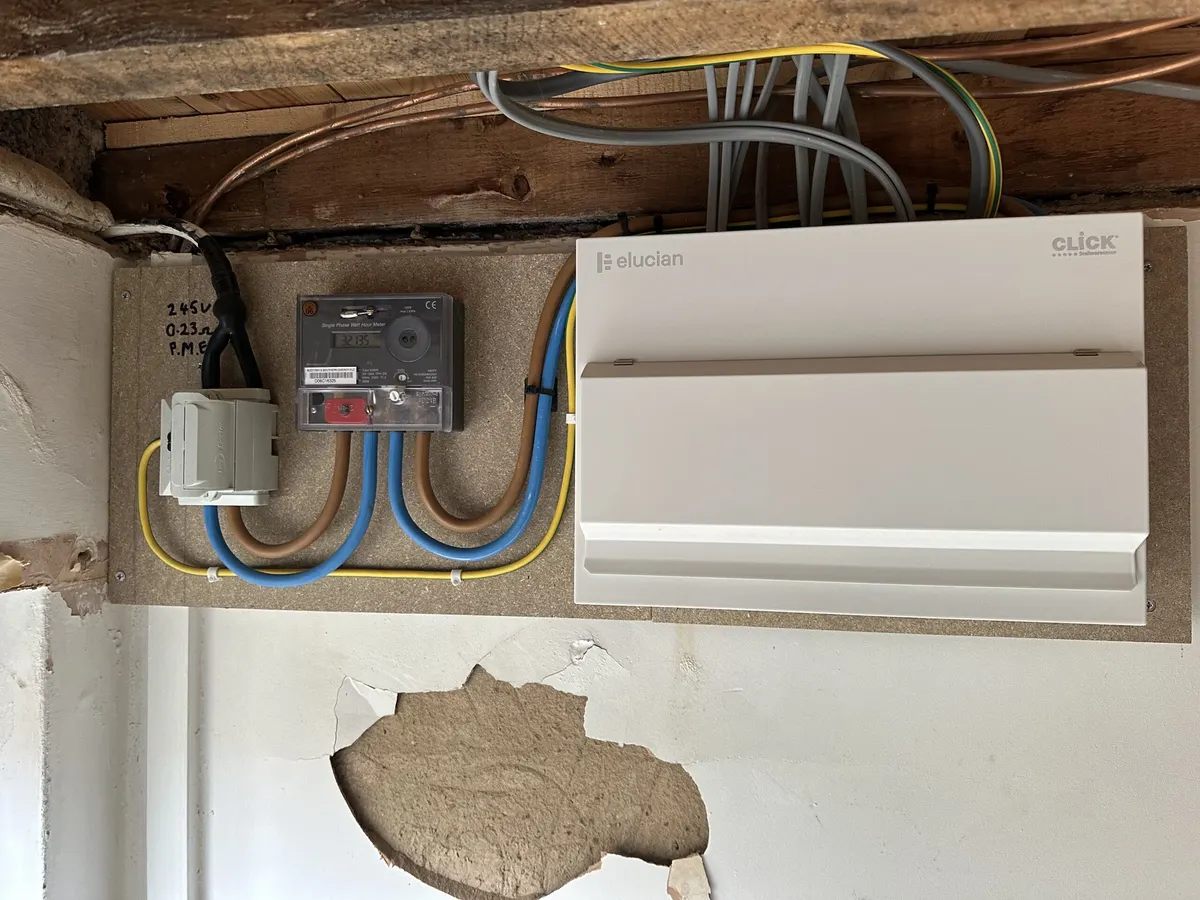
Ask for professional advice if you notice damage, heat marking, a burning smell, repeated tripping or other signs of a possible fault. Older features such as rubber, lead or fabric-insulated cables, a wooden-backed fuse box, round-pin sockets or very old switches can also indicate that the installation needs closer assessment.
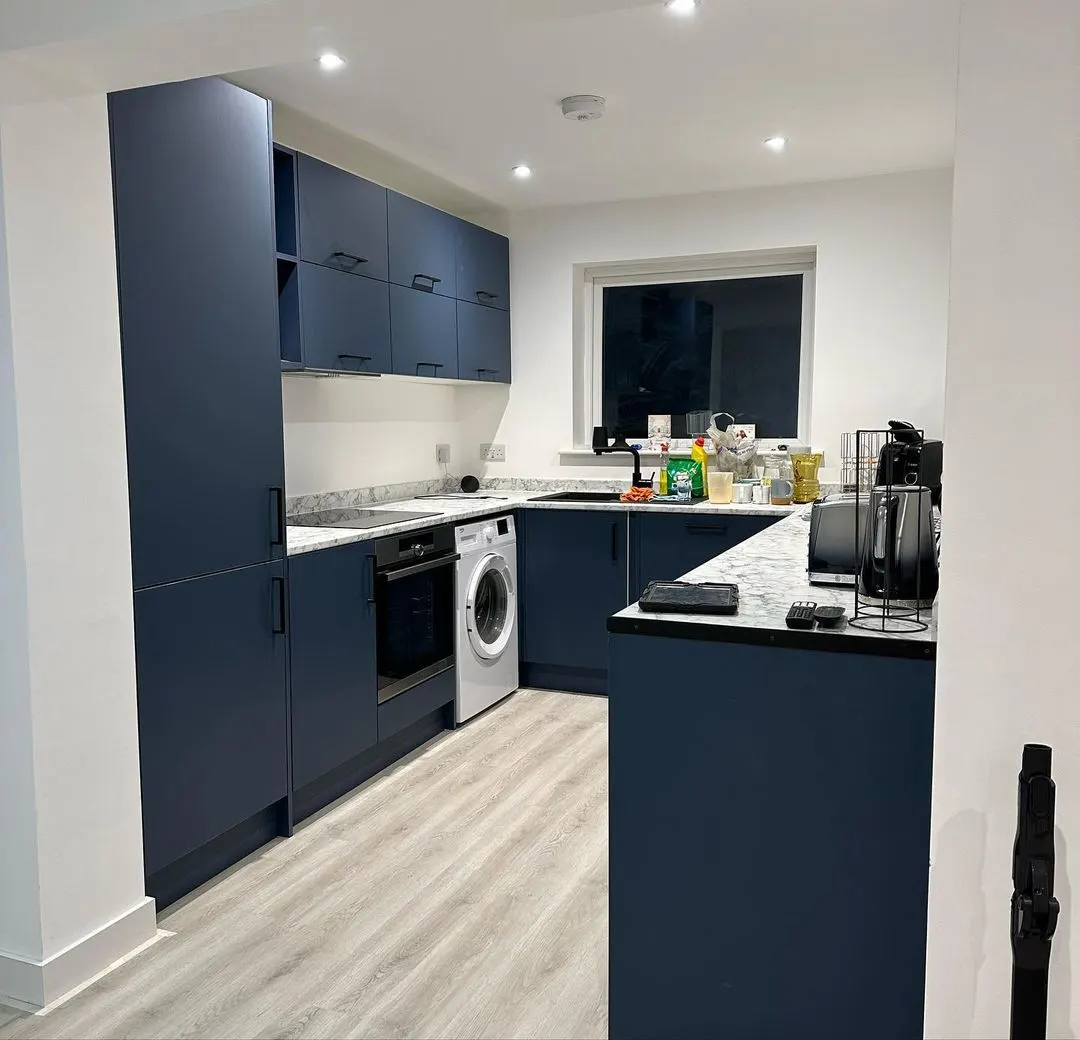
A lack of sockets, a new kitchen, an extension, electric heating or an EV charger may change the property's electrical needs. That does not prove a full rewire is necessary, but it should be considered before finishes and fitted furniture make access harder. If the board is the only real concern, a consumer unit upgrade may be the right-sized job, and an EV charger is a common reason to check capacity first.
Seeing warning signs?
Have the installation tested before you decide
Describe what you have noticed, when it happens and roughly how old the fuse board is, and Jack will advise on the next step.
Ask for a quoteCall 07380 944864
Questions that separate full from partial work
- What inspection and test results support the proposed scope?
- Which circuits and areas are being replaced?
- Which parts will remain, and why are they suitable to remain in service?
- Does the renovation change the room layout or expected electrical demand?
- What access, lifting of floors or opening of finishes is assumed?
- Who is responsible for making good and final decoration?
- What inspection, testing and certification are included?
- How will unexpected defects or requested changes be agreed?
These questions make competing quotations easier to compare. Two prices may cover very different circuits, access assumptions and finishing work.
Older and listed homes in the Cotswolds
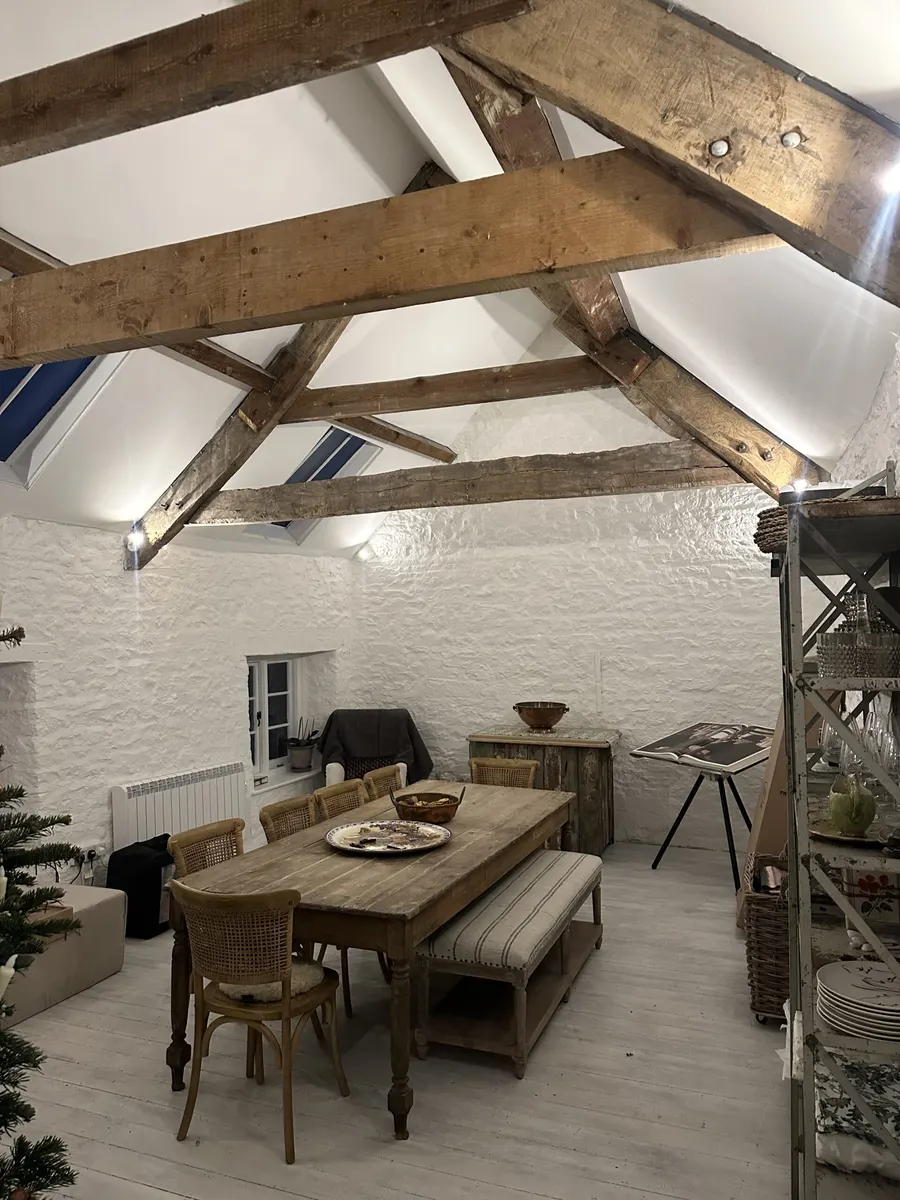
Many homes in and around Cirencester are built in stone, with lime plaster, exposed timbers and some listed. Rewiring them is less about the cable and more about the route it takes. Chasing into old walls, lifting historic floorboards or drilling through beams can damage the fabric that gives the house its character.
If the property is listed, check before work starts whether the alterations need consent. Historic England advises talking to the local authority conservation officer first, and warns that unauthorised works to a listed building are a criminal offence. For Cirencester, the local planning authority is Cotswold District Council. Agree cable routes, surface-mounted runs and the positions of new accessories with the electrician before the programme is fixed.
Plan the layout before work starts
Prepare a room-by-room list of sockets, lighting, fixed equipment, heating controls, data points, outside power and future needs. Coordinate the electrical work with the kitchen, plumbing, plastering and decorating programme.
For an occupied home, discuss temporary power, safe access, working areas and belongings before agreeing the programme. The duration depends on the property, scope, access and other trades. It should be confirmed for the actual job rather than copied from a generic estimate.
Buying an older home
If you are buying, do not assume the survey has looked at the wiring. Electrical Safety First's advice for home buyers says a standard home survey will not cover electrical safety, and suggests an Electrical Installation Condition Report before agreeing a price, because a full rewire can be expensive. An EICR gives you evidence to negotiate with rather than a guess.
Landlords face a stricter version of the same question, with a five-year inspection cycle and fixed repair deadlines. The landlord EICR guide covers those rules.
Building regulations and certificates
Electrical work in a dwelling must meet Part P of the Building Regulations, set out in Approved Document P. GOV.UK lists replacing fuse boxes and connected electrics among the alterations that can need building regulations approval.
There are three routes to showing the work complies. An electrician registered with a competent person scheme can self-certify it, and GOV.UK says you then receive a certificate within 8 weeks of completion, which also shows up in solicitors' searches when you sell. Otherwise the work can be checked by building control, or by a registered third-party certifier. Ask which route applies before work starts, and check any electrician on the Electrical Competent Person Register.
GOV.UK is clear about the downside: if building regulations are not followed, you may have to correct the work or pay a fine.
Request a rewiring assessment in Cirencester
JI Electrical provides full and partial rewiring in Cirencester and the Cotswolds. Share the postcode, property type, number of rooms, occupancy and renovation plans when requesting a site assessment. You can see recent work in the project gallery.
Customer reviews
What customers say about Jack
Very happy to recommend Jack. He's highly efficient, professional and straightforward to work with.
He replaced the fuse board efficiently, providing all the required certifications within a day.
Work done to a high standard, areas left clean and super polite along with his colleague, Freddie.
Quick answers
Rewiring questions
Does an old house always need a full rewire?
No. Electrical Safety First says there are no set guidelines for when a property should be rewired, and that old wiring is not automatically unsafe. Inspection and test results decide the scope.
What is the difference between a full and a partial rewire?
A full rewire replaces the installation throughout the property. A partial rewire replaces defined circuits, rooms or sections, and only works where the remaining installation has been tested and can safely stay in service.
Will I get a certificate after rewiring?
You should. Rewiring in a home must meet Part P of the Building Regulations. An electrician registered with a competent person scheme can self-certify the work, and GOV.UK says you get a certificate within 8 weeks of completion.
Can I live in the house during a rewire?
Sometimes, depending on the scope, the rooms affected and the access needed. Discuss temporary power, working areas and belongings before agreeing the programme.
Sources
- Electrical Safety First: advice for DIYers, including when a rewire is needed, checked 22 September 2026.
- Electrical Safety First: advice for home buyers, checked 22 September 2026.
- GOV.UK: Electrical safety, Approved Document P, checked 22 September 2026.
- GOV.UK: Building regulations approval, checked 22 September 2026.
- GOV.UK: Use a competent person scheme, checked 22 September 2026.
- GOV.UK: Third-party certification schemes for domestic electrical work, checked 22 September 2026.
- Electrical Competent Person Register, checked 22 September 2026.
- Historic England: Listed Building Consent, checked 22 September 2026.