
An added socket has a typical UK market range of £100 to £200 plus VAT in Checkatrade’s June 2026 guide. At 20% VAT, the total is £120 to £240. That is a starting benchmark, not a JI Electrical price or a tariff for Cirencester. The useful next question is what work your room actually needs.
A new point beside a desk, a replacement faceplate and a supply for fixed equipment are different briefs. Start with the lighting and power alterations service, then ask Jack to quote for the agreed installation rather than multiplying a headline figure by the number of sockets you want.
Read the market range with VAT attached
The Checkatrade new-socket guide has a June 2026 update label and lists its £100 to £200 range under a plus-VAT heading. The table carries a May 2026 date. These national guide figures do not establish the cost of your particular circuit or wall. Treat them as a typical market benchmark when deciding whether to request a quotation.
GOV.UK states that standard VAT is 20%. Applying that rate to the quoted endpoints gives £100 × 1.20 = £120 and £200 × 1.20 = £240. This is transparent arithmetic on the published benchmark, not a promise that every contractor charges VAT or that every job fits the range. Ask for the actual total payable and the quotation’s VAT treatment.
Do not add an hourly rate to an installation total unless the quotation says that labour is separate. Similarly, a faceplate’s shop price does not cover assessing the existing wiring, fitting it or completing the required tests. Keep supplied materials, electrical work, additional repairs and decoration distinct when comparing offers. A cheap accessory can still be part of a job with difficult access.
Which socket job are you asking for?
Use the table to describe the outcome. It deliberately gives scope questions rather than invented prices for every variation. An electrician must decide the appropriate connection method after assessment. A nearby socket is not proof that another outlet can safely be supplied from it, and a photograph cannot establish everything about concealed wiring.
| Request | What changes | Question before pricing |
|---|---|---|
| Replace a faceplate | The existing point remains in its position | Is the wiring and box suitable for the chosen accessory? |
| Change single to double | The outlet and potentially its mounting arrangement change | Can the installation support the proposed use? |
| Add a new point | An additional location needs a suitable cable route and connection | Which circuit will supply it and what access is needed? |
| Move a point | The original location and new position both need consideration | What happens to the old outlet and wall finish? |
| Supply fixed equipment | The appliance may need a different connection or dedicated circuit | What does its manufacturer specify? |
| Add a new circuit | Work extends to the distribution board and circuit design | What protection, certificate and notification are included? |
For conversion from single to double, Electrical Safety First advises assessment of the load, circuit type and cable rating. Keep that assessment separate from choosing a style. Our consumer unit upgrade scope guide explains why existing protection matters. An extra socket does not automatically mean a new board or a full house rewire.
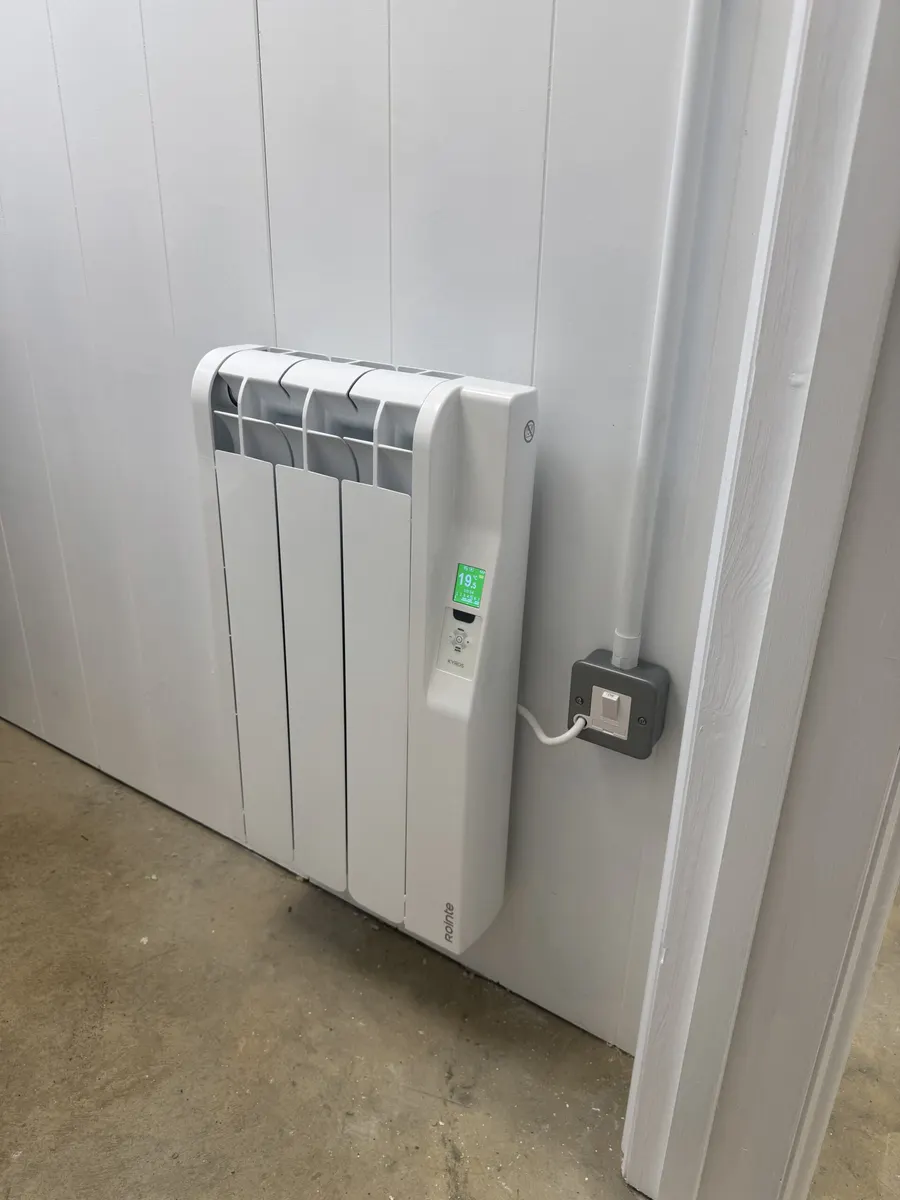
Mark positions around the room’s actual use
Draw the furniture first, then mark the proposed outlets. For a home office, list the computer, monitors, charger, printer and any other equipment that needs power. For a television wall, consider the television, media equipment and how plugs will remain accessible after furniture is fitted. Bedside positions need to suit the bed width and the person using them, not just match an old point across the room.
Record how many outlets you want at each position and what will be connected simultaneously. Mention portable heating and other substantial loads rather than describing everything as office equipment. If an appliance has a particular supply requirement, send its model and manufacturer’s instructions. A connection for fixed heating or cooking equipment should not be priced by assuming it is an ordinary extra socket.
Choose whether standard white, decorative metal or integrated USB fittings suit the brief. For USB, specify the devices and charging requirements instead of assuming every fitting provides the same performance. Ask who supplies the accessory, which exact model will be used, and what happens if a homeowner-supplied fitting is unsuitable. Agree the finish before ordering several matching plates.
Send a wide photograph showing the wall and furniture position as well as a close view of the existing point. Photographs are useful for the first discussion, but do not remove the need to examine the installation. If you are also planning network connections, distinguish mains power from the data installation service. They serve different needs even when both terminate near the same desk.
Agree the cable route and finished surface
Ask which surfaces need opening and whether visible containment is proposed. A concealed route and a surface-mounted route can leave very different appearances. If you have just decorated, fitted cabinetry or installed flooring, explain that before accepting a scope. The quotation should identify access assumptions so you can decide whether the proposed finish is acceptable.
For an older Cirencester or Cotswolds property, flag features that need careful treatment. Do not assume walls, floors or decorative details can be opened without restrictions. Our older-home electrical planning guide discusses fabric and consent questions. If the property is listed, resolve the proposed route and any consent requirement with the appropriate adviser before destructive work is agreed.
Break making good into named tasks: filling the cable chase, patch plastering, sanding, priming and painting. Also ask about lifting and reinstating flooring, moving furniture and removing waste. “Tidy installation” does not tell you who repaints the wall. Record what is included, what another trade must do and which finish will remain when the electrician leaves.
A defined scope
Ask what the complete job includes
Share photographs and a marked room plan. Agree access, finish, testing and any separate repairs before booking.
Ask for a quoteCall 07380 944864
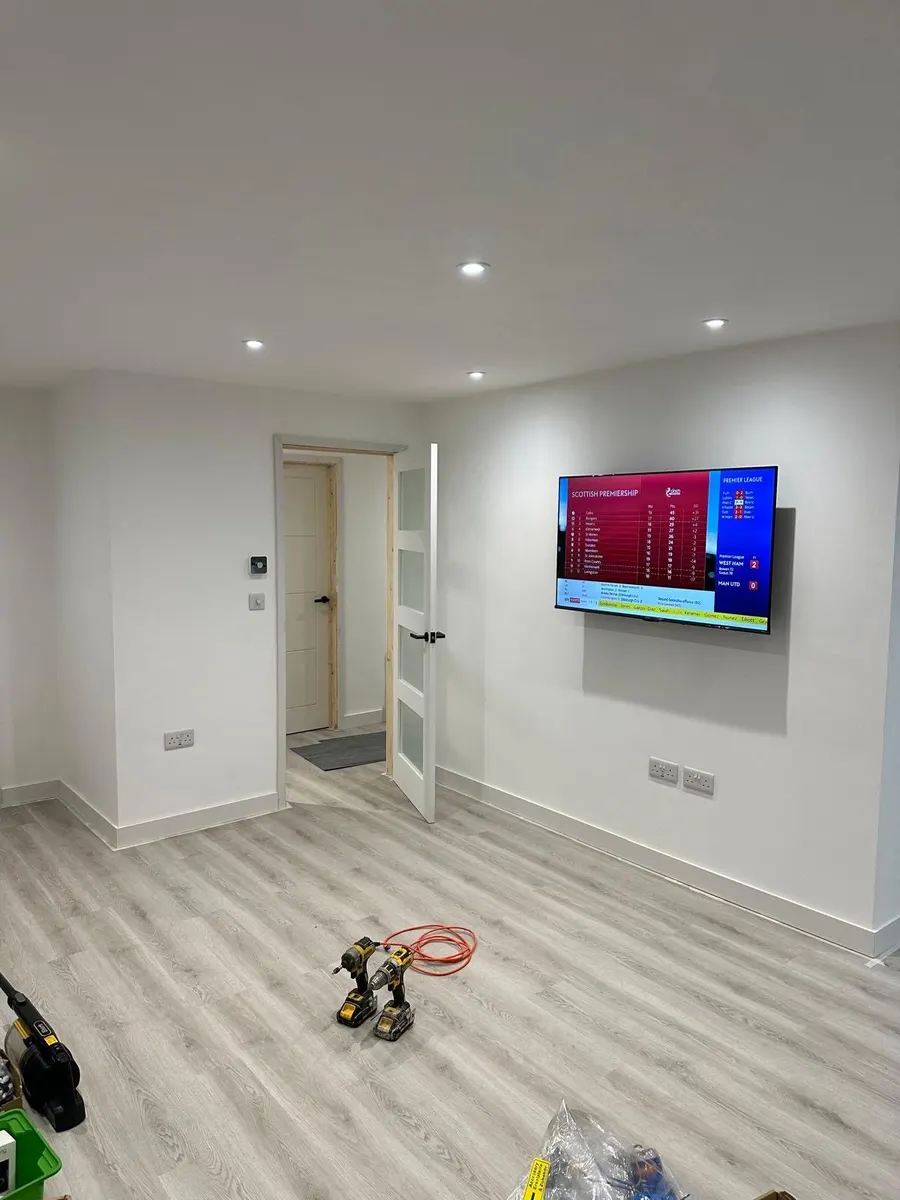
More outlets are not automatically more available power
An outlet count describes convenience; it does not establish circuit capacity. Electrical Safety First’s overload advice warns against exceeding an extension lead’s stated rating or plugging one extension into another. If adaptors and trailing leads have become permanent, discuss a properly assessed alteration rather than simply buying a larger multiway lead.
If there are burn marks, a burning smell, unusual buzzing, damage or repeated tripping, raise that as a fault rather than an accessory upgrade. Stop using the affected equipment and get professional advice. Do not remove covers or attempt to test concealed wiring yourself. The service overview is a starting point for discussing the concern; do not assume an ordinary planned socket visit includes investigation of every existing fault.
A recommendation for repairs should identify the issue and the proposed remedy. Ask whether that work is required for the new point, addresses a separate defect or is an optional improvement. If a condition report exists, send the complete document. The EICR code explanation and remedial action guide help you frame questions without treating every observation as a requirement for wholesale replacement.
Prepare for access and power interruptions
Agree the likely programme for the actual scope. Do not rely on a national guide’s simple-job duration to plan a day with several points, difficult routes or additional repairs. Ask when the affected supply will be isolated, which rooms need access and whether work elsewhere depends on this alteration being completed. Confirm arrangements before booking another trade.
Tell the electrician about medical equipment, home working and any other essential electricity needs in advance. Keep children and pets away from the working area and ask what furniture clearance is needed. Discuss dust protection when walls may be opened. These are planning questions for the particular job, rather than claims about Jack’s standard installation process or guaranteed appointment length.
If several points are wanted, ask for one defined room schedule rather than separate assumptions for each visit. Compare the total for that agreed scope. There may be shared access or setup work, but do not assume that the next point costs a fixed fraction of the first. If assessment changes the proposed work, ask for the revised scope and price before the additional work proceeds.
Check certificates separately from notification
The IET’s 2026 Minor Electrical Installation Works Certificate notes describe additions to existing circuits, including socket outlets, as suitable examples. A new circuit needs an Electrical Installation Certificate instead. Ask which record will cover your work and retain it with the property’s other electrical documents. A small alteration still needs appropriate inspection and testing.
Building Regulations notification is a separate issue. Approved Document P for England distinguishes notifiable work, including new circuits, from non-notifiable additions outside specified special locations. A kitchen alone does not make every added socket notifiable. Bathroom work needs location-specific advice. Non-notifiable does not mean exempt from safety requirements.
For notifiable work, agree the compliance route before booking. GOV.UK explains the competent-person scheme route and how to check registration. Verify the proposed installer’s current status rather than assuming it from a logo. Our electrician comparison checklist covers this conversation; the seller’s paperwork guide explains why keeping records helps later.
For a property purchase, use the buyer’s EICR guide to assess condition separately. If board work is proposed, compare its scope with the consumer unit replacement cost guide rather than adding an unexplained allowance to the socket price.
The brief to send for a fixed quotation
Send Jack your postcode, a room plan with each proposed position, the outlet count and fitting preferences. Include equipment details, useful photographs, access restrictions and any existing electrical report. Ask the quotation to state its circuit assumptions, testing and certificate, notification where applicable, VAT, making-good tasks and exclusions. You can read about Jack and JI Electrical before making contact.
At handover, compare the completed points against the agreed plan, ask about operating any unfamiliar accessories and keep the completion records. Raise finish or scope questions while the work is fresh. For an actual price in Cirencester, discuss socket alterations with Jack and request a fixed quote for the defined job.
If board work is suggested, use the fuse box assessment guide to ask what justifies replacement.
For outside points, compare the outdoor socket route and cost guide.
For a workplace, keep socket installation separate from appliance checks: use the PAT testing cost worksheet to compare equipment counts and visit minimums.
Customer reviews
What customers say about Jack
Jack did a great job installing new spotlights in our kitchen. He turned up on time, worked efficiently, and everything was finished to a really high standard.
Jack and his colleague Freddie arrived on time, worked efficiently, and everything was completed to a really high standard. The price was fair and they left everything clean and tidy afterwards.
I contacted JI Eletrical within 24hrs with an issue and they came to fix it quickly and not had a problem since!
Extra socket questions
How much does adding an extra socket cost in Cirencester?
Checkatrade’s June 2026 UK guide lists £100 to £200 plus VAT. At 20%, the total is £120 to £240. This is a typical market range, not a Cirencester tariff or JI Electrical price. Ask Jack for a fixed quote for your installation.
Can a single socket be changed to a double?
It may be possible, but the circuit, load, cable rating and physical fitting need assessment. Do not assume that changing the faceplate alone creates a suitable additional supply.
Does adding a socket mean I need a new consumer unit?
Not automatically. The electrician needs to assess the existing circuit and protection. Ask for the reason and separate scope if additional board work is recommended.
Will the electrician repair the wall afterwards?
Confirm the exact finish in writing. Filling a chase, plastering, sanding and repainting are different tasks. Do not assume all are included in an installation quotation.
What certificate should I receive for an added socket?
For an addition to an existing circuit, a Minor Electrical Installation Works Certificate can be appropriate. A new circuit needs an Electrical Installation Certificate. Building Regulations notification is a separate question based on the work and location.
Sources and further reading
Market guide and primary guidance checked 9 October 2026. Published national prices are benchmarks, not JI Electrical quotations.