
An EICR marked unsatisfactory needs a controlled response, not an assumption that the whole property must be rewired. First confirm that any immediate danger has been made safe. Then read every observation with the report’s extent, limitations and test schedules, obtain a written scope for the C1 and C2 items, complete the work, and keep the original report with the completion records. Landlords in England also have statutory deadlines.
For a Cirencester or Cotswolds property, send the complete document when asking for help. A front-page or code-list photograph is not enough to plan safely. The JI Electrical guide to C1, C2, C3 and FI explains the classifications.
Your action plan after an unsatisfactory EICR
| When | Action | Evidence to keep |
|---|---|---|
| Immediately | Confirm how any C1 danger has been removed or isolated. Do not switch an isolated circuit or item back on. | The report observation and any dangerous-condition or make-safe record |
| Before requesting prices | Read the complete report, match each C1 and C2 to its circuit and location, and define any further investigation. | The full EICR, including inspection and test schedules and limitations |
| Within the applicable deadline | Have the agreed remedial or investigative work completed by a suitably qualified person. | A clear quotation, change records and the appropriate certificate or works record |
| After completion | Check that every required item is accounted for. Landlords must send the required documents within the separate follow-up deadline. | The original EICR plus written confirmation and relevant certification |
This sequence separates the report from the repair sale. An EICR records the condition found at the time of inspection. It does not, by itself, prove that a new consumer unit, a rewire or another particular product is the only answer. The repair scope must follow the actual observation and test evidence.
1. Deal with danger before discussing the full job
A C1 means danger is present and there is a risk of injury. Electrical Safety First’s EICR guidance says the person ordering the report should be told immediately. The dangerous part may need to be repaired at once or isolated until a permanent repair can be completed.
Ask what has been made safe, which circuit or equipment must stay off and what permanent work remains. Do not open a consumer unit, remove an accessory or test exposed parts yourself. If the danger concerns the electricity distributor’s or supplier’s equipment, the inspector may need to direct the issue to the relevant organisation rather than include it in the property owner’s repair scope.
C2 means potentially dangerous and calls for urgent remedial action. It is different from a C1 because danger was not present in the same immediate sense at the inspection, but it still makes the EICR unsatisfactory. Do not use a landlord’s maximum statutory period as permission to delay a safety action that the report gives a shorter deadline.
2. Read the result as a complete report
Before anyone quotes for the work, check the property address, inspection date, overall assessment, declared BS 7671 edition, inspection extent, agreed limitations, observations and test schedules. Electrical Safety First Best Practice Guide 4 explains that the report’s value reduces as its limitations increase.
For each C1 or C2, ask for four facts:
- Location: which board, circuit, accessory or part of the installation is involved?
- Condition: what defect, damage or test result led to the observation?
- Immediate status: has anything been isolated or restricted from use?
- Next scope: what repair, replacement, access or testing is needed to resolve it?
If those facts are unclear, ask the inspector to explain the observation before comparing quotations. The seven checks before booking an electrician help you compare written scope and records rather than totals for different jobs.
Check the report edition before interpreting FI
On 2 October 2026 there are two valid editions in the transition to BS 7671:2018+A4:2026. The IET says the previous Brown Book edition remains valid until 15 October 2026, so a report issued before then may use either edition.
C1 and C2 make an EICR unsatisfactory under the current model forms. Amendment 4 changes FI from “further investigation required without delay” to “further investigation is advised”, and makes clear that FI alone does not make the report unsatisfactory. The IET’s technical explanation of the FI change says the code should identify a potential issue that could not be fully determined within the inspection.
For an FI, read the edition and exact wording. Ask what evidence prompted it, what investigation is proposed, what access is needed and whether a legal duty attached to the property requires follow-up. A landlord should follow the report and the current rented-sector guidance.
3. Turn each required item into a written scope
A useful remedial quotation maps each required item to the EICR reference. It should say what will be repaired, replaced, investigated or retested, what access and power interruption are assumed, how additional defects will be handled, and which completion record will be supplied. Send every page of the report, not only the summary.
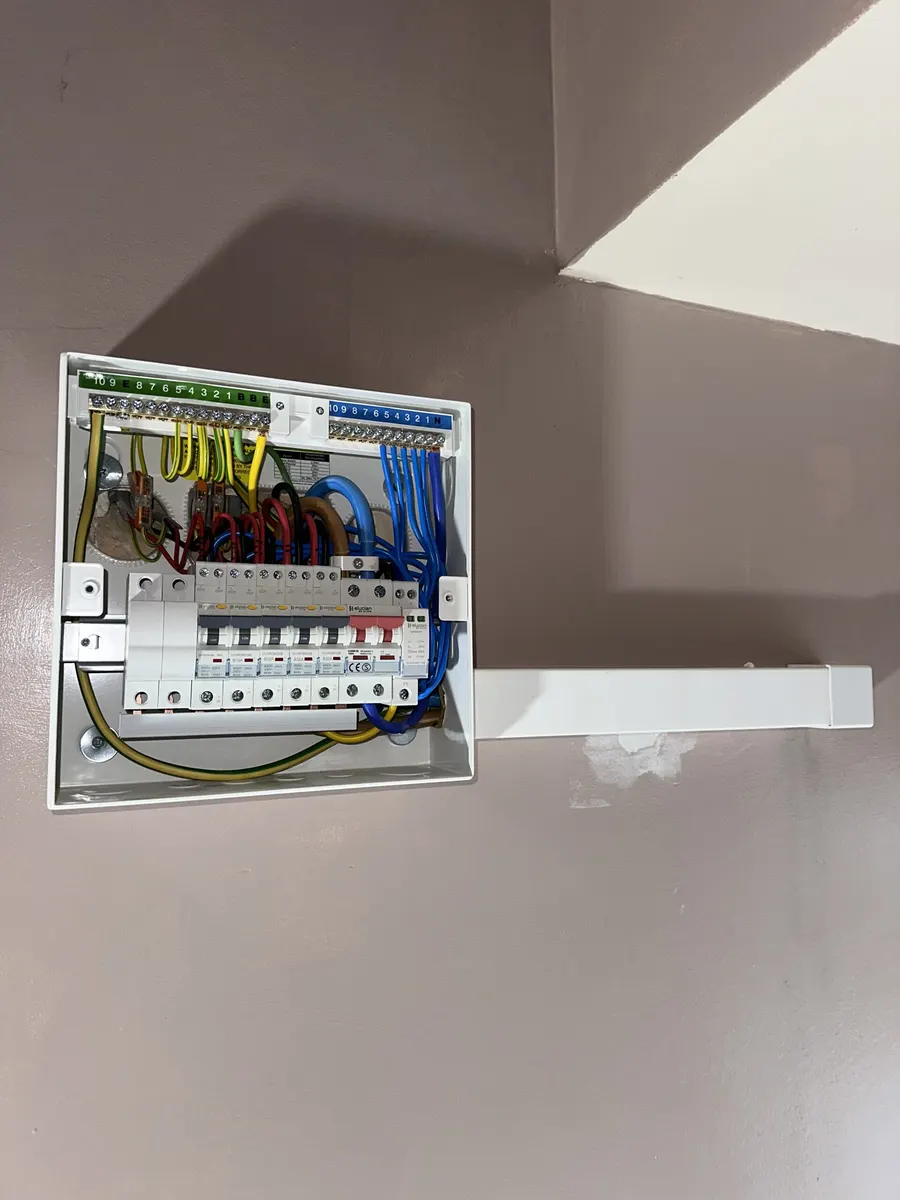
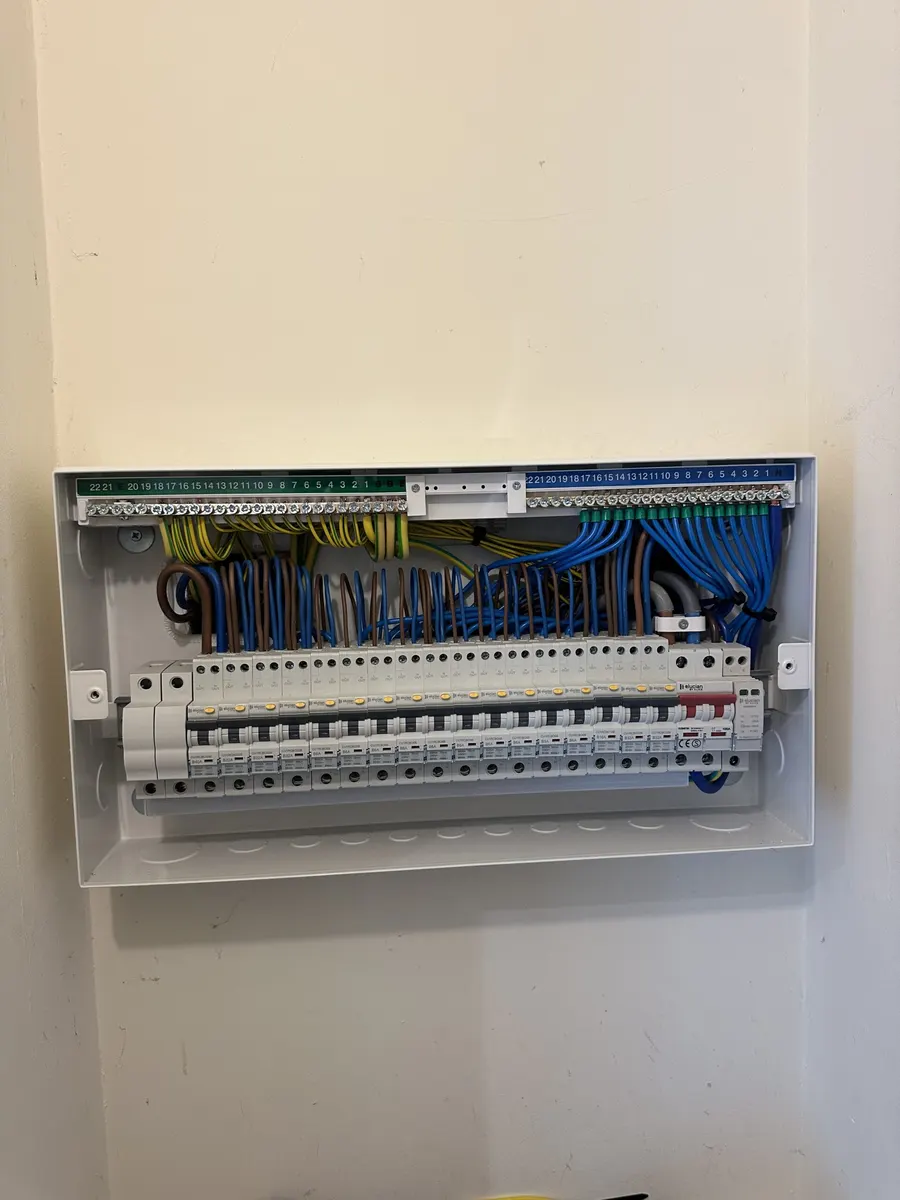
Do not accept an unexplained jump from “unsatisfactory” to “full rewire”. Some reports identify local defects. Others reveal wider deterioration that justifies more extensive work. The full or partial rewire guide explains how the boundary should be evidence-led. If an observation involves the distribution board, the consumer unit upgrade guide lists the wider checks that should inform the decision.
Keep C3 improvements separate. A C3 does not make the report unsatisfactory, although it may be sensible alongside planned work. This separation makes quotations easier to compare and prevents optional work being presented as the reason the report failed.
Turn findings into a scope
Match the proposed work to each observation
Share the report before requesting a quotation so required repairs, investigation and optional improvements stay separate.
Ask for a quoteCall 07380 944864
Landlords in England have two important 28-day periods
The rules below apply to the rented-sector duties covered by the legislation. They are not a general grace period for every owner or every safety defect. The current GOV.UK electrical safety guidance for private and social rented sectors says that required remedial work or further investigation must be completed within 28 days, or within a shorter period stated as necessary in the report.
The underlying Electrical Safety Standards in the Private Rented Sector (England) Regulations 2020 start that period on the date of inspection and testing. They then create a separate period after the work:
- Within 28 days of the inspection, or sooner if the report specifies, arrange completion of the required further investigative or remedial work by a qualified person.
- Obtain written confirmation that the work has been completed and the standards are met, or that more work is required.
- Within 28 days of completion, supply the written confirmation and the report to each existing tenant and the local housing authority.
- If investigation identifies more required work, repeat the statutory steps for that work.
Cotswold District Council’s local EICR guidance confirms the investigation, remedial-work and follow-up document route for properties in its area. The detailed landlord EICR guide for Cirencester also covers report-copy duties and the inspection cycle. If the tenancy or exemption position is uncertain, obtain appropriate property or legal advice.
4. Keep the original report and the right completion records
Completing the physical repair is only part of the handover. Electrical Safety First Best Practice Guide 10 explains that the original unsatisfactory EICR, together with appropriate records showing the C1 and C2 remedial work is complete, can be sufficient evidence that the installation is safe for continued use. A complete repeat inspection and a fresh “satisfactory” EICR are not automatically required.
The correct record depends on the work. A consumer unit replacement requires an Electrical Installation Certificate. An addition or alteration may need a Minor Electrical Installation Works Certificate. A simple like-for-like repair that is not an addition or alteration can be recorded on an appended works record. The IET publishes the current model electrical forms.
Keep this small evidence file:
- The complete original EICR and its schedules.
- The written quotation and any agreed changes.
- Records showing each C1 and C2 item has been completed.
- The appropriate electrical certificate or works record.
- Written confirmation required by the landlord regulations, where applicable.
- Proof of when the documents were sent to tenants and the council.
A licensing body or another organisation may still ask for a fresh satisfactory report, so confirm that requirement before paying for another full inspection. For the distinction between condition reports and certificates for completed work, see the guide to electrical certificates after installation work.
What changes for homeowners and buyers?
An owner-occupier is not using the rented-sector 28-day process simply because the report is unsatisfactory. The safety meaning of C1 and C2 is unchanged, so prioritise the work according to the report and any make-safe instruction. Keep the same report-to-scope-to-record discipline.
For a buyer, clarify who is arranging the work, whether it will happen before completion and what evidence will be handed over. Do not rely on a verbal promise that the electrics will be “sorted”. The home buyer EICR guide explains how the report differs from a home survey and which records to request through the purchase.
JI Electrical provides EICRs in Cirencester and the Cotswolds for landlords, homeowners, buyers and businesses. The electrical services overview sets out the work currently listed on the site. If you already have an unsatisfactory report, use the contact page to send the property type, full report and any deadline.
Customer reviews
What customers say about Jack
Very happy to recommend Jack. He's highly efficient, professional and straightforward to work with.
He replaced the fuse board efficiently, providing all the required certifications within a day.
Work done to a high standard, areas left clean and super polite along with his colleague, Freddie.
Questions after an unsatisfactory EICR
Do I need a new EICR after remedial work?
Not automatically. Electrical Safety First says the original unsatisfactory EICR together with appropriate records showing the C1 and C2 work is complete can be sufficient evidence. A local licensing body or another organisation may still ask for a new satisfactory report, so confirm its requirement first.
How quickly must a landlord act on an unsatisfactory EICR?
In England, required remedial or further investigative work must be completed within 28 days starting with the inspection date, or sooner if the report specifies. Any C1 danger needs immediate make-safe action rather than waiting for that maximum period.
Can a different electrician complete the EICR remedial work?
The rented-sector regulations require a qualified person to complete the work, but do not require the original inspector to do it. Give the chosen electrician the complete report and ask for a scope that maps back to each observation.
Do C3 recommendations have to be fixed for the EICR to pass?
No. A C3 is an improvement recommendation and does not make an EICR unsatisfactory. Keep C3 options separate from the C1 and C2 work required to address an unsatisfactory result.
What should I do with an FI observation in October 2026?
Check the BS 7671 edition stated on the report and read the exact FI wording. During the transition ending 15 October 2026, either of two editions may be used. Ask what evidence prompted the FI and what investigation is advised or required, and follow any separate landlord duty that applies.
Sources checked for this guide
- GOV.UK: electrical safety standards in the private and social rented sectors
- The Electrical Safety Standards in the Private Rented Sector (England) Regulations 2020
- Cotswold District Council: HMO and EICR guidance
- Electrical Safety First: Best Practice Guide 4, EICR classification guidance
- Electrical Safety First: Best Practice Guide 10, electrical safety in rented accommodation
- IET: BS 7671 Amendment 4 transition period
- IET Wiring Matters: implications of Amendment 4 for FI
- IET: current model electrical forms