
A consumer unit upgrade is more than swapping one box for another. A sound quotation should cover the existing installation assessment, the protection proposed for each circuit, any separate defects, the installation and testing, the electrical certificate and the route used for Building Regulations notification.
That scope matters because an older fuse box does not automatically need replacing. The latest Electrical Safety First consumer-unit guide, published in September 2026, says that rewireable fuses, older circuit breakers, a lack of built-in RCD protection or a plastic enclosure do not by themselves prove replacement is required. The condition of the board, the connected circuits and the protection needed for the property have to be assessed together.
If you are comparing a consumer unit upgrade in Cirencester, use the inclusions below to compare like with like. They are a buying checklist, not a diagnosis of your installation.
First, establish whether replacement is the right job
Visible scorching, cracking, corrosion, loose covers, a burning smell or exposed live parts need prompt professional attention. Keep clear, do not remove the cover and do not keep resetting a breaker or RCD if it will not stay on. A sudden failure can require an urgent replacement, but a planned upgrade should start with evidence.
For an older but apparently serviceable board, the useful questions are different. What is the condition of the circuits? Are the earthing and bonding arrangements adequate? What protection is already present? Is new work planned, such as a kitchen alteration, extension, electric heating or an EV charger? A recent EICR may already contain part of that evidence.
Electrical Safety First's home-buyer guidance makes the same distinction: an older unit may not have modern devices, but that does not necessarily mean it is unsafe or must be upgraded. Inspection and testing decide the next step.
What should a consumer unit quote include?
A short quotation can still be clear. It should tell you what has been assessed, what equipment is proposed, what happens if an existing circuit fails a test and which records you receive at the end.
| Part of the job | What the quote should make clear | Why it matters |
|---|---|---|
| Existing installation | Whether the price includes an EICR, a defined pre-work survey or relies on a recent report | Existing faults can affect whether circuits may be reconnected |
| Consumer unit design | The enclosure, main switch, circuit protection, labels and any planned spare capacity | Two quotes may propose different protection and future capacity |
| Separate remedial work | How defects in circuits, earthing, bonding, meter tails or the supply will be handled | A new board does not repair faults elsewhere in the installation |
| Access and shutdown | Where the unit will sit, what must be cleared and which parts of the property lose power | The work needs safe access and an agreed interruption to the supply |
| Testing and handover | The inspection, testing, circuit schedule and Electrical Installation Certificate included | The records explain what was installed and verified |
| Building Regulations | Who notifies the work and which compliance certificate follows | Replacing a consumer unit in a home is notifiable work in England |
Ask for exclusions as well as inclusions. Making good, moving the board, a new enclosure around it, work by the electricity network operator and repairs to failed circuits can all sit outside the basic replacement unless the quotation says otherwise.
Before the installation date: survey first, scope second
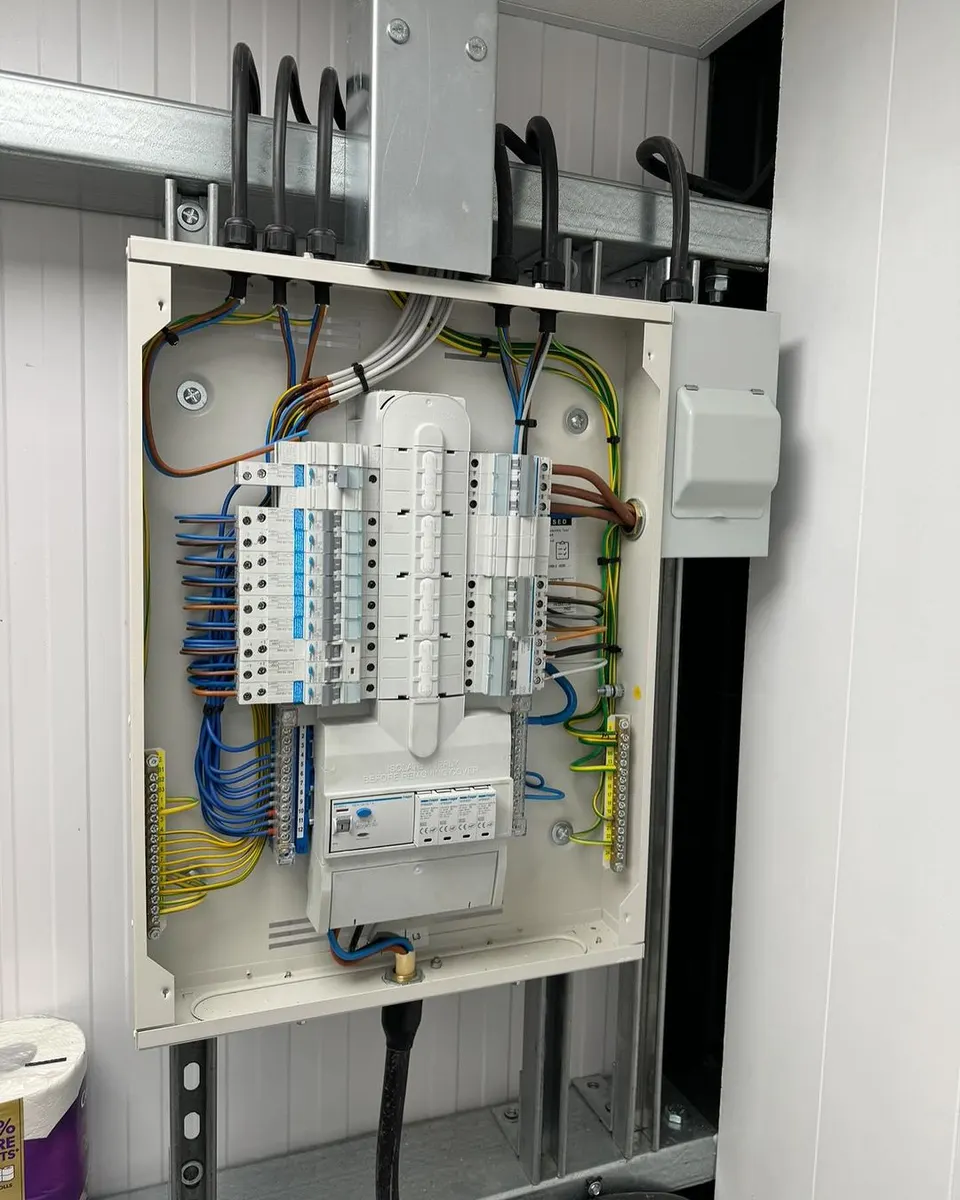
Electrical Safety First's Best Practice Guide series treats a planned consumer-unit replacement as work that needs evidence from the existing installation. Its current consumer-unit guide strongly recommends an EICR in advance. If the customer does not want an EICR, it says a pre-work survey must still be completed before the replacement begins.
The guide's minimum survey covers known faults, the type and condition of the wiring, accessible parts of the installation and specific electrical tests. If the checks find an immediate or potential danger, or a condition likely to make an RCD trip unnecessarily, the problem needs resolving or the affected circuit needs to remain disconnected from the new board.
This is the point at which a cheap photograph-only estimate can become an expensive misunderstanding. Ask the quote to separate three things:
- the agreed consumer unit and protective devices;
- work already known to be necessary before circuits can be reconnected;
- the process for pricing a defect that only becomes clear during testing.
Planning an upgrade?
Get the survey and exclusions clear first
Share known faults, planned new circuits and a photograph taken without removing the consumer unit cover.
Ask for a quoteCall 07380 944864
The quote should name the protection being proposed
Consumer units can contain different combinations of circuit breakers, RCDs, RCBOs, surge protection and, where relevant, arc-fault protection. The correct design depends on the circuits, the equipment likely to be used and the current wiring requirements. A homeowner does not need to specify the devices, but should be able to see what each quotation actually provides.
The IET's consumer-unit and protective-device guidance explains why device type and coordination matter. It also notes that manufacturer instructions form part of the design. Ask the electrician to explain the proposed arrangement in plain language, including:
- how the circuits will be divided and labelled;
- which protective device serves each circuit;
- whether surge protection or other additional protection is included and why;
- whether spare capacity is being allowed for known future work;
- what happens if an existing circuit cannot safely be reconnected.
If the upgrade is being considered alongside a new kitchen, garden supply or other alteration, link the decisions together. The lighting and power alterations service covers the wider circuit planning that a board-only quote may not.
What normally happens on the day?
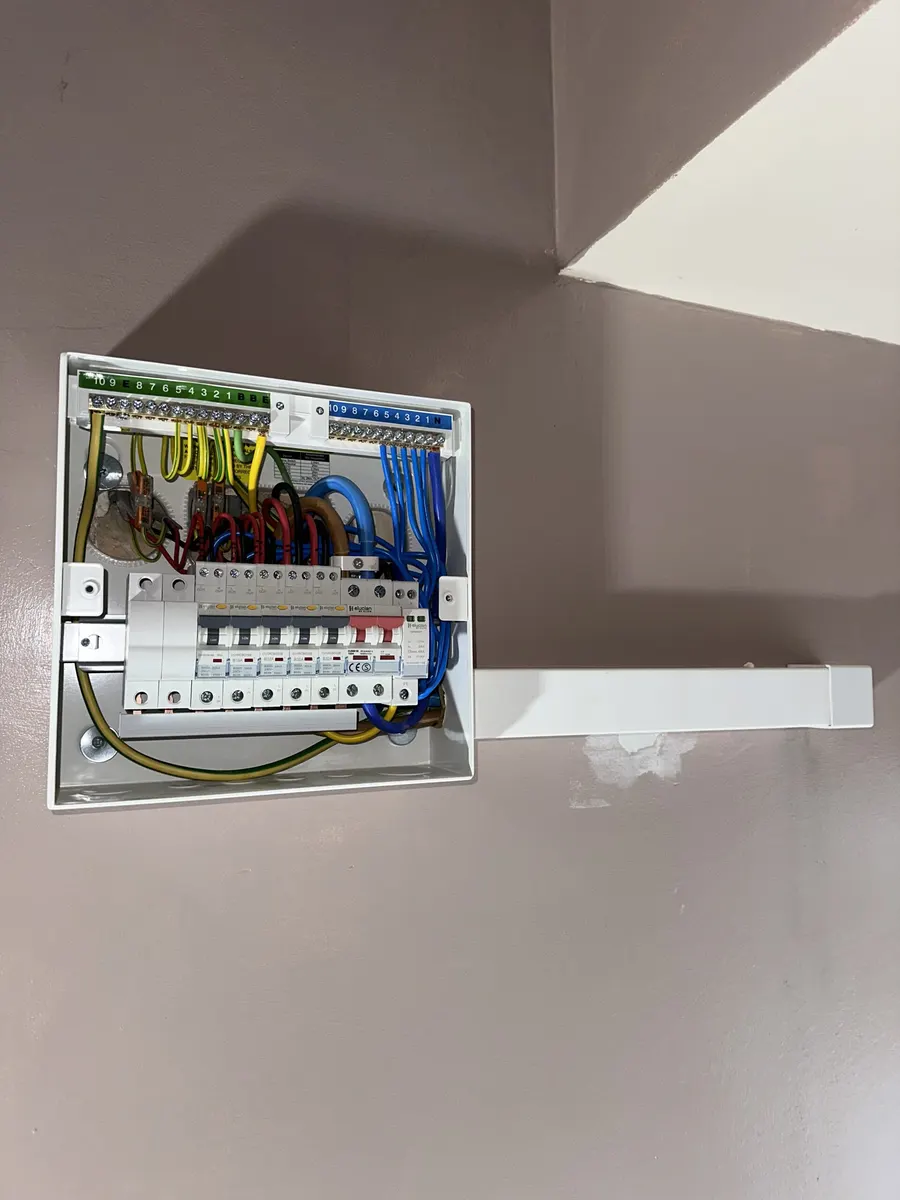
Your quotation should explain the planned sequence for the property. A typical replacement includes an agreed shutdown, safe isolation, removal of the old equipment, installation of the new unit, reconnection of suitable circuits, labelling, inspection, testing and handover. The electricity supply will be unavailable for at least part of the work, so discuss home working, alarms, medical equipment, refrigeration and any other load that cannot simply be switched off.
The position of the board also matters. Clear ordinary storage away before the visit, but do not open the enclosure or expose any electrical parts yourself. If access is cramped, the board is hidden behind fitted joinery or it needs moving, make that part of the quotation rather than assuming the existing position can be reused unchanged.
A replacement is not permission to reconnect every old circuit regardless of condition. The September 2026 guide says new work must be verified to the current edition of BS 7671 and must not make the existing installation less safe. Circuits with defects that would create immediate or potential danger must not be reconnected until the issue is dealt with.
What can change the final scope?
The consumer unit is the distribution point, not the whole electrical installation. A quotation can change when assessment or testing identifies work elsewhere. Common scope questions include:
- whether the earthing and main protective bonding are adequate;
- whether the meter tails and supply equipment suit the proposed arrangement;
- whether an existing circuit has damaged insulation, no suitable protective conductor or another defect;
- whether the new devices reveal a fault that the older protection did not show;
- whether the unit must move to gain safe, usable access;
- whether new circuits for a rewire, kitchen, extension or EV charger are part of the same project.
None of these proves that extra work will be required in your home. They are the reasons the quotation should define assumptions and a variation process. For broader work, the full or partial rewire guide explains how inspection results set the boundary between circuits that stay and circuits that are replaced.
Which certificates and records should you receive?
Replacing a consumer unit in an English dwelling is notifiable under Part P. The current Approved Document P covers design, installation, inspection, testing and the information that should be provided. GOV.UK's building approval guidance specifically lists replacement fuse boxes and connected electrics among work that can need approval.
There is more than one compliance route. A tradesperson registered for the relevant work with a competent person scheme can self-certify and notify the local authority on the customer's behalf. GOV.UK says the scheme route provides a compliance certificate within eight weeks of completion. Building control is another route when the installer is not self-certifying.
Ask which route applies before accepting the quote. If self-certification through a competent person scheme is proposed, check the installer's current registration on the Electrical Competent Person Register and against current evidence from the electrician.
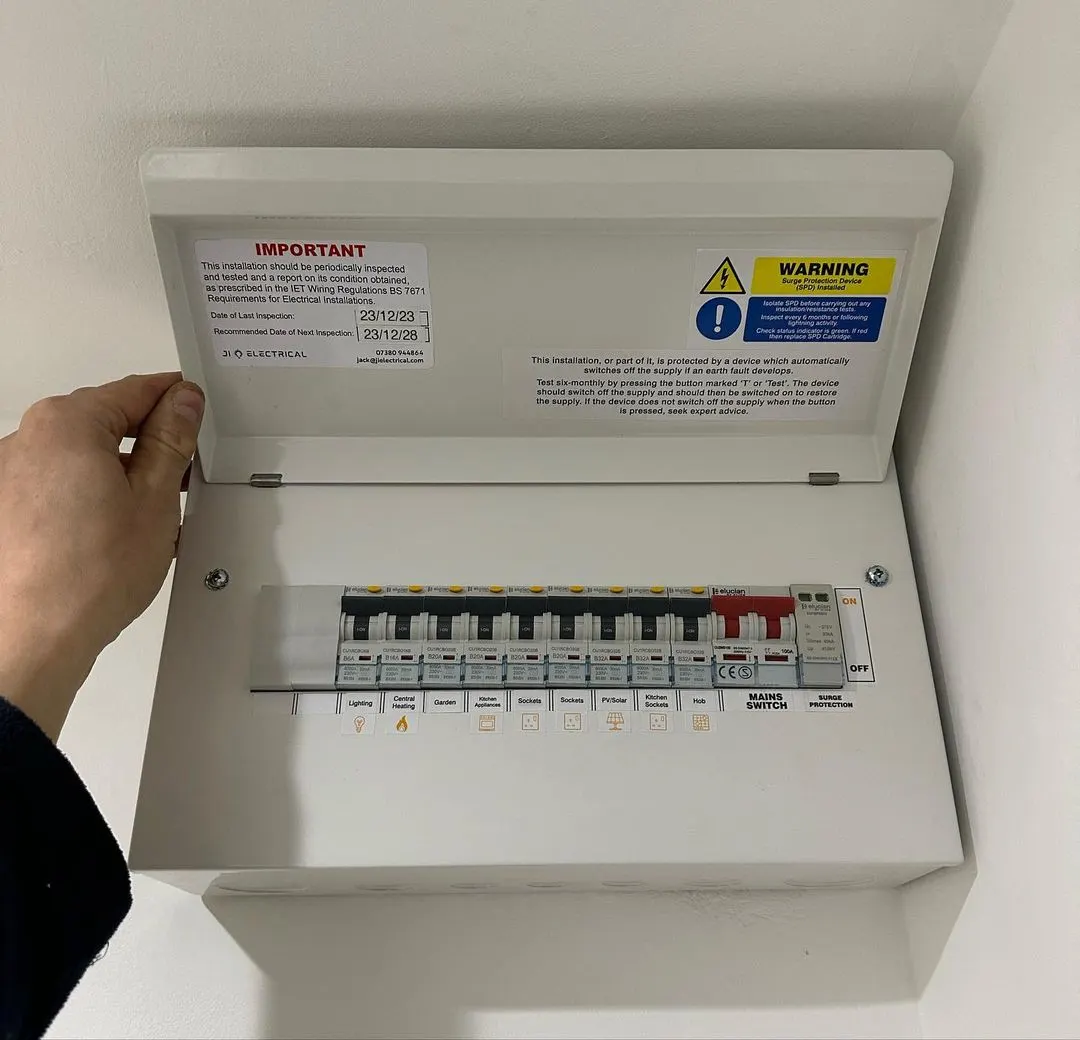
Your handover pack should identify the work completed, the inspection and test results, the circuit schedule and the Building Regulations compliance route. Keep it with earlier EICRs and electrical certificates. Those records help with future alterations, fault finding and a later sale.
A homeowner's pre-acceptance checklist
- What evidence shows that replacement is appropriate?
- Is an EICR or defined pre-work survey included?
- Which consumer unit, protective devices and spare capacity are proposed?
- Which existing defects are included, excluded or still unknown?
- What access, shutdown and making-good assumptions apply?
- What inspection, testing, labels and electrical certificate are included?
- Who handles Building Regulations notification, and what proof follows?
- How will a newly discovered defect or customer change be priced and approved?
If the answers are clear, two quotations become much easier to compare. If they are not, a lower total may simply cover less work.
Ask for a consumer unit assessment in Cirencester
JI Electrical provides consumer unit and fuse box assessments and upgrades in Cirencester and the Cotswolds. Share the postcode, property type, reason for the enquiry, known faults and any recent EICR or electrical certificate. You can include a clear photograph taken without removing the cover.
For other electrical work, use the service overview, see examples in the project gallery, or contact Jack with the details needed to scope the next step.
Customer reviews
What customers say about Jack
Very happy to recommend Jack. He's highly efficient, professional and straightforward to work with.
Work done to a high standard, areas left clean and super polite along with his colleague, Freddie.
Whenever we have called on Jack to carry out electrical work at our home he has always given us great advice.
Quick answers
Consumer unit upgrade questions
Does an old fuse box automatically need replacing?
No. Electrical Safety First says age, older fuses, a lack of built-in RCD protection or a plastic enclosure do not by themselves prove replacement is required. The condition of the wider installation and the protection needed must be assessed.
Is an EICR included before a consumer unit upgrade?
Ask the quotation to say. For a planned replacement, current Electrical Safety First guidance strongly recommends an EICR in advance. If there is no EICR, it says a defined pre-work survey must still be carried out before replacement begins.
Will the circuits be tested when the consumer unit is replaced?
The existing installation needs assessment before work, and the completed alteration must be inspected, tested and verified. The quote should identify the checks included and how any circuit that cannot be safely reconnected will be handled.
Is replacing a consumer unit notifiable under Part P?
Yes, in an English dwelling it is notifiable work. Agree whether a registered competent person will self-certify it or whether another Building Regulations approval route will be used, and keep the compliance certificate with the electrical records.
Sources
- Electrical Safety First: Best Practice Guide 1, Replacing a Consumer Unit, issue 5.2, checked 23 September 2026.
- Electrical Safety First: Best Practice Guides, checked 23 September 2026.
- Electrical Safety First: advice for home buyers, checked 23 September 2026.
- IET: consumer units and protective devices FAQs, checked 23 September 2026.
- GOV.UK: Electrical safety, Approved Document P, checked 23 September 2026.
- GOV.UK: Building regulations approval, checked 23 September 2026.
- GOV.UK: Use a competent person scheme, checked 23 September 2026.
- Electrical Competent Person Register, checked 23 September 2026.