
An old fuse box does not automatically need replacing. The first decision is whether you have an urgent fault or a planned improvement. Damage, unsuitable protection and changes to the installation can justify work, but a board’s age or appearance cannot settle the question on its own.
If there is smoke or fire, leave the property, stay out and call 999. A burning smell, signs of overheating, electric shocks or exposed parts need urgent professional attention. Do not approach damaged equipment to investigate or remove covers. For a planned enquiry, the consumer unit assessment and upgrade service is the place to discuss the existing installation and proposed changes.
First separate danger from a replacement decision
Use this table to decide what kind of help to seek. It is a triage aid, not a diagnosis or permission to keep using suspect equipment. A fault can require immediate action even when the eventual remedy is a circuit repair rather than a complete consumer unit replacement. Equally, a working board can still merit an assessment before additional electrical work.
| What you notice | Next step | What it does not prove |
|---|---|---|
| Smoke or fire | Leave, stay out and call 999 | That it is safe to reach the main switch |
| Burning smell, damage, shocks or exposed parts | Keep away and seek urgent professional help | That a planned board change alone will resolve the danger |
| Repeated trips or blown fuses | Have the cause investigated; do not bypass protection | That the protective device is the faulty component |
| Older equipment, uncertain protection or missing records | Arrange a condition assessment | That age alone makes replacement compulsory |
| New circuits or substantial equipment planned | Assess the installation against the proposed work | That a spare slot guarantees a suitable supply |
Electrical Safety First warns against ignoring burn marks, arcing sounds and repeated trips. For an actual fire, follow the fire service’s escape advice. An ordinary quotation form is not an emergency response channel.
Seven reasons to ask for an assessment
1. Signs of heat or physical damage
Discolouration, cracking or damaged covers deserve attention. Describe what you can see from a safe position rather than touching equipment to see whether it is hot. A photograph may help explain your concern, but cannot establish safe connections or circuit condition. Avoid turning a visible symptom into your own diagnosis of which component needs replacing.
2. Repeated tripping or fuses blowing
A protective device disconnecting can be a response to a fault elsewhere. Record when the problem happens and which appliances were in normal use, without recreating the fault as an experiment. Tell the electrician whether it affects one room or several. Replacing the enclosure will not repair a faulty appliance, damaged cable or unsuitable alteration. Do not keep forcing power back on or fit different fuse wire.
3. Uncertain or inadequate shock protection
RCDs provide protection against certain electric shock risks. The presence of a test button is useful information, but does not show which circuits are covered or prove the installation safe. Electrical Safety First’s home buyer guidance says older units without RCDs or circuit breakers are not necessarily unsafe or in need of upgrading. Ask what protection exists and what improvement is appropriate for your actual circuits.
4. Older rewireable fuses or a plastic enclosure
These are reasons to understand the installation, not automatic verdicts. Electrical Safety First’s current condition-reporting guide lists adequately protective rewireable fuses in its mythbusting section. It also distinguishes the location of a plastic unit, including under a wooden staircase or on a sole escape route. Ask the inspector to explain the specific observation. Do not treat a photograph of an older design as proof of an urgent replacement requirement.
5. The proposed work needs a different arrangement
An EV charger, added circuit or substantial renovation changes the brief. Tell the electrician the equipment specification and what else is planned. A spare space in the board does not establish capacity, suitable protection or compatible parts. The EV charging service and lighting and power alterations service cover different requirements; describe both if they are part of one project.
6. A report identifies a relevant defect
Send the full EICR, including observations and schedules, rather than a photograph of its overall result. Ask which observation relates to the board and which relates to the wider wiring. The EICR code guide helps you read the report. An unsatisfactory result does not itself specify a whole-board replacement as the only remedy. The explanation should connect the defect to the proposed work.
7. Alterations and labels leave the installation unclear
If labels do not make sense, documents are missing or different additions have accumulated, explain that uncertainty. Do not operate unfamiliar switches to map the property for an enquiry. Ask whether an electrical condition inspection would provide the information needed. For a recent purchase, the buyer’s inspection guide separates an EICR from a general home survey.
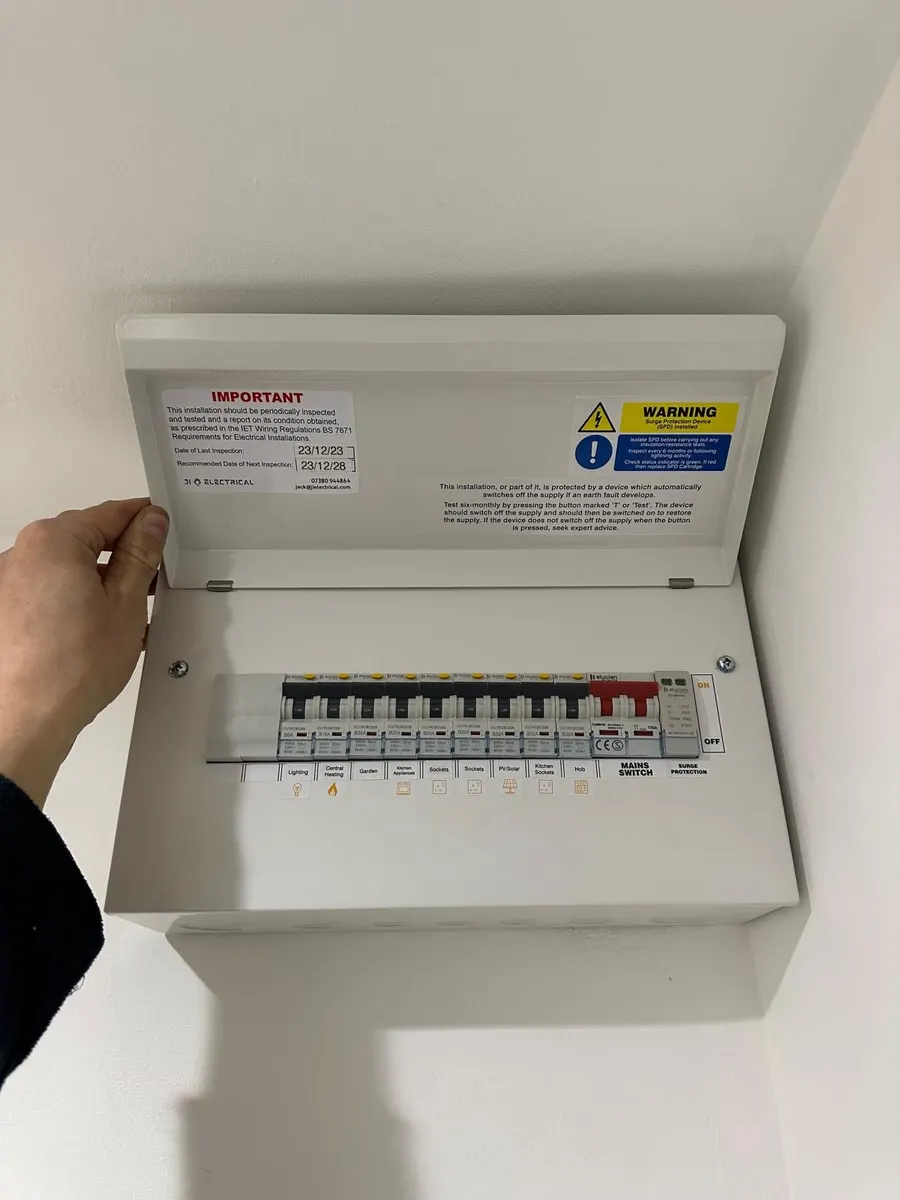
What should support the recommendation?
A useful recommendation names the issue, explains its significance and describes a remedy. “Old board” is an incomplete explanation. Ask whether the concern is a damaged enclosure, inadequate protection for a particular circuit, incompatible equipment or the demands of new work. Then ask what assessment supports that conclusion and whether circuit repairs are also needed.
Electrical Safety First’s September 2026 replacement guide strongly recommends an EICR ahead of a planned change. If it is declined, a pre-work survey is required; declining that survey means the replacement should not proceed. Agree which assessment is proposed and priced. A new board cannot remove defects in the circuits being reconnected.
The upgrade scope guide explains the questions to settle before work. If broader defects are reported, use the remedial action guide to organise the follow-up. Keep the original observations and the quoted remedies together so you can see what each item addresses.
Compare repair, improvement and replacement separately
Ask for the options that are technically suitable, rather than choosing a product before assessment. One option may be a defined repair. Another may improve protection while retaining suitable equipment. A third may replace the consumer unit and include other remedial work. These are questions for the electrician, not assurances that all three options will be possible in your home.
For each proposed option, ask what remains, what changes and what limitations remain afterwards. If replacement is recommended, ask why retaining the existing board is unsuitable or less practical. If a repair is proposed, ask whether it resolves the identified defect or only part of it. An explanation of the completed arrangement matters more than the number of devices listed in an offer.
Components must suit the assembly, not merely fit the space. The IET’s component compatibility guidance explains why the manufacturer’s verified arrangement matters, including replacement parts from the same manufacturer. Leave equipment selection to the professional. Buying a breaker online because its width looks right is not a safe shortcut.
A clear recommendation
Ask what the proposed work will solve
Send the complete report and planned changes. Separate a board upgrade from circuit repairs before agreeing a quotation.
Ask for a quoteCall 07380 944864
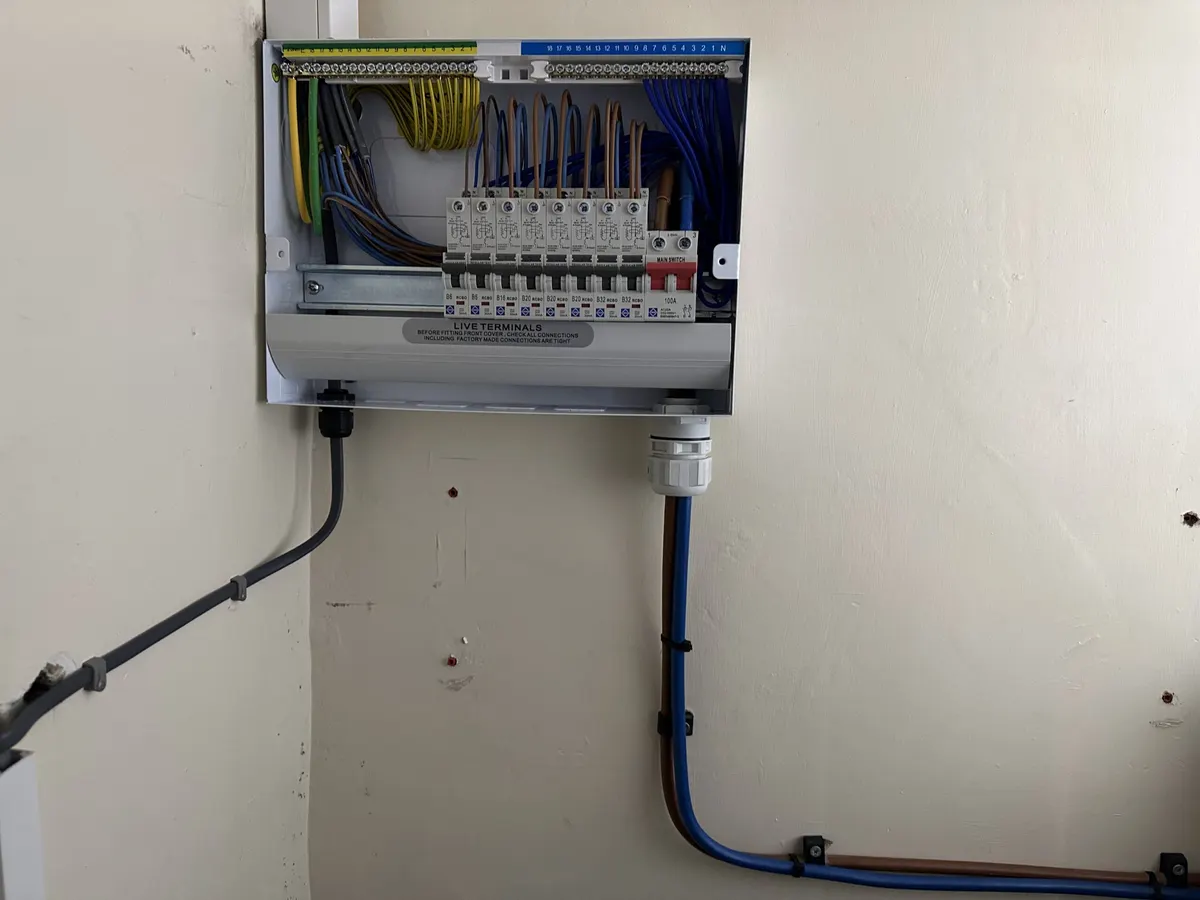
Make a useful observation record without opening anything
Write down the property address, the concern and when you first noticed it. Separate a symptom that has just appeared from one that has been happening intermittently for months. Describe what was in normal use at the time and whether any recent electrical work, water leak or building work preceded it. Do not deliberately reproduce an incident to obtain a better description.
If it is safe, provide a wide external photograph showing the board and its surroundings, plus readable labels with the enclosure intact. Do not remove a screwed cover, touch cables, disturb the meter or incoming supply equipment, or reach past damage. Explain if the board is difficult to access or in a cupboard that also stores other items. The electrician can decide what further inspection is needed.
Include existing EICRs, installation certificates and previous quotations. If you do not have them, say so. List planned equipment and alterations separately from the current fault. For a Cirencester or Cotswolds renovation, mention protected finishes or access constraints early. Our older-home planning guide covers questions about fabric and routes without assuming every old home requires a rewire.
Check the quote and practical arrangements
The written scope should separate assessment, board equipment, installation, circuit repairs, testing and documentation. Ask whether the price assumes all existing circuits can be reconnected and what happens if assessment finds a defect. Confirm that additional work will be explained and priced before it proceeds, rather than leaving an undefined repair allowance.
Ask for the total payable and VAT treatment. For national market benchmarks, use the consumer unit cost guide; those figures are not JI Electrical prices. A quotation for your installation needs its own defined scope. There is no benefit in comparing two headline totals if only one includes the assessment and relevant repairs.
Agree access and the power-interruption arrangements for the actual job. Mention medical equipment, working from home, alarms and other essential supplies before booking. Ask which areas need clearing and whether another contractor needs to attend. Do not assume a generic guide’s duration describes Jack’s programme or that all power can remain available throughout the work.
Keep the installation certificate and compliance record
Consumer unit replacement in an English dwelling is notifiable work under Approved Document P. Ask for an Electrical Installation Certificate with the relevant schedules, and agree the separate Building Regulations notification route. An EICR describes condition; it does not replace the certificate for new installation work.
GOV.UK explains how to check a competent-person scheme registration and how that route handles compliance. Verify the proposed route before booking rather than assuming a logo proves current status. The electrician comparison guide gives further booking questions. Retain the records with the property documents, using the seller’s paperwork guide if you are preparing for a future sale.
For a planned assessment, read about Jack and JI Electrical, then send the concern and existing documents. Ask Jack for a fixed quote for the agreed work through the consumer unit service. The goal is a justified remedy and clear handover, not replacement based on age alone.
If alterations prompted the enquiry, compare the socket-work scope with the wider rewire budget before choosing the next step.
Adding home charging? Use the EV charger cost guide to separate the chargepoint budget from any justified consumer unit work.
For outside points, compare the outdoor socket route and cost guide.
Customer reviews
What customers say about Jack
Jack did a great job installing new spotlights in our kitchen. He turned up on time, worked efficiently, and everything was finished to a really high standard.
Jack and his colleague Freddie arrived on time, worked efficiently, and everything was completed to a really high standard. The price was fair and they left everything clean and tidy afterwards.
I contacted JI Eletrical within 24hrs with an issue and they came to fix it quickly and not had a problem since!
Fuse box replacement questions
Does an old fuse box automatically need replacing?
No. Age alone does not establish whether a consumer unit is safe. Condition, protection, circuit tests and planned alterations determine the appropriate work.
Does a plastic consumer unit have to be replaced?
Not solely because it is plastic. Its condition and location matter. Ask the inspector to explain the observation, the risk and whether replacement is required or recommended.
Will a new consumer unit stop repeated tripping?
Not necessarily. A circuit or appliance fault can remain after a board change. The cause needs investigation before replacement is treated as the solution.
Can I replace a fuse box myself?
Consumer unit replacement needs a competent electrician, safe isolation, design, inspection, testing and certification. Do not remove covers or disturb supply equipment yourself.
What paperwork should a replacement include?
Ask for an Electrical Installation Certificate and relevant schedules. Consumer unit replacement in an English dwelling is notifiable work, so agree the separate Building Regulations compliance route and record.
Sources and further reading
Primary guidance checked 12 October 2026. This guide explains assessment questions, not a diagnosis of an individual installation.
- Electrical Safety First: warning signs
- London Fire Brigade: escaping a house fire
- Electrical Safety First: older units and RCDs
- Electrical Safety First: condition reporting, issue 7.4
- Electrical Safety First: replacing a consumer unit, issue 5.2
- IET: component compatibility
- GOV.UK: Approved Document P for England
- GOV.UK: competent-person scheme route