
Start with the installed price, not the box price
For a Cirencester home, current supplier examples suggest roughly £775 to £1,400 for an installed home charger package, before work outside the supplier’s standard scope. That is a planning benchmark, not a JI Electrical tariff or a ceiling. A charger-only offer can look much cheaper because the circuit, fitting and testing still need paying for.
Start with EV charger installation in Cirencester when you want a property-specific discussion. The useful comparison is the total for a named charger in an agreed position, with the electrical work and any VAT clearly recorded. The cheapest headline cannot tell you whether a long driveway route or detached garage is included.
What the current market examples actually cover
Prices below were checked on 13 October 2026. Smart Home Charge’s Gloucestershire listings show installed starting prices of £774.90 for Vchrgd Seven, £918 for Easee One and £1,404 for Andersen A3. They also show separate charger-only prices. The visible listings do not state VAT treatment beside those amounts, so confirm the tax-inclusive total rather than adding or assuming tax yourself.
For a second benchmark, Jaguar’s official home charging offers advertise a Pod Point 7kW tethered installation from £949 and an Andersen offer from £1,169, both including VAT. These are particular supplier offers with their own conditions. They are not equivalent quotations for your home and do not establish what Jack charges.
Use these figures as typical market reference points, then read the scope. A starting price applies to qualifying work. Ask whether the listed installation allowance covers your actual route and whether the product shown is the exact specification you want. Avoid averaging unlike offers into a supposedly precise local price.
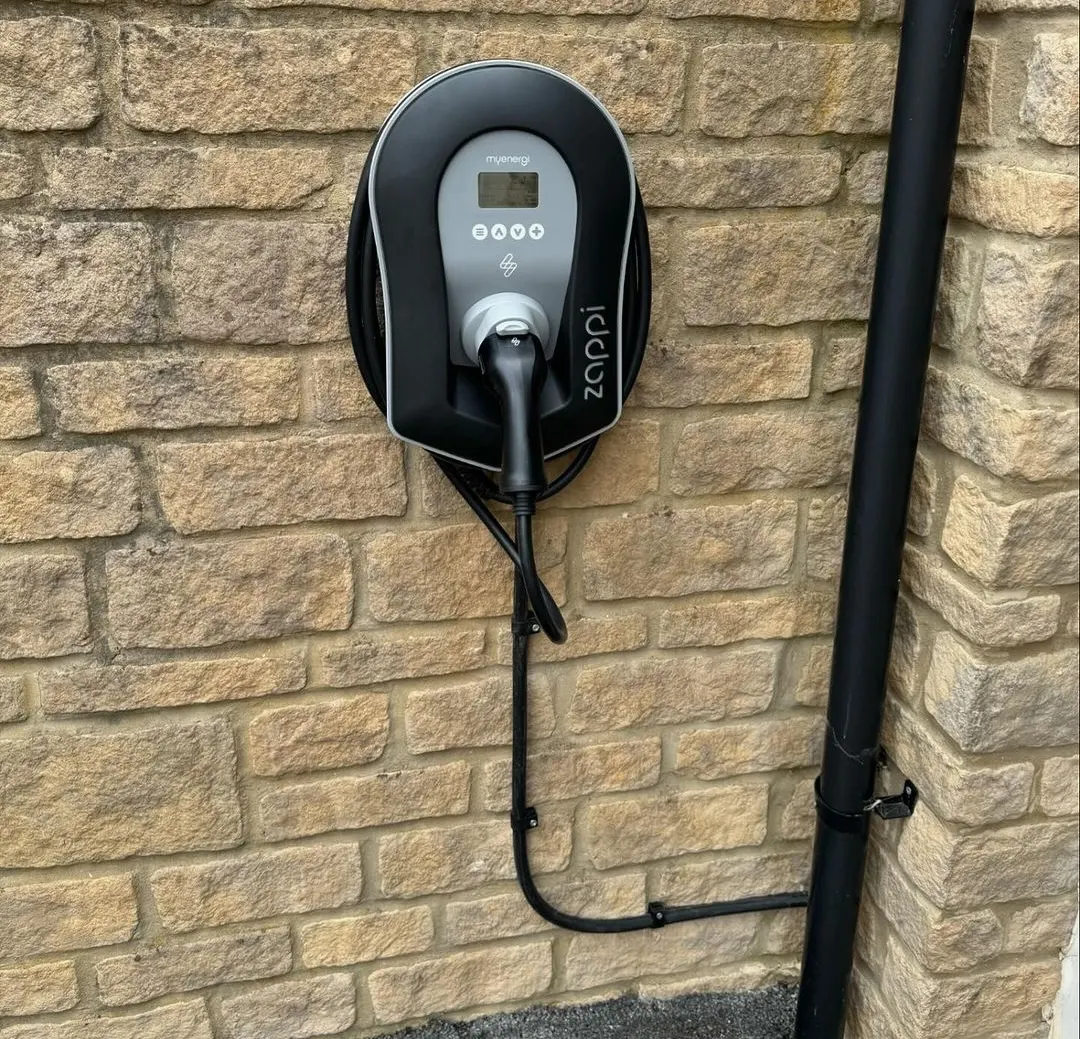
A scope table for comparing two quotations
Put each quotation beside the same brief. Write “included”, “excluded” or “awaiting assessment” against each line. An unanswered item is a question to resolve, not a reason to assume it comes free.
| Item | What to confirm | Why the total changes |
|---|---|---|
| Charger and lead | Model, tethered or socketed, cable reach and accessories | Equipment-only and installed packages cover different purchases. |
| Installation route | Agreed position, measured route and surface or concealed finish | The cable route can be longer than the distance across the driveway. |
| Groundwork | Who excavates and reinstates paving or garden surfaces | A remote garage may need a separate contractor or priced allowance. |
| Existing supply | Assessment, required electrical changes and network involvement | Suitability needs checking before the installation scope is fixed. |
| Completion | Testing, electrical records, notification route and demonstration | The handover is part of the work, not simply mounting a box. |
| Total | VAT, grant assumptions, exclusions and payment terms | A discount or monthly payment can obscure the overall commitment. |
For related work, the extra sockets cost checklist explains the same distinction between hardware and complete installation. Keep additional household alterations separate so you can see what belongs to the charger and what is optional.
Make VAT and any grant visible in the arithmetic
GOV.UK gives the standard VAT rate as 20%. Where a quote expressly says £1,000 excluding VAT and that rate applies, the arithmetic is £1,000 × 20% = £200 VAT, making £1,200 payable. This is an illustration only. It is neither a JI Electrical quote nor a claim about Jack’s VAT registration.
If a figure already includes VAT, do not add it again. Ask for the amount you will actually pay, and whether separately arranged groundwork has its own quotation and tax treatment. A quote without clear VAT wording needs clarification before you compare it with a tax-inclusive package.
The current renters and flat owners grant contributes 75% of eligible purchase and installation costs, capped at £500. Older references to a £350 cap should not be used for today’s budget. Illustratively, if the scheme accepts £1,200 as eligible cost, 75% is £900, but the cap limits assistance to £500 and leaves £700. Separate ineligible work remains payable.
Check the official eligibility conditions: the scheme is for qualifying renters or flat owners with private off-street parking and an eligible vehicle. An owner-occupied house is not eligible under this particular route. Permissions and previous claims also matter. Do not subtract a grant from your budget simply because you have ordered an electric car.
Why the cable route deserves its own discussion
Photograph the parking space and explain how you normally park. A charging port at the front of one vehicle and the rear of another can change the most practical position. Consider whether the lead can reach comfortably without obstructing a door, footpath or the area used to move bins. Ask the installer to assess the proposed arrangement.
Then describe the route from the electrical supply to that position. A straight-line estimate misses corners, doorways, internal finishes and changes in level. On the Octopus installation package page, the standard allowance is up to 10 metres, with different tiers for longer routes. That illustrates how suppliers define scope; it does not set Jack’s allowance or price per metre.
For a detached garage, ask who is responsible for any trench and reinstatement before agreeing a date. Put the finish in writing: replacing a few paving slabs, restoring a decorated wall and leaving an exposed clipped route are different outcomes. The lighting and power alterations page is useful when a larger household project also needs discussion.
Compare the complete scope
Get the exclusions written down
Share your charger preference and photographs of the proposed route. Ask which electrical and groundworks are included.
Ask for a quoteCall 07380 944864
Separate supply assessment from automatic fuse box replacement
A new charger does not, by itself, prove that the entire consumer unit must be replaced. Ask the electrician to explain the proposed circuit arrangement, the suitability of the existing installation and any work needed. You should be able to distinguish the chargepoint cost from repairs or improvements elsewhere.
Use the fuse box assessment guide and consumer unit cost guide if an upgrade appears in the quote. If a condition report is proposed, ask what question it will answer; the EICR cost guide helps compare inspection scope. Do not remove covers or touch the service fuse to collect information.
The network operator is separate from the company selling your electricity. National Grid Electricity Distribution’s domestic connections page provides an EV application or notification route. Ask who handles that process and whether any network decision is still outstanding. Supply photographs cannot settle every capacity or connection question.
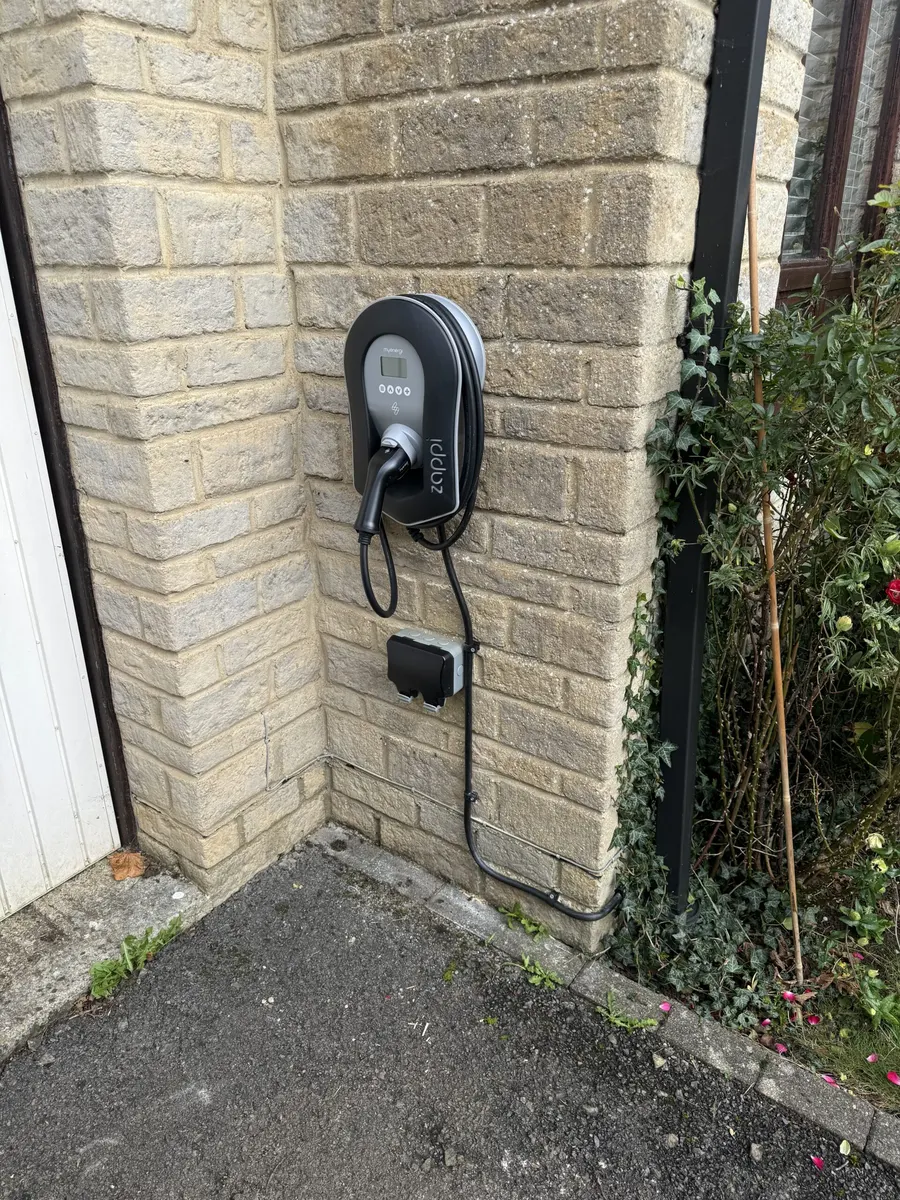
Choose features around your parking and charging routine
Before paying more for a particular model, write down the needs it solves. These might include a permanently attached lead, cable storage, a screen, solar integration or compatibility with a chosen electricity tariff. Confirm the exact model and the vehicle’s requirements, rather than relying on a brand name alone.
Government smart chargepoint rules cover private chargepoints sold in Great Britain within their scope and include smart functionality and device security requirements. Ask for the relevant compliance information. Also ask how ordinary charging works if connectivity fails and which features need an app or ongoing service.
Keep installation cost separate from electricity running cost. A low overnight unit rate does not tell you the whole household bill, and a charger subscription is not the same as buying the equipment outright. For a monthly offer, compare the initial payment, minimum term, total payments, ownership terms and what happens when the agreement ends.
Check permissions and handover before setting the date
Shared parking, a tenancy or a listed building can add decisions beyond the electrical design. Establish your right to use the space and alter the relevant wall or common area. For a Cirencester address with protected fabric, use Cotswold District Council’s heritage information to find the applicable guidance. Do not assume a modern charger makes the building’s restrictions irrelevant.
The older home electrical planning guide explains why the route matters in protected buildings. If renovation is already planned, discuss the charger alongside rewiring requirements, rather than finishing surfaces before the electrical scope is agreed.
In England, Approved Document P covers dwelling electrical safety. A new circuit is notifiable work. Agree the compliance route and electrical completion records with the installer. The electrical certificate explainer separates installation certificates from Building Regulations records.
If grant funding matters, verify the installer against the official OZEV installer guidance. This article makes no claim that JI Electrical holds a particular grant authorisation. Confirm eligibility, installer status and the application sequence before commissioning grant-dependent work.
If charging is part of a larger renovation, use the full or partial rewire decision guide to agree the wider scope, then the house rewire budget guide to keep that work separate from the chargepoint quotation.
Send a brief that can produce a fixed quote
Send Jack your postcode, vehicle make and model, preferred charger and normal parking position. Include safe external photographs of the consumer unit and supply equipment, the proposed wall and the route between them. Mention solar equipment, a detached garage, shared access and any permission still outstanding.
Ask for a written total that identifies the equipment, installation route, any electrical changes, groundwork responsibilities, VAT and completion records. Resolve provisional items before accepting. Visit Jack’s About page, then contact JI Electrical to discuss a fixed quote for your home EV charger installation.
At business premises, ordinary appliance maintenance is a separate scope from charger installation. The PAT testing budget worksheet explains visit minimums and equipment records.
For a separate investigation, agree call-out charges and first-visit inclusions before authorising repair work.
Before treating funding as a discount, read who can claim the current EV charger grant. Check the applicant, parking, permission and installer conditions before installation.
Customer reviews
What customers say about Jack
Jack did a great job installing new spotlights in our kitchen. He turned up on time, worked efficiently, and everything was finished to a really high standard.
Jack and his colleague Freddie arrived on time, worked efficiently, and everything was completed to a really high standard. The price was fair and they left everything clean and tidy afterwards.
I contacted JI Eletrical within 24hrs with an issue and they came to fix it quickly and not had a problem since!
EV charger cost questions
How much does a home EV charger installation cost in Cirencester?
Supplier packages checked on 13 October 2026 provide a broad benchmark of about £775 to £1,400 before property-specific extras. VAT treatment and scope differ. These are market examples, not JI Electrical prices; ask Jack for a fixed quote.
Is the charger included in an installation price?
Only if the quote says so. Distinguish equipment-only, installation-only and complete installed packages, then confirm the exact charger model, cable route, electrical work, VAT and exclusions.
Can I get a £500 EV charger grant?
Eligible renters and flat owners can get 75% of eligible purchase and installation costs, capped at £500. Private off-street parking, an eligible vehicle, permissions and the scheme’s installer requirements apply. This is not an automatic discount for every homeowner.
Do I need a new consumer unit for an EV charger?
Not automatically. The electrician must assess the existing installation and the proposed charger circuit. Ask whether the quote requires a board replacement, a separate arrangement or other work, and why.
What should I send for a fixed EV charger quote?
Send your postcode, vehicle details, parking layout, preferred charger position, approximate route and safe external photographs of the existing supply and consumer unit. Mention shared parking, tenancy permissions, solar equipment and protected-building status.
Sources
Checked 13 October 2026. Supplier figures are dated market examples with their stated or unspecified VAT treatment, not JI Electrical prices.
- Smart Home Charge: Gloucestershire installed listings
- Jaguar: home charging supplier offers
- GOV.UK: VAT rates
- GOV.UK: renters and flat owners chargepoint grant
- GOV.UK: grant eligibility
- Octopus: installation package allowances
- National Grid: domestic connection applications
- GOV.UK: smart chargepoint regulations
- Cotswold District Council: heritage guidance
- GOV.UK: Approved Document P
- GOV.UK: grant installer guidance