
Choose the grant route before counting a £500 saving. UK renters and flat owners with qualifying private parking can receive 75% of eligible chargepoint purchase and installation costs, capped at £500. A homeowner with a driveway does not qualify for that household route. A separate scheme may help households with only on-street parking, subject to its permissions and installation conditions.
This guide reflects the official rules checked on 27 October 2026. Start with the GOV.UK grant overview, then follow the scheme matching your circumstances. To discuss the electrical work in Cirencester, see JI Electrical’s EV charging service. Grant eligibility and an installation quotation are separate decisions.
Which EV charger grant route fits your property?
The standard home and workplace grant caps rose from £350 to £500 on 1 April 2026. The government currently lists these schemes through 31 March 2027, but reserves the right to change or end them. Check the live application page before committing. An old guide mentioning March 2026 or £350 may describe the previous rules.
| Your situation | Route to investigate | First practical check |
|---|---|---|
| Rent your home or own and occupy a flat | Renters and flat owners: 75%, up to £500 | Eligible vehicle, legal right to private parking and necessary permissions |
| Own a house with your own driveway | Not eligible for the renters and flat owners route | Plan the full installation budget without assuming a grant |
| Only have on-street parking | Separate on-street household grant: 75%, up to £500 | Permanent cross-pavement solution and highways consent |
| Residential landlord | Residential landlord chargepoint grant: up to £500 per socket | Applicant, property, registration and private-parking conditions |
| Business, charity or public sector organisation | Workplace Charging Scheme: up to £500 per socket | Qualifying premises, designated parking and authorised installer |
There is also a separate route for state-funded education institutions. Do not transfer one scheme’s cap, evidence requirements or applicant rules to another. A landlord’s application is different from a tenant’s, even when both relate to the same building. Decide who is applying and who will own and pay for the proposed equipment.
Renters and flat owners: check the whole eligibility chain
The current renters and flat owners scheme requires you to live at the property and have designated private off-street parking you are legally entitled to use. A space need not be immediately beside the dwelling, but the arrangement must allow safe charging and access at all times.
Company-assigned and leased vehicles can qualify as well as vehicles you keep yourself. Check the official eligible vehicle list and the evidence required for your arrangement. A vehicle on order must meet the scheme’s delivery condition, currently within three months. Do not assume every hybrid or informal vehicle-sharing arrangement qualifies.
This route excludes owner-occupied houses, lodgers living with the homeowner, people moving or planning to move, and applicants who already claimed under this grant or its named predecessors. Mandatory installations are excluded too. If the charger is already installed, you cannot use a later application to recover the cost. Read those exclusions before making a non-refundable commitment.
For rented homes, obtaining consent is a different task from keeping electrical safety records. The landlord EICR renewal guide and letting agent record checklist help with the existing installation’s paperwork. An EICR does not itself grant permission to alter a freeholder’s wall, shared cable route or allocated parking space.
How much comes off the bill?
The official household grant summary gives the calculation as 75% of eligible purchase and installation costs, up to £500. It is a ceiling, not a fixed discount on every installation. Additional work or items outside the eligible cost base need their own quotation treatment.
Here is an illustration, not a JI Electrical price or market estimate. If the confirmed eligible cost is £600 including any VAT due, 75% is £450, leaving £150 of that eligible cost payable. At an eligible cost of £1,000 including any VAT due, 75% would be £750, but the £500 cap limits support to £500. Any separate excluded costs remain additional.
Ask for the total before grant, VAT treatment, eligible cost base, proposed deduction and balance payable. The standard UK VAT rate is 20%: where it applies, a hypothetical £500 excluding VAT becomes £600 including VAT. Do not add VAT to an inclusive figure again or assume every contractor charges it. These arithmetic examples do not establish grant approval.
For actual budget comparisons, use the EV charger installation cost guide. Keep charger equipment, cable route, installation assessment and possible supply work visible. A grant does not make two quotations equivalent when one excludes the work needed to connect the charger safely.
Separate funding from scope
Compare the complete payable quotation.
Ask Jack for a fixed quote and verify any proposed grant deduction separately.
Ask for a quoteCall 07380 944864
On-street parking: funding does not reserve a space
The on-street household scheme is for residents without private and exclusive off-street parking who install a permanent cross-pavement solution alongside a chargepoint. A temporary cable cover or mat does not qualify. The scheme requires local highways consent and any other necessary permissions.
From 21 October 2026, the official guidance records new permitted development rights in England for qualifying cross-pavement solutions installed with associated chargepoints. That does not remove highways consent or every planning restriction. Listed buildings and conservation areas can still require further checks. A grant application does not authorise you to dig into the pavement yourself.
For a Cirencester property, establish the relevant highways and planning authorities and ask whether the proposed arrangement can be permitted at that exact address. Do not infer Gloucestershire approval from another county’s trial. Funding also gives no ownership, reserved bay or guaranteed access to an on-street space. Consider whether ordinary parking availability makes the arrangement useful before paying for design or works.
A conventional outdoor socket installation is a different scope. It is not a shortcut around grant, charging or pavement permissions. Discuss the intended vehicle charging use explicitly rather than ordering a generic external power point and expecting it to satisfy the scheme.
Landlords and workplaces use different applications
The residential landlord scheme supports qualifying chargepoints at residential rental properties, with private parking and the required legal rights. It excludes property the applicant lives in and property used only as holiday accommodation. The current page also requires a company registration number or VAT registration number. Check your eligibility before promising a tenant funding.
Do not confuse the surviving chargepoint grant with older infrastructure schemes. The government’s current overview is the starting point for what remains available. Where a managing agent applies for a landlord, agree who provides permissions, owns the equipment and holds the records. Electrical safety duties and the rental inspection budget remain separate from the grant claim.
The Workplace Charging Scheme supports eligible organisations at up to 75% of purchase and installation costs including VAT, capped at £500 per socket and 40 sockets across all sites. It requires qualifying premises and parking. Ordinary working from home does not automatically turn a domestic driveway into an eligible workplace.
A successful workplace application issues a voucher, currently valid for 180 days, with installation and claim required within that period. Read its dates and conditions. For site enquiries, Jack’s commercial electrical service page explains what information helps define work. It does not establish eligibility for a commercial grant.
Check the installer and the exact charger model
Use the official OZEV installer finder to check the business you intend to appoint. Ask for its authorisation reference and confirm the relevant scheme. An electrician’s ability to install charging equipment is not, by itself, proof of grant authorisation. This guide makes no claim about JI Electrical’s OZEV status.
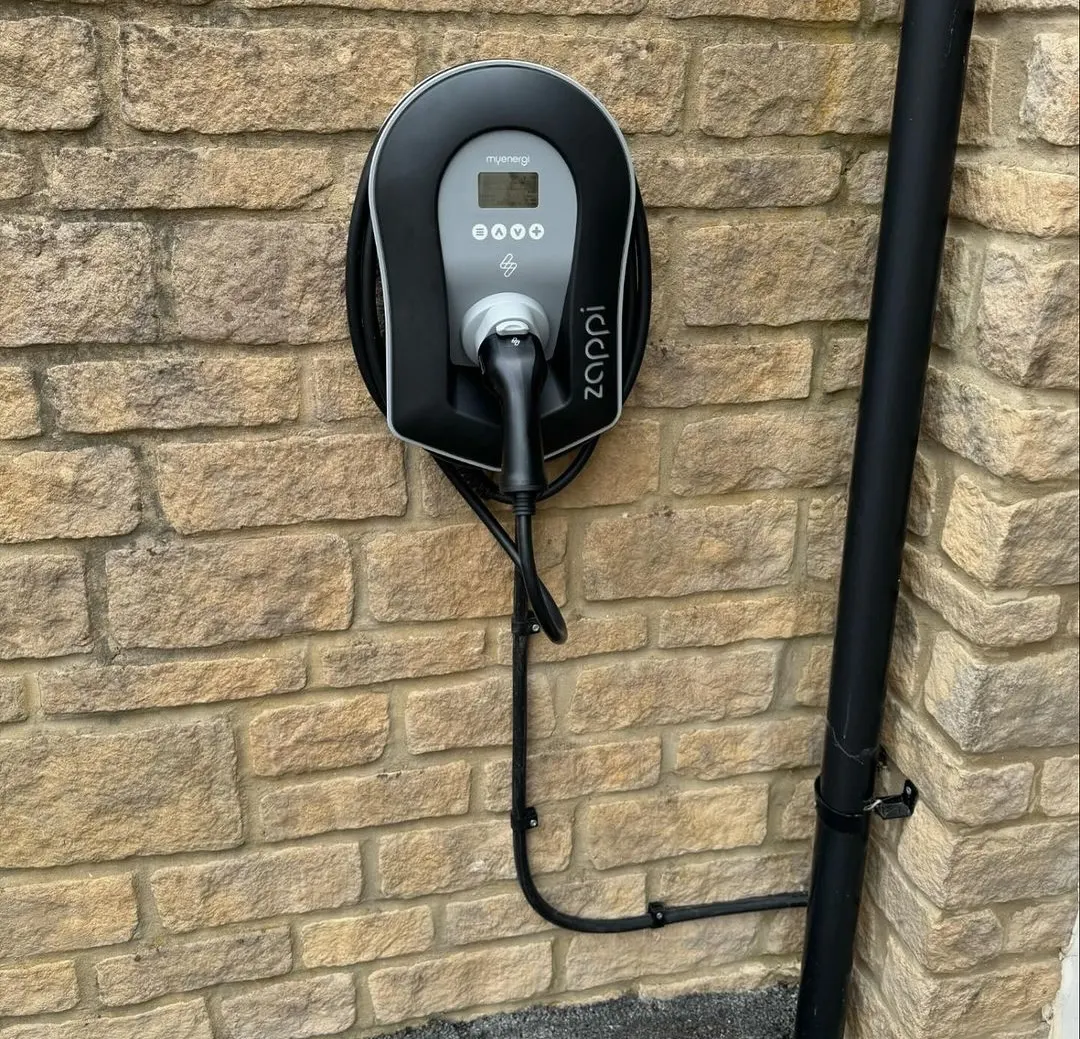
Check the exact proposed model against the eligible chargepoint list, updated on 23 October 2026 when checked. A brand name alone is insufficient: confirm the model and relevant residential or commercial category. Keep the grant check separate from assessing your electrical supply, protective arrangements and cable route.
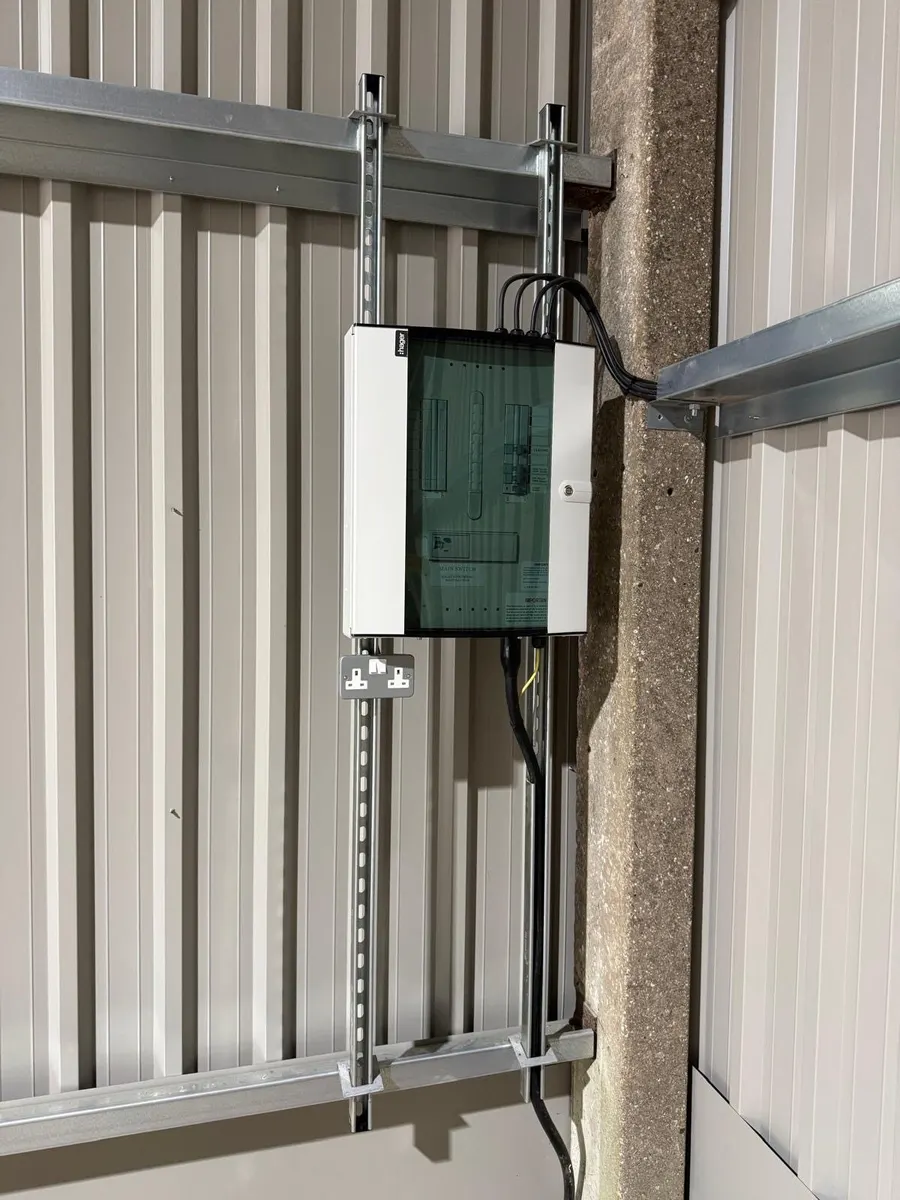
Our guide to EV chargers and existing consumer units explains why a new board is not an automatic requirement. If alterations are proposed, use the consumer unit quotation guide to clarify their scope. Neither a favourable grant decision nor a charger’s eligibility proves the existing installation needs no work.
Get permissions, then approval, then installation
For a household application, organise the permission and document pack first. Renters need the signed tenancy evidence specified by the scheme; flat owners need the required address evidence. Obtain the authorised installer’s quotation and vehicle documents. Use the official application rather than treating a supplier’s eligibility quiz as government approval.
Wait for OZEV’s eligibility confirmation and follow the instructions sent to you and the installer before installation. Under the renters and flat owners route, the installer deducts the grant from the invoice and claims after completion. Keep the approval, itemised invoice, permissions and handover records together. Ask what happens to the quotation if the application is declined.
A separate government consultation published on 21 October 2026 proposes improving tenant and leaseholder access to charging. A consultation is not an existing automatic right to install or override a lease. Obtain the permissions the live scheme and your property actually require.
When you contact Jack, send the postcode, tenure, parking arrangement, vehicle and proposed charger position, plus photographs taken safely with covers closed. Explain whether grant funding matters before booking. Use the EV charging enquiry route to request a fixed quotation for the agreed electrical work and verify grant authorisation separately before relying on a deduction.
If assessment identifies existing defects, the EICR code guide helps distinguish report findings from optional additions. For a separate attendance, clarify the call-out charge and included time rather than assuming the grant covers every visit.
Customer reviews
What customers say about Jack
Jack did a great job installing new spotlights in our kitchen. He turned up on time, worked efficiently, and everything was finished to a really high standard.
Jack and his colleague Freddie arrived on time, worked efficiently, and everything was completed to a really high standard. The price was fair and they left everything clean and tidy afterwards.
I contacted JI Eletrical within 24hrs with an issue and they came to fix it quickly and not had a problem since!
EV charger grant questions
How much is the EV charger grant in 2026?
The renters and flat owners grant covers 75% of eligible chargepoint purchase and installation costs, capped at £500. The cap increased from £350 on 1 April 2026. Other routes have their own conditions; check the current official scheme before booking.
Can I get a grant if I own a house with a driveway?
The renters and flat owners route excludes people living in a house they own. The on-street household route is for people without private and exclusive off-street parking. Do not assume an ordinary owner-occupied driveway installation receives a grant.
Can I claim after my EV charger has been installed?
The household routes cannot be backdated for a chargepoint already installed. Obtain the required permissions and follow OZEV approval instructions before installation.
Does on-street grant approval give me a reserved parking space?
No. The on-street grant does not confer ownership, exclusive use or reserved access to a road space. It requires a qualifying permanent cross-pavement solution and local highways consent, alongside other scheme conditions.
Does any electrician qualify to install a grant-funded charger?
No. Use an OZEV-authorised installer and an eligible chargepoint model for the relevant scheme. Check the official finder and exact model list before relying on grant support. This guide makes no claim about JI Electrical’s OZEV status.
Sources checked on 27 October 2026
The scheme pages linked above govern eligibility; the examples here are explanatory only.
- OZEV: current grant overview
- Renters and flat owners: eligibility and application
- On-street households: permissions and conditions
- Residential landlords: current scheme
- Workplace Charging Scheme
- Official installer finder and eligible models
- Eligible vehicles and VAT rates
- Tenant and leaseholder charging consultation