
An EV charger does not automatically need a new consumer unit. There are three different possibilities: use the existing board, install a separate board for charging, or replace the main board. The right choice depends on the installation and the charger, rather than the age of the box or a visible spare slot. Ask for the reason behind the proposed arrangement before agreeing to a replacement.
For a home in Cirencester, start with the proposed parking position and the existing electrical installation. Jack's EV charger installation service is the route to discuss the property. This guide explains the decisions to resolve, not a promise that a particular board, charger or installation method will suit your home.
A dedicated circuit is different from a replacement board
A consumer unit distributes electricity to the home's circuits and contains protective equipment. A typical home wallbox has a dedicated circuit, but that circuit does not necessarily require replacing the board serving the rest of the house. The IET's guidance on separate EV consumer units describes both replacement and additional-board approaches when protective equipment cannot readily fit the existing arrangement.
Use the following comparison when reading a quotation. These are possible design outcomes, not a description of Jack's standard method. More than one item of work may be required, and a separate board still needs a suitable supply and protection.
| Possible outcome | What must be established | What it does not prove |
|---|---|---|
| Retain the main board | Condition, loading and compatible equipment support the new circuit | An empty position alone is insufficient |
| Add a separate EV board | The supply, location and protective arrangement are suitable | The incoming supply has gained extra capacity |
| Replace the main board | There is a clear condition, compatibility or wider installation reason | Every existing cable or circuit has been renewed |
| Resolve supply or other defects first | The relevant network or installation issue has been assessed | A board purchase alone makes charging possible |
Ask the electrician to identify which finding drives the recommendation. If the answer is limited space, ask whether a separate assembly is an appropriate alternative. If the answer is damage or unsuitable existing equipment, ask what needs correcting and how the quotation deals with it. An explanation tied to the property is more useful than a blanket rule about all old fuse boxes.
Why a spare slot is only the start
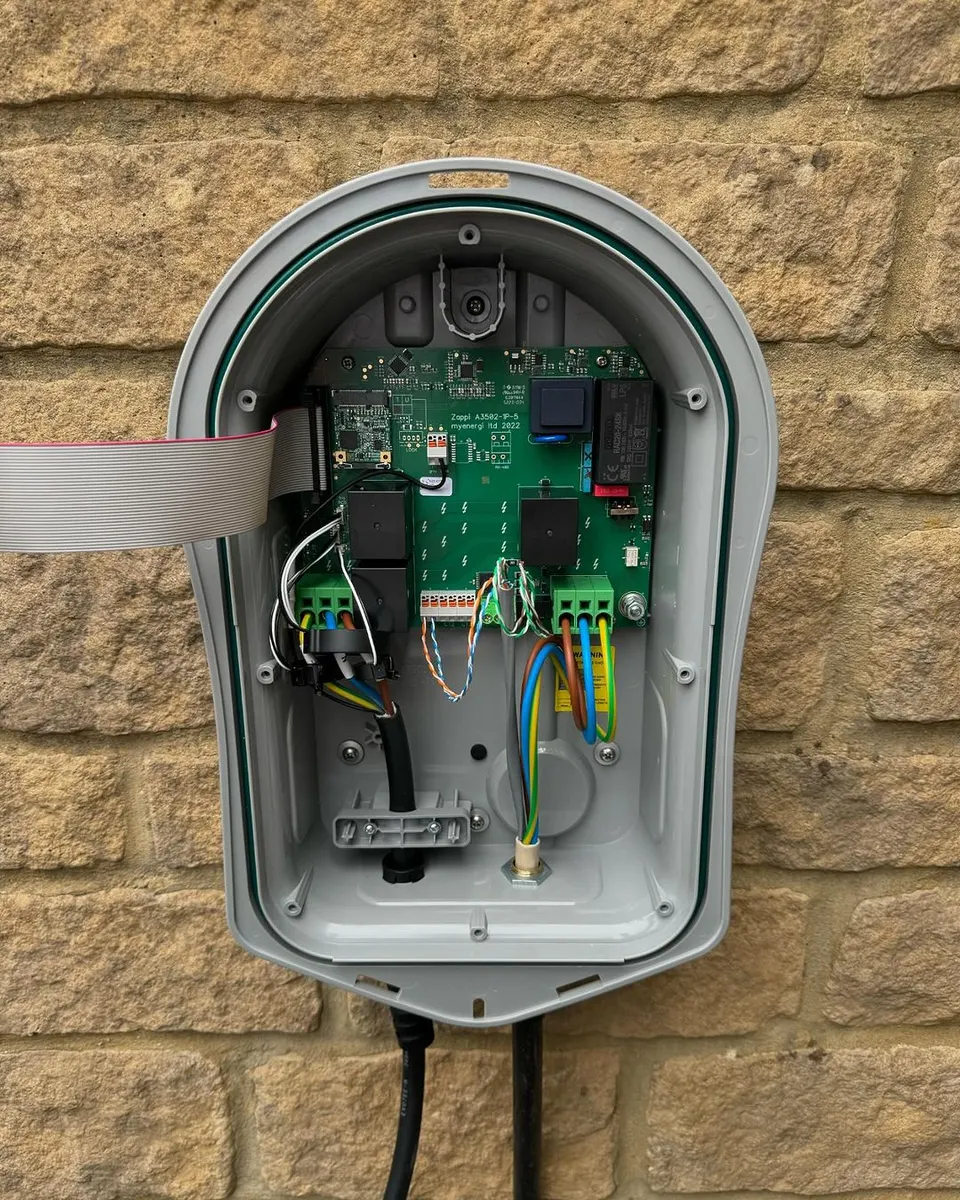
A photograph may show a blank position, but it cannot establish whether a suitable device can be added. Physical fit and a familiar brand name are not enough. The IET's component compatibility explanation says suitability must be established for the assembled board. That includes the manufacturer's verified arrangements, rather than treating similarly sized components as interchangeable.
For the homeowner, the useful question is simple: what evidence supports keeping this board for the proposed circuit? Ask for the board identification and the intended protection to be recorded in the scope. Leave component selection and any internal inspection to the electrician. Do not remove the cover to photograph labels, measure spare spaces or identify wiring.
Board condition and suitability are also separate from the condition of every circuit in the house. A new enclosure cannot repair concealed cable damage elsewhere. Conversely, a board fitted to an earlier standard is not automatically unsafe because a newer edition exists. The consumer unit warning-sign guide explains why an assessment should precede a replacement decision.
The charger model changes the protection question
Residual-current protection helps disconnect electricity when certain leakage faults occur. EV charging requires attention to direct-current leakage as well as the rest of the protective arrangement. The IET's EV RCD guidance explains why the protection within the charging equipment and the protection elsewhere in the installation must be considered together.
A product description saying that a charger has built-in protection does not settle the whole installation design. Ask the electrician to use the current installation instructions for the exact model and confirm any external protective equipment. Avoid choosing a protective device from an online photograph or assuming that a charger bought for another property can be transferred without assessment.
Earthing and protection against relevant supply faults require their own consideration. A new board, a surge-protection label and a smart-charging app describe different things. They are not interchangeable evidence that the electrical design is complete. The quotation should identify the proposed protection without expecting you to become the designer or open the equipment yourself.
Since 15 October 2026, the previous Amendments 2 and 3 have been withdrawn and Amendment 4 is the current basis for new work. The IET's April 2026 clarification also explains that standards are not retrospective. Historical technical explainers remain useful background, but the installation design must use current requirements and the relevant manufacturer instructions.
A new consumer unit does not enlarge the incoming supply
Keep the household supply question separate from the board question. Cooking, electric showers, heating and charging can overlap. The assessment needs to consider the proposed demand and the supply arrangement, not merely add up empty circuit positions. Tell the electrician about planned heat pumps, batteries, solar equipment or another vehicle so the discussion covers the intended use.
Load management may reduce charging power when other demand is high. The IET's load-curtailment questions and answers explain the design considerations. The practical trade-off is that charging can take longer while capacity is being reserved for other loads. Ask how the proposed arrangement affects the time available to charge your vehicle.
A scheduled overnight charge and a system designed to limit the electrical load are different features. Do not assume that choosing an off-peak time resolves a capacity problem. Ask what happens if another appliance operates during charging, and whether the required monitoring and control equipment is included. This should be resolved before agreeing an installation date.
The Energy Networks Association's current connection guidance requires the network operator to be informed and explains when contact is needed before installation. Its current application route is ENA Connect Direct. Ask who will handle the relevant application or notification and whether any network assessment or work is a dependency. A promised board replacement is not confirmation of network approval.
Resolve the supply question
Plan the complete electrical scope.
Mention other large electrical loads and future plans before agreeing the charger arrangement.
Ask for a quoteCall 07380 944864
The parking space and cable route still matter
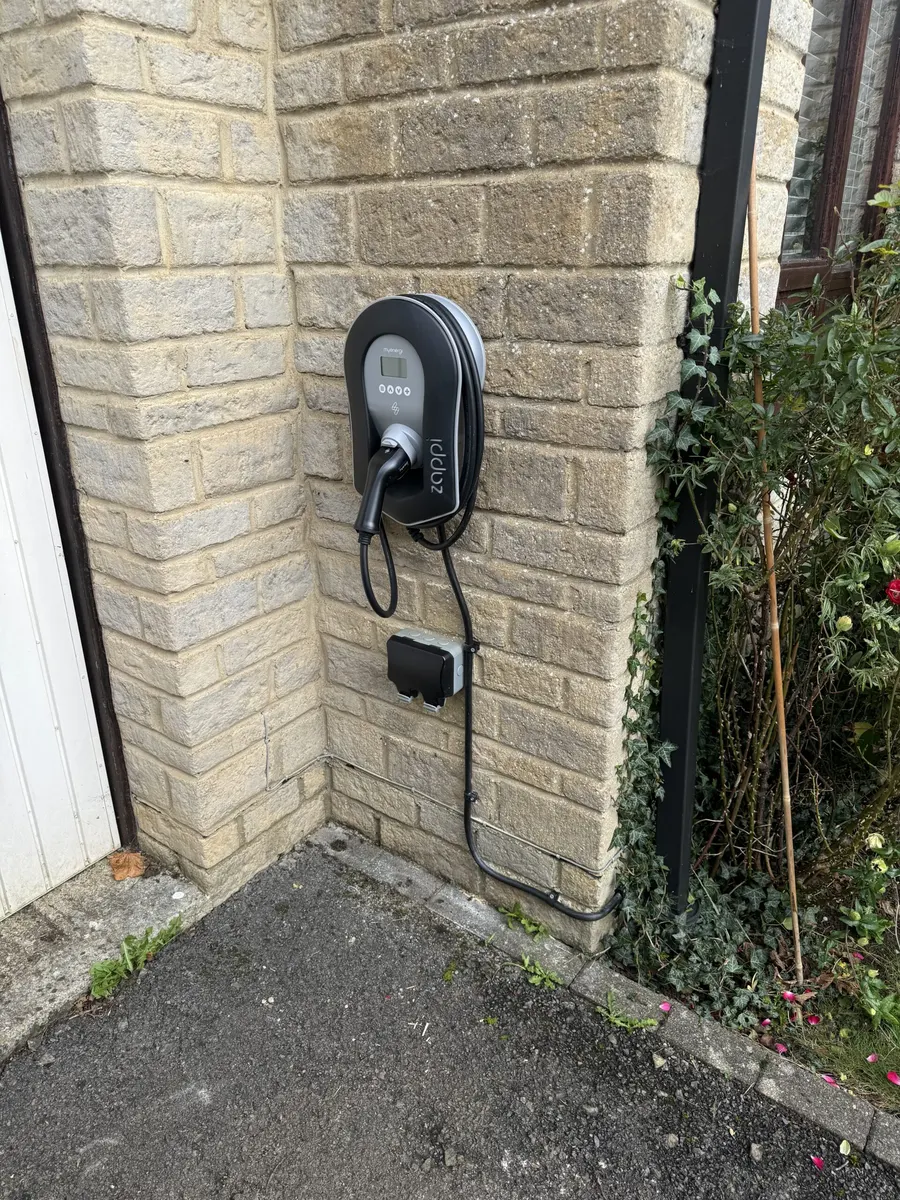
Mark the proposed charger position on a simple photograph or sketch. Include the normal parking position, the route between the car and charger, and any garage or outbuilding involved. An existing garage board is useful information, but its presence does not establish that its supply can support charging. Ask for the complete route to be assessed.
If a separate board is proposed outdoors, its position and environmental suitability belong in the scope. The IET's external-board guidance considers weather, condensation, impact and the complete assembly. It also reports the ENA's advice against treating the meter cabinet as spare space for a consumer unit. Do not plan equipment inside that cabinet simply because there appears to be room.
Discuss drilling, visible cable routes, access and any permissions before accepting the quote. For a Cirencester flat or shared parking arrangement, establish who owns the relevant walls and parking space. If the property is listed, flag that immediately rather than assuming a small electrical installation cannot affect protected fabric. The older-property planning guide gives the consent questions to raise.
Compare the work, not just the name of the board
Ask each quotation to state the exact charger, intended location, cable route, board arrangement and protective equipment. Have any necessary repairs, monitoring equipment and network dependencies identified separately. Where surface repairs or groundworks are relevant, agree who carries them out. A short line saying “charger supplied and fitted” leaves too much room for different assumptions.
There is no JI Electrical tariff in this article. For attributed market examples, use the EV charger cost guide and consumer unit replacement cost guide, then ask Jack for a fixed quote for the agreed work. Confirm the total payable and VAT treatment rather than adding unrelated guide figures together.
If a wider refurbishment is being considered, separate the charger work from a rewire, other power alterations or a main consumer unit upgrade. A combined quotation can still make each part clear. Ask what remains usable during connection work and mention essential equipment before arrangements are made.
Keep three different records distinct
Electrical certification, Building Regulations records and the network application or notification address different responsibilities. Under England's Approved Document P, a new circuit and a consumer unit replacement are notifiable work. Confirm the applicable notification route before work starts; do not infer scheme membership from this guide.
Ask for the Electrical Installation Certificate and relevant schedules for the new circuit, along with the applicable Building Regulations record. The IET publishes current model forms showing the distinction between installation certificates and condition reports. An existing EICR can help the assessment, but it does not certify a charger circuit added afterwards.
At handover, ask for the charger instructions, a demonstration of normal operation, the agreed charging limits and a clear explanation of what to do if a fault appears. Keep the quotation and records together for later alterations or a sale. The seller's electrical paperwork guide explains why these documents should remain identifiable.
For a wider renovation, the rewire certificate guide helps organise completion records. If the property is managed for someone else, use the letting-agent electrical records checklist to keep inspection and new-work documents distinct.
What to send Jack before a quotation
Send the postcode, parking location, vehicle or preferred charger model, and any existing electrical records. If safe and readily accessible, include photographs of the closed consumer unit and the proposed route. Keep all covers in place and do not touch supply equipment. Say whether you rent, share access or have restrictions on alterations.
Then ask for the proposed board option and its reason in writing, together with unresolved survey or network dependencies. A useful next step is a property-specific assessment through the EV charging service. You can contact Jack to discuss the scope and request a fixed quote once the requirements are established.
For a rental property, keep the charger work records with the existing report and check the landlord EICR renewal date separately.
If charging is part of a wider renovation, use the three-bedroom rewire budget planner to separate the charger scope from the rest of the house.
Before relying on a funded installation, check which EV charger grant route fits your parking and applicant status. Supply assessment, OZEV authorisation and grant approval are separate checks.
Customer reviews
What customers say about Jack
Jack did a great job installing new spotlights in our kitchen. He turned up on time, worked efficiently, and everything was finished to a really high standard.
Jack and his colleague Freddie arrived on time, worked efficiently, and everything was completed to a really high standard. The price was fair and they left everything clean and tidy afterwards.
I contacted JI Eletrical within 24hrs with an issue and they came to fix it quickly and not had a problem since!
EV chargers and consumer units: questions
Does every EV charger need a new consumer unit?
No. A suitable existing board may supply the dedicated circuit, a separate EV board may be appropriate, or the main board may require replacement. The choice needs a property-specific assessment of condition, loading, compatible protection and supply.
Can a charger be added if my fuse box has a spare slot?
Possibly, but an empty position is not proof of suitability. The electrician must assess the board, loading, compatible devices, protection and complete circuit design.
Does replacing the consumer unit increase supply capacity?
No. The incoming electricity supply is a separate issue. The proposed household demand, load management and any network requirements must be assessed.
Does built-in charger protection remove the need for external protection?
Not automatically. The exact equipment instructions and complete installation determine the protective arrangement. Ask the electrician to confirm what is required for the selected model.
What paperwork should I keep after an EV circuit is installed?
Ask for the Electrical Installation Certificate and relevant schedules, applicable Building Regulations record, network application or notification information, charger instructions and agreed operating limits. These records serve different purposes.
Sources and further reading
Primary guidance checked on 21 October 2026. The earlier technical articles explain principles; current installation design requires the current standard and exact equipment instructions.