
Compare the complete job, then the total price
A consumer unit quotation is easier to judge when it describes the installation it will leave behind. Before comparing two totals, find out whether both electricians are pricing the same circuits, protection, checks, records and repairs. A cheaper figure with several undefined extras can be difficult to compare with a fixed quotation for a clearly described job.
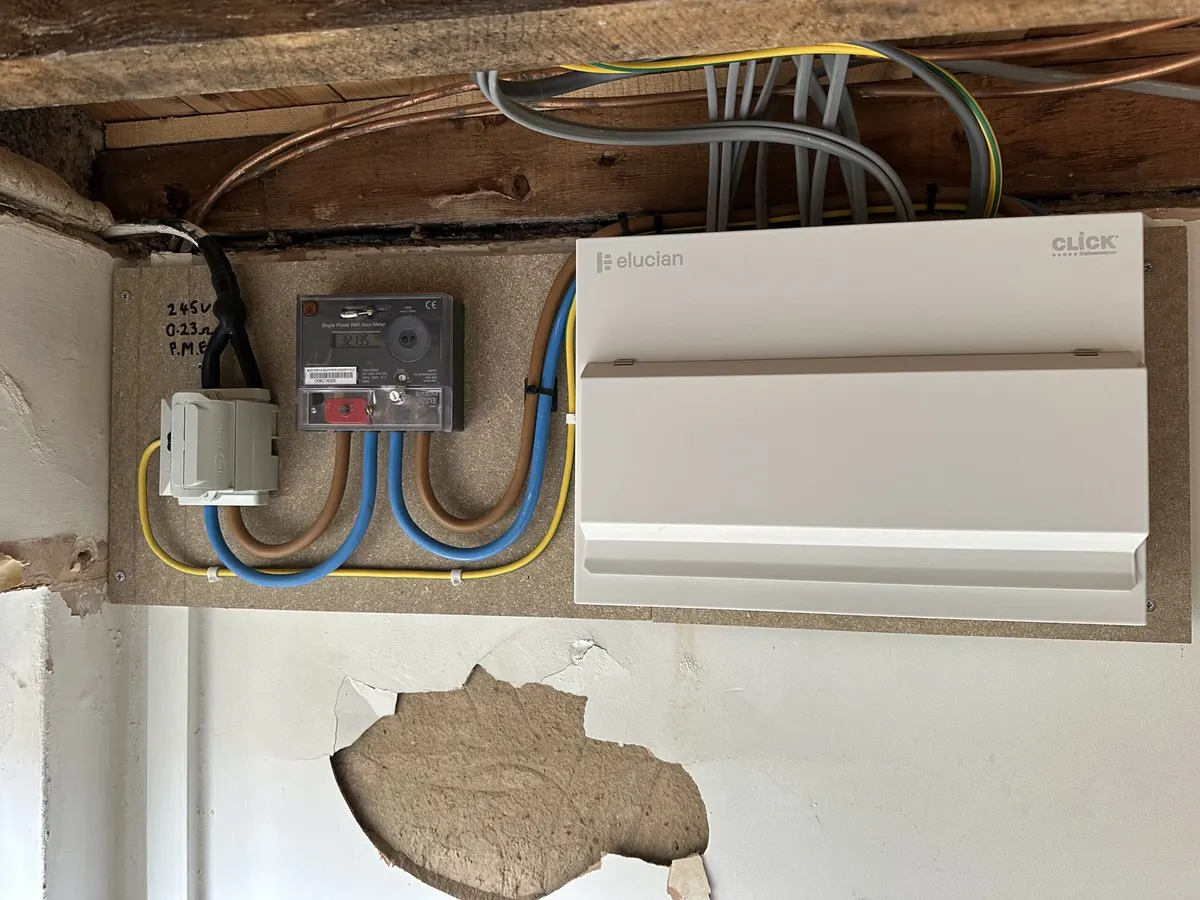
For a home in Cirencester, start with the consumer unit assessment and upgrade service. The useful first question is what needs changing and why. A photo can help explain the starting point, but the condition of circuits and supply arrangements needs professional assessment. Do not remove the board cover to obtain a photograph.
This guide is a quotation workbook. Use it to check a budget, identify what a supplier has included and prepare the information needed for a fixed price. It complements the guide to what a consumer unit upgrade includes, which explains the assessment, installation and handover stages in more detail.
A dated market benchmark, with VAT made explicit
Checkatrade's June 2026 guide, checked on 7 October 2026, gives typical UK variations from £350 for six circuits to £800 for twelve or more. The separate range does not expressly state VAT treatment. These are market guide figures, not JI Electrical prices or a Cirencester quotation.
Its component table is explicitly marked plus VAT: £250 for a populated ten-way RCBO unit, £160 installation and £75 removal. That illustrative subtotal is £485 before VAT. At the standard 20 per cent VAT rate, £485 × 0.20 = £97, giving £582 including VAT. This is arithmetic on published components, not a complete installation quote; other work may be additional.
Use a national benchmark as a starting point for a conversation rather than an entitlement to a particular total. Ask the supplier to write the final amount payable and the VAT position on the same quotation. If a figure is an estimate, ask what still has to be assessed before it can become a fixed quotation. Do not add an assumed local premium or discount merely because the property is in Cirencester.
The seven lines a replacement quotation should resolve
Send the same brief to each electrician. Then use this table to identify differences before asking anyone to lower a price. A clear inclusion can be compared; an unanswered question should be resolved before booking.
| Part of the job | Ask for this in writing | Why it changes the comparison |
|---|---|---|
| Starting assessment | What inspection or pre-work survey is included, and whether a separate EICR is proposed | Different starting evidence can produce different repair assumptions |
| Board and devices | Proposed equipment, circuits served, protective devices and spare capacity | A bare enclosure price does not describe the complete assembly |
| Supply arrangements | Who organises safe isolation and any supply-side work | Another organisation or appointment may be needed |
| Existing defects | Known repairs included and how newly discovered faults will be authorised | An undefined repair allowance can change the final bill |
| Location and finishes | Same-position replacement or relocation, waste removal and making good | Cable alterations and decorating are separate scope decisions |
| Testing and records | Inspection, testing, EIC schedules and Building Regulations notification route | A physically fitted board is not the complete handover |
| Payable total | Fixed price or estimate, VAT treatment, exclusions and payment terms | This identifies what you will actually pay and what remains uncertain |
The table is also useful if you already have a quotation. Highlight anything that cannot be answered from the document and send those questions back together. Keep the replies with the quotation. Our seven checks before choosing an electrician cover the wider checks on scope, registration evidence and records.
Count circuits and planned changes, not just bedrooms
Tell the electrician about extensions, outbuildings and separately supplied equipment as well as the main house. A description such as “three-bedroom home” is useful background, but it does not identify every circuit. A kitchen alteration or a previous extension may have changed the installation without changing the bedroom count.
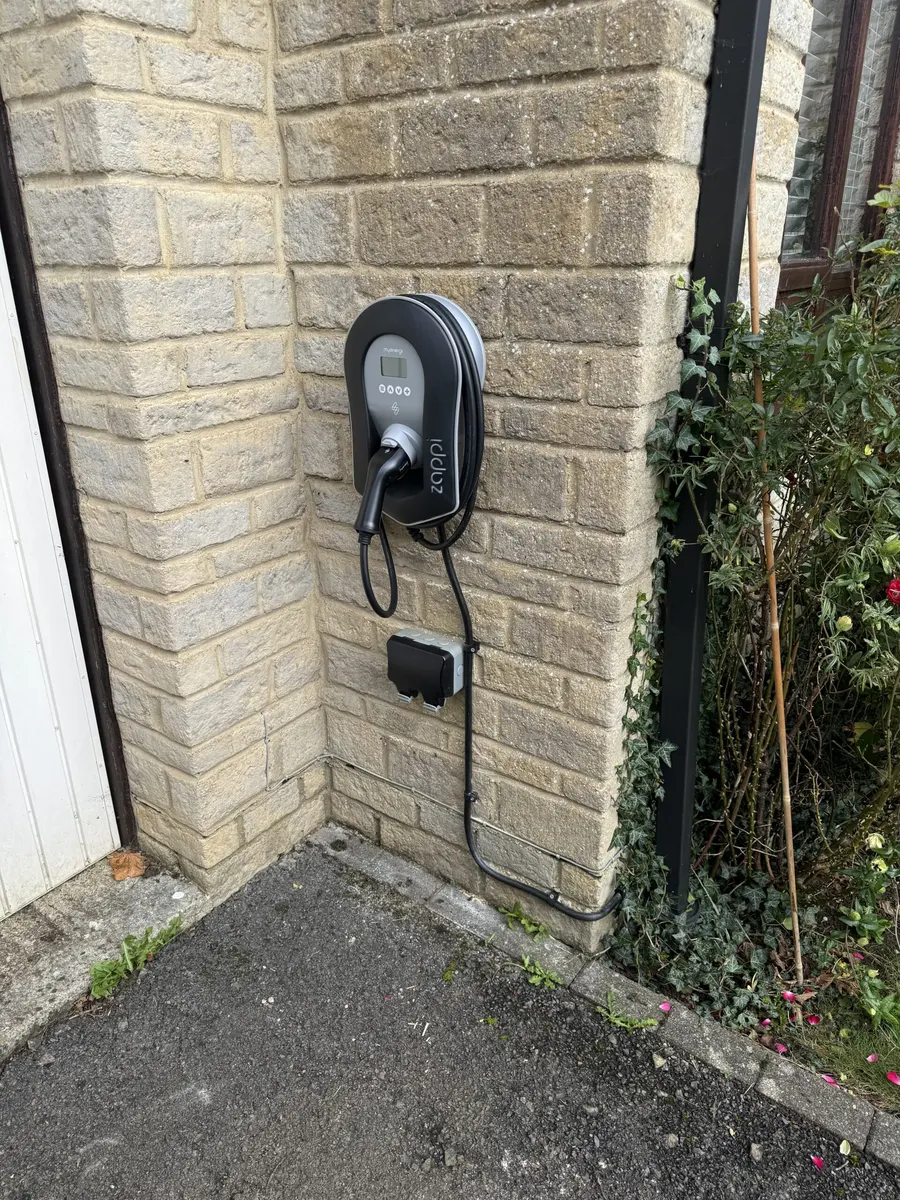
Also disclose work you are considering, even if it is not part of today's quotation. For example, mention a future charger when discussing home EV charging. Ask whether the proposed arrangement allows for that plan, what has actually been assessed and what would need a separate quotation later. Spare space by itself is not a promise that every future load can be connected.
Keep new work identifiable. If you also want lighting or socket alterations, ask for them to appear as separate lines. That lets you compare the board replacement consistently and decide which optional work to commission. It also avoids assuming that buying a larger board includes the wiring for new outlets or appliances.
Ask what the proposed protection does
A quotation should explain the protective arrangement in language you can follow. An RCBO combines residual-current and overcurrent protection. An RCCB provides residual-current protection but does not itself provide overload protection. The IET's protective-device FAQs explain why compatibility, coordination and manufacturer instructions matter.
Rather than specifying devices from a shopping list, ask the electrician why the proposed arrangement suits the circuits and whether surge or other protection is required. Ask which devices are included in the total. “New metal board” describes an enclosure, but does not by itself tell you how the connected circuits will be protected.
If the reason for the quotation is an existing report, provide the full report, including schedules. The EICR code guide helps you understand the observations. Ask the electrician to connect any proposed work to the finding it addresses, rather than treating all improvements as one unexplained replacement package.
Assessment and a full EICR are different scope questions
Electrical Safety First's September 2026 replacement guide recommends an EICR before a planned change. If the customer declines, it requires a pre-work survey. Ask which assessment is proposed and priced. Do not assume every board quotation includes a full condition report.
The same guide says age, rewireable fuses or a plastic enclosure alone do not establish a need for replacement. Supply equipment, earthing, bonding and connected circuits must be considered. A dangerous circuit cannot simply be reconnected as part of a planned board change. These are reasons to establish the scope before agreeing a price.
If a separate inspection is proposed, compare it using the EICR cost and scope guide. Ask whether its price is separate, included or credited under stated terms. An existing report may be useful evidence, but the installer should explain what further checks they need before accepting responsibility for the new work.
A replacement also does not automatically mean a whole-house rewire. If broader work is suggested, ask which circuits need attention and what evidence supports it. The full versus partial rewire guide is useful when the proposed scope extends beyond the board. For period properties, the older-home planning guide helps prepare questions about routes and finishes.
Resolve the exclusions
Ask what is included before booking
Share the circuits, planned changes and access information, then ask for equipment, checks, VAT and any separate repairs in writing.
Ask for a quoteCall 07380 944864
Agree how extras will be handled
Ask for known defects to be priced before work starts. For anything discovered later, agree how the electrician will explain the finding, proposed repair, additional cost and effect on the programme. Keep a written record of approval. This is particularly useful when a landlord, managing agent or another family member is arranging the work on the owner's behalf.
A practical variation process has three parts: identify the issue, explain the available safe options and confirm the additional scope before proceeding. Ask what happens if a circuit cannot safely be restored immediately. The answer should include how the property will be left and what follow-up is needed. Do not make a budget saving by insisting that a dangerous circuit be reconnected.
Relocation deserves its own description. Moving the board is a different request from replacing it in the existing position. Ask about cable routes, access, any supply-side arrangements and the boundaries of plastering or decorating. If you are comparing quotes after an unsatisfactory inspection, use the failed-EICR action plan to keep required remedial work distinct from optional improvements.
Plan the interruption and the paperwork
Ask Jack for the expected power interruption for your property once the work is scoped. Explain any medical equipment, home-working requirement, alarm, refrigeration concern or access restriction before agreeing the date. Avoid relying on a generic installation time as a promise for an unassessed home. Confirm whether another organisation's appointment is needed and who will organise it.
Domestic consumer unit replacement is notifiable work in England. Approved Document P sets out the notification framework. Ask which route will be used and whether associated costs are included. GOV.UK explains competent-person schemes and their self-certification route; ask for current evidence rather than assuming an electrician's scheme membership.
Keep the Electrical Installation Certificate and its schedules for the completed work. The IET publishes model electrical forms, including EICs and condition reports. An EIC records installation work; an EICR assesses existing condition. Building Regulations compliance records answer another question. Our electrical handover records guide explains these document boundaries.
For rented homes, keep the landlord inspection duties in view when agreeing repair work. Compare a separately proposed inspection using the EICR quotation guide, so the two scopes remain clear.
Send Jack a brief for a fixed quote
Include the postcode, property type, reason for the enquiry, accessible photos taken with the cover closed, any previous report and the changes planned. Describe where the board is and whether access is restricted. State whether you want a same-position replacement or are considering relocation. Send any existing quotation questions together so the response can deal with the complete scope.
Ask for the total JI Electrical price, VAT treatment, included checks, equipment, certification and exclusions in writing. Then compare that quotation with the same information from any other supplier. Contact Jack through the consumer unit upgrade service or enquiry page for a fixed quote based on the actual property.
Customer reviews
What customers say about Jack
Very happy to recommend Jack. He's highly efficient, professional and straightforward to work with.
He replaced the fuse board efficiently, providing all the required certifications within a day.
Work done to a high standard, areas left clean and super polite along with his colleague, Freddie.
Consumer unit cost questions
How much does consumer unit replacement cost in Cirencester?
Checkatrade's June 2026 UK guide gives £350 to £800, with range VAT unspecified. This is not a JI Electrical price. Ask Jack for a fixed quotation for your installation.
Is VAT included in a consumer unit replacement price?
Ask the supplier to state it explicitly. A plus-VAT price excludes VAT; where the standard 20 per cent rate applies, multiply that amount by 1.20. Do not assume that an online range or a quotation includes VAT unless it says so.
Does a consumer unit replacement quote include an EICR?
Ask what is included. Electrical Safety First recommends an EICR before a planned replacement and requires a pre-work survey if the customer declines it. A quotation for a board change does not automatically include a full condition report.
Will I need a full rewire when replacing the fuse box?
Not automatically. Ask which circuits need work and what inspection or test evidence supports that conclusion. Define necessary repairs separately from optional changes before agreeing the complete quotation.
What records should I receive after replacement?
Keep the Electrical Installation Certificate and its schedules for the completed work, plus the appropriate Building Regulations compliance record. Ask which notification route will be used and whether its costs are included in the quotation.
Sources and market evidence
Sources checked 7 October 2026. Market figures are dated guide prices, not JI Electrical quotations.