
A three-bedroom rewire needs two budgets: the electrical quotation and the cost of getting the house usable afterwards. For comparison, Wired & Certified publishes a typical Greater Manchester range of £3,800 to £5,200 including VAT, while Checkatrade’s national table gives £6,225 plus VAT, £7,470 at 20%. These are researched market benchmarks, not JI Electrical prices or a Cirencester average.
Start with the rooms you actually have, the work the installation needs and whether anyone will be living there. This planner brings the price, programme and disruption questions together. For the wider factors behind a quotation, read the general house rewire cost guide. To discuss your property, use Jack’s full and partial rewire service.
What published three-bedroom rewire figures actually cover
The examples below were checked on 26 October 2026. They describe different markets and assumptions, so do not combine them into a universal minimum and maximum. A supplier’s short installation programme also does not establish when your decorators can finish or when your household can move back in.
Read the underlying Wired & Certified, Greater Manchester, Checkatrade, national cost table and 0800 Rewire, empty-property example guides alongside their assumptions.
| Published source | Price and VAT basis | Scope or timing boundary |
|---|---|---|
| Wired & Certified, Greater Manchester | Typical three-bedroom semi: £3,800 to £5,200 including VAT | The supplier’s 2026 guide allows five to ten working days |
| Checkatrade, national cost table | Three-bedroom house average: £6,225 plus VAT, £7,470 at 20% | Table marked October 2026; an average, not a fixed quote |
| 0800 Rewire, empty-property example | Two-to-three-bedroom house built from the 1940s onwards: £4,000 including VAT | No carpets or furniture; its stated allowance is two to four days |
The two supplier pages do not display a tariff publication date, so the check date is the freshness marker. Their figures are useful comparisons, not proof that another contractor can match the price or speed. Ask each bidder what property, fittings, access, testing and finishing assumptions underpin the total.
Compare the payable total before comparing the headline
GOV.UK gives the standard VAT rate as 20%. Where that rate applies, £6,225 multiplied by 0.20 is £1,245 VAT, giving £7,470 payable. A £5,000 quotation excluding standard-rate VAT would become £6,000. Do not add VAT again to an inclusive price, or assume every contractor charges it.
Keep three columns in your comparison: the electrical total including applicable VAT, separately quoted finishing work, and household costs. Leave an unpriced item visibly unresolved rather than entering zero. If a quotation says “making good included”, ask whether that means filling cable chases, a full wall skim, matching decorative plaster or repainting.
Use a complete-budget equation: electrical total including applicable VAT, plus your written finishing quotations, plus your agreed household costs. The £7,470 national benchmark above illustrates only the first line. It does not price your plasterer, temporary accommodation or storage. Leave those lines open until the relevant supplier confirms them.
Make a three-bedroom room schedule before the survey
A third bedroom used as an office has different practical needs from a guest room. Write one short brief per bedroom, then cover the rest of the house. Mark furniture positions and planned equipment without deciding circuit sizes or protective devices yourself. The electrician designs the installation from the agreed requirements.
For bedroom one, note the bed position, bedside charging and lighting controls. For bedroom two, record whether desks or wardrobes restrict usable walls. For bedroom three, say whether it is an office, nursery or spare room, including foreseeable changes. A simple annotated plan is more useful than requesting the same unspecified socket allowance everywhere.
Then add the hall, stairs, landing, living spaces, kitchen and bathroom. Include the loft, garage or outside supply if you want it assessed or included. An extension can make a three-bedroom house electrically larger than its label suggests. Identify what remains undecided so the quotation can state an allowance or exclusion explicitly.
Separate the number and position of points from the finish of accessories. Ask which basic sockets, switches and light fittings are priced and how alternatives are approved. Our socket quotation checklist helps with that boundary. If garden power matters, include it in the enquiry rather than assuming the outside socket installation is part of the house total.
Does the whole three-bedroom house need rewiring?
Bedroom count and age cannot decide that. Electrical Safety First says there is no fixed rewire interval, and old wiring is not automatically unsafe. Ask which inspection findings or planned changes justify complete replacement and whether defined existing circuits can remain.
Use the full versus partial rewire guide before comparing unlike proposals. A consumer unit change and a whole-house rewire are different scopes. The consumer unit budget guide helps identify board work separately. Neither a new board nor additional sockets proves that every cable needs replacing.
If you already have an EICR, provide the complete report and schedules. Ask the electrician to distinguish necessary safety work, recommended improvements and the extra installation you want. That keeps the budget connected to evidence and your plans, rather than treating the most extensive option as the inevitable starting point.
If you are still assessing the existing installation, use the fuse box assessment guide to frame the board questions. For a rental, keep the landlord EICR renewal record separate from certificates for proposed work.
Before comparing prices
Define what stays and what changes.
Share existing records, planned fittings and access constraints before requesting a fixed quote.
Ask for a quoteCall 07380 944864
Working days are different from the date the house is ready
The published allowances in the comparison table range from a specialist’s two-to-four-day empty-house example to five-to-ten working days in another supplier’s three-bedroom guide. The difference is a reason to examine assumptions, not to select a deadline from the internet. These are their market examples, never Jack’s programme.
Ask for milestones covering access preparation, electrical first fix, any intervening plastering, second fix, testing and handover. Confirm whether quoted days are electrician attendance days or a continuous calendar period. Ten working days spread around another trade can occupy more than two calendar weeks without anyone working ten consecutive weekdays.
Use the rewire timescale guide to discuss dependencies. Before booking a decorator, ask what must be finished and accepted first. Before booking removal dates, ask what “electrical completion” includes. The useful promise is the programme agreed for your actual property, with its assumptions recorded.
What changes if you stay in the house?
Discuss occupancy before a start date is agreed. List essential medical equipment, working-from-home needs, refrigeration, cooking, heating and access to washing facilities. Explain children’s or pets’ needs and which rooms cannot be cleared. Those details affect whether a safe workable arrangement is possible; they are not small-print matters for arrival day.
Do not assume power will return every evening because another supplier advertises that approach. Ask Jack what interruptions the proposed work involves and whether temporary arrangements or alternative accommodation are needed. Agree who moves furniture, lifts floor coverings and stores belongings. A clear room is not the same as a room whose fitted flooring can be lifted.
Keep household access separate from the work area and follow the electrician’s instructions. Never remove covers, disconnect equipment or start chasing walls to reduce the price. Electrical Safety First warns against DIY electrical work and drilling into concealed cables. Useful preparation is supplying information and arranging agreed access.

Finished rooms and older Cotswold houses need a route discussion
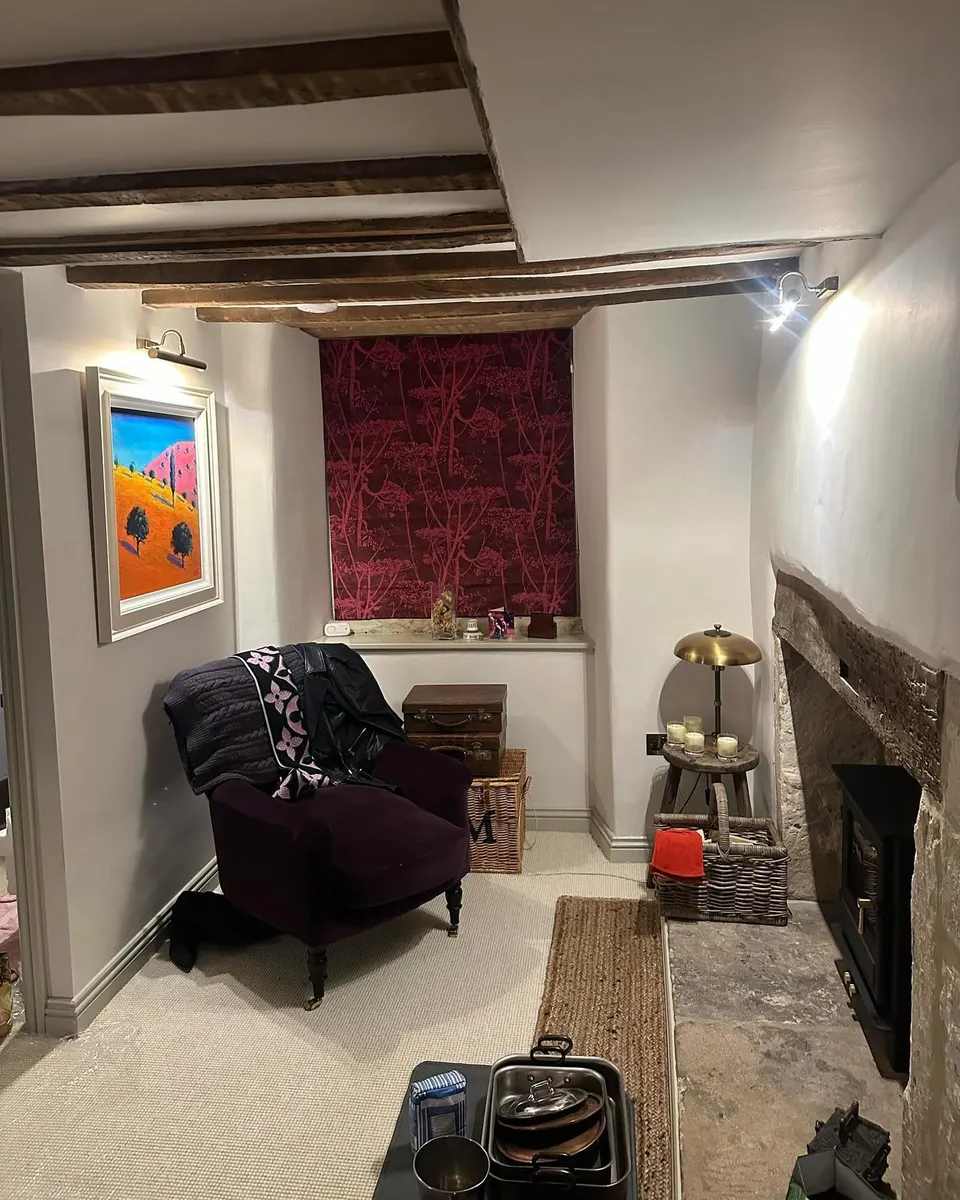
Tell the electrician about stone walls, exposed beams, decorative plaster, fitted cupboards and floors you intend to keep. Ask where access is likely to be required and which visible finishes need separate decisions. Photographs can show constraints, but they cannot establish hidden routes or the condition of concealed wiring.
For a listed property, check the permission position before agreeing invasive work. Cotswold District Council explains that listing covers interiors as well as exteriors. Ask the council about the proposed alterations rather than assuming internal electrical work is exempt. Our older-home rewire guide covers that planning conversation.
The photographs here illustrate rooms and finishes from Jack’s real uploads. They do not establish a three-bedroom rewire price, duration or customer result. Your quotation still needs a property-specific assessment, including the electrical work and any consent or other-trade dependency that could change the programme.
Keep testing and the Building Regulations route in the quote
Approved Document P covers electrical safety in England dwellings, including inspection, testing, information and notification. Ask for the Electrical Installation Certificate and appropriate schedules, plus the applicable Building Regulations record. Agree who handles notification and any associated charges before work starts.
GOV.UK describes competent person schemes as one compliance route. Ask how the chosen installer’s route applies to this work and verify any claimed membership directly with the scheme. This guide makes no claim about JI Electrical scheme registration. The rewire handover documents guide explains why the records serve different purposes.
Send one brief so every quotation answers the same question
Send Jack the property details, floor plan, room schedule, occupancy, existing reports and planned renovation dates. State whether finishes are being retained and which outside or additional supplies need discussion. Ask for a fixed quote with the payable VAT position, exclusions, approval process for changes and programme assumptions.
Read each returned quote against that same brief. Resolve missing items in writing before choosing a price, and keep an agreed version when positions or fittings change. To take the next step, contact Jack about rewiring your Cirencester or Cotswolds home. A clear scope makes the price, disruption and handover easier to plan together.
If the renovation includes home charging, use the EV grant eligibility route map before deducting any funding from the household budget. Owning a house with a driveway does not qualify you for the renters and flat owners route.
Customer reviews
What customers say about Jack
Jack did a great job installing new spotlights in our kitchen. He turned up on time, worked efficiently, and everything was finished to a really high standard.
Jack and his colleague Freddie arrived on time, worked efficiently, and everything was completed to a really high standard. The price was fair and they left everything clean and tidy afterwards.
I contacted JI Eletrical within 24hrs with an issue and they came to fix it quickly and not had a problem since!
Three-bedroom rewire questions
How much does it cost to rewire a three-bedroom house?
Published market examples checked on 26 October 2026 include £3,800 to £5,200 including VAT in Greater Manchester and Checkatrade’s national £6,225 plus VAT benchmark (£7,470 at 20%). Different scopes and locations apply. These are not JI Electrical prices or a Cirencester average. Ask Jack for a fixed quote.
How long does a three-bedroom rewire take?
The supplier examples in this guide include two to four days for a particular empty-house scope and five to ten working days in another supplier’s three-bedroom guide. They are market examples, not Jack’s programme. Confirm attendance days, gaps for other trades, testing and the date rooms will be usable.
Can I stay at home while my house is rewired?
This needs a property-specific safe working plan. Discuss essential equipment, power interruptions, access, children, pets and accommodation before booking. Do not assume electricity will return every evening.
Does the rewire price include plastering and decorating?
Only where the written scope says so. Confirm whether making good means filling chases, skimming walls, replacing floor coverings or repainting. Compare the electrical total, finishing quotes and household costs separately.
Must a house be rewired after a fixed number of years?
No. Electrical Safety First says there is no set rewire interval and old wiring is not automatically unsafe. Ask which condition findings and planned changes justify full replacement rather than defined partial work.
Sources checked on 26 October 2026
- Wired & Certified: Greater Manchester supplier benchmark
- Checkatrade: national cost table, October 2026
- 0800 Rewire: empty-property estimate and assumptions
- GOV.UK: VAT rates
- Electrical Safety First: rewire interval and DIY safety
- Cotswold District Council: listed buildings
- GOV.UK: Approved Document P
- GOV.UK: competent person schemes