
If a switch on your consumer unit keeps dropping, do not keep flicking it back up. Unplug everything on that circuit, reset it once, then plug things back in one at a time to see what brings it down. If it trips with nothing plugged in, will not reset, or trips again straight away, stop and call a registered electrician. Electrical Safety First says that if an RCD keeps tripping there is likely to be a fault that needs investigating, in an appliance or in the wiring.
This guide reflects the Electrical Safety First, Institution of Engineering and Technology (IET), NICEIC and GOV.UK pages opened on 2 November 2026. It is written for homes in Cirencester and the Cotswolds, but the steps apply anywhere in England. It is general guidance, not a diagnosis of your installation. For your own property, describe the problem to Jack and ask what he can do, or see JI Electrical’s consumer unit assessment page.
What to do the first time it trips
Most pages on this topic stop at “unplug things”. The IET’s consumer guidance is more exact, and the order matters. The steps below combine the IET consumer unit guidance and the NICEIC advice on sockets that stop working.
- 1Find the switch that has moved
NICEIC says to look in the consumer unit for switches sitting in a different position to the rest. Note which one it is, and whether other circuits went off with it.
- 2Unplug everything on that circuit
The IET says to remove the plug completely from the socket. Switching an appliance off at the socket is not the same thing.
- 3Reset once
With everything unplugged, the IET says the affected circuit-breaker or RCD could be reset. If it trips again straight away, NICEIC says not to try resetting it again.
- 4Plug things back in one at a time
If the switch stays up, reintroduce appliances individually. The one that brings it down is the likely culprit, and the IET says it should not be used again unless it has been repaired.
- 5Stop if it will not hold
If it will not reset with everything unplugged, the IET says to consult a registered electrical contractor who can test the installation and find the fault.
The IET also warns that repeatedly resetting a circuit-breaker or RCD on a fault could damage the device. One reset to learn something is reasonable. Ten resets in a row is not.
What you are seeing and what it points to
A tripped switch is a symptom, not a diagnosis. The table below sets out what each pattern points to, using only what the sources above say, so you know whether this is a job for a new plug or a phone call. Where a row says “call an electrician”, the reason is that the sources treat it as a possible installation fault.
| What you see | What it points to | What to do |
|---|---|---|
| It trips only when one particular appliance is plugged in | A fault in that appliance. The IET says a trip is more often an appliance than the installation | Stop using it until it has been repaired or replaced |
| It trips with everything unplugged, or will not reset at all | A possible fault in the installation rather than an appliance | Call a registered electrician (IET) |
| It trips again immediately after you reset it | An underlying fault. Electrical Safety First says an RCD that keeps tripping needs investigating, in an appliance or the wiring | Do not keep resetting it (NICEIC). Call a registered electrician |
| It trips when several heavy appliances are running on the same sockets | An overloaded circuit. NICEIC says socket-outlets are designed to handle a certain load only | Run fewer appliances on that circuit. If it still trips, have it checked |
| The RCD does not trip when you press its test button | The RCD may not be working as it should | Call a registered electrician (IET, Electrical Safety First) |
| Burn marks on a plug or socket, arcing sounds, or blown fuses with tripping | A possible hazard in the installation | Electrical Safety First says to have a registered electrician check as soon as possible |
| A burning smell, excess heat, smoke or charring | A possible fire risk | The IET says to isolate the installation immediately, then consult an electrician. If there is fire or smoke, leave and call 999 |
The table is deliberately narrow. It does not rank causes by how common they are, because none of the primary sources opened for this guide publishes a figure for that. Some trade blogs state flatly that one cause is “by far the most common” without evidence. The IET goes only as far as saying a trip is more often an appliance than the installation.
The test button, and why it is worth pressing
An RCD is the device that cuts the power when it detects a fault. Electrical Safety First says RCDs can be regularly checked with the test button on the device, and that if the check fails you should get a registered electrician to investigate. The IET is more specific: it says RCDs should be tested every six months, by pressing the button marked T or Test. The device should switch off, and you then reset it. Electrical Safety First gives no frequency on the page opened, so the six-month figure here is the IET’s.
Two points follow. First, a test that trips normally tells you the mechanism works. It does not tell you anything about a fault somewhere in the house. Second, a test that does nothing is a reason to call someone rather than carry on. Many repeated-trip guides leave the test button out altogether, which is a gap, because it is the one check that takes ten seconds and needs no tools.
What not to do
- Do not keep resetting. The IET says repeated resets on a fault could damage the device, and NICEIC says to stop if the circuit re-trips immediately.
- Do not repair wiring yourself. NICEIC says you should not try to repair damaged or loose wiring yourself.
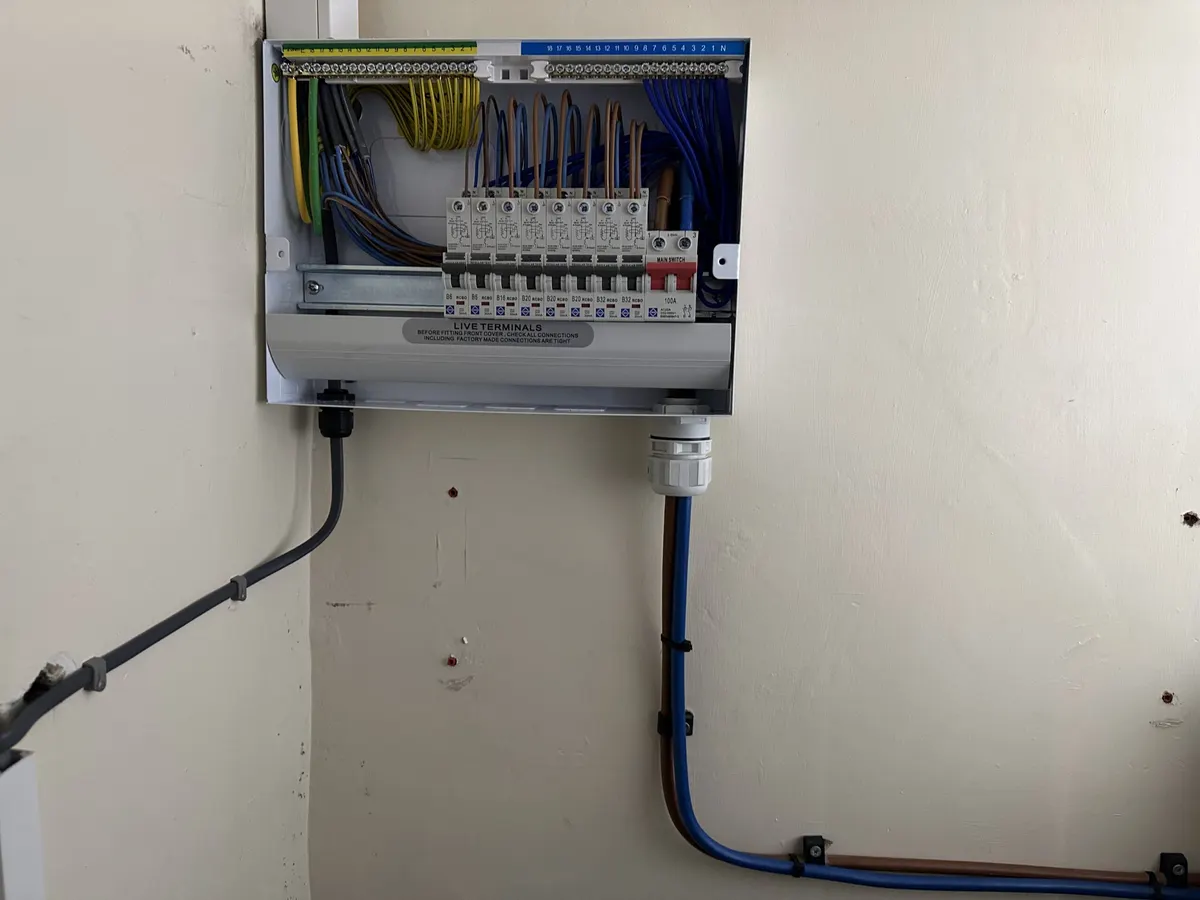
- Do not open the consumer unit. You only ever need the switches on the front. The photograph above shows a board with its cover off during work, which is a job for an electrician.
- Do not carry on using a suspect appliance. The IET says a faulty item should not be used again until it has been repaired.
- Do not bypass or disable the protection. An RCD tripping is the device doing its job. If it trips too often to live with, the answer is to find the fault, not to remove the protection.
What to tell an electrician, and what they will do
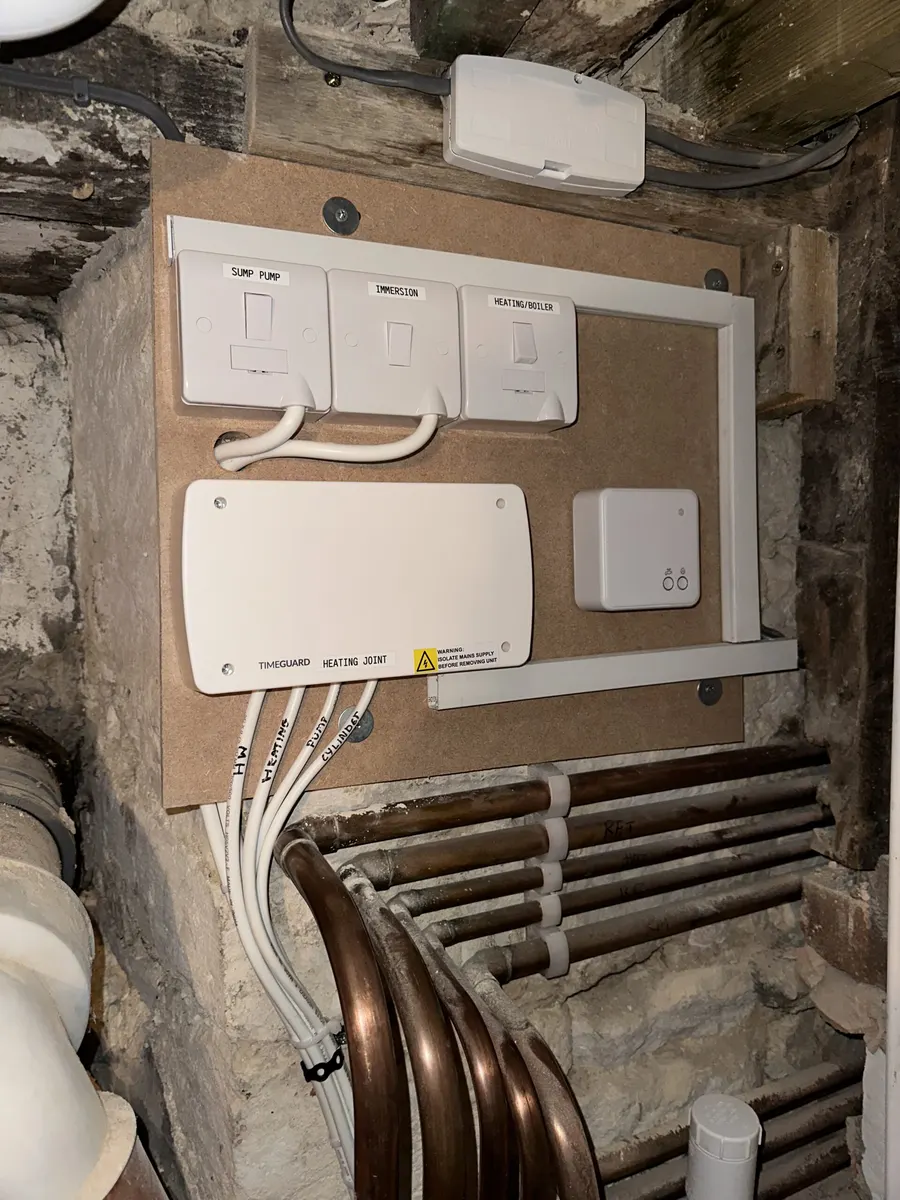
The IET says a registered electrical contractor can test the installation and find the fault. You can make that quicker and cheaper to start by noting a few things before you call, because an intermittent fault is hard to find from a cold start.
- Which switch dropped, and whether it was one circuit or several.
- What was running or plugged in at the time, and whether the weather, a washing cycle or a heating cycle was involved.
- How often it happens, and whether it is getting more frequent.
- Whether you found an appliance that triggers it, and whether you have stopped using it.
- A photograph of the front of the consumer unit, with the cover closed, showing the labels.
Before you book a visit
Ask how the search is charged.
Finding a fault takes unpredictable time, so ask what the visit covers and what happens if a repair is needed.
Ask for a quoteCall 07380 944864
Ask what the visit covers before you agree it. Time to find a fault is hard to predict, so a sensible conversation sets out how the investigation will be charged and what happens if the fault is found and needs a separate repair. Our guide to electrician call-out charges in Cirencester explains how attendance charges and hourly rates are usually described. This guide does not quote a JI Electrical price for fault investigation, and the answer will depend on the property.
Does a tripping board mean it needs replacing?
Not automatically. Electrical Safety First’s advice is that the likely explanation is a fault in an appliance or in the wiring, so the first job is to find the fault. A new board does not remove a fault that is still in the circuit. JI Electrical’s consumer unit page says the same thing in its own words: repeated tripping can come from an appliance, a circuit or another fault, so replacing the unit is not automatically the answer.
There are cases where the board becomes part of the conversation, for example when it is old, damaged or lacks modern protection. Our guides to warning signs that a fuse box needs replacing, what a consumer unit upgrade quotation should include and consumer unit replacement costs cover that decision separately. Those are separate questions from why a circuit is tripping today.
If you are planning an EV charger and the board is already tripping, fix the fault first. Whether an EV charger needs a new consumer unit is another question again.
If you rent out the property, or rent it
GOV.UK’s guidance on electrical safety in the private rented sector says landlords must have the installation inspected and tested by a qualified person at least every five years, and must give tenants proof that the installation has been checked. That is a scheduled inspection. It is not a substitute for dealing with a circuit that is tripping now, which is a fault to report and have investigated promptly.
The page opened for this guide does not set out who pays for or arranges repairs after a trip, and it gives no repair deadline for a tripping circuit, so this guide does not either. Tenants should tell the landlord or agent in writing, and landlords should have the circuit looked at by a qualified person. For the inspection side, see our landlord EICR guide, what the EICR codes mean and what happens after a failed EICR. The cost side is in the EICR cost guide.
Choosing who looks at it
Electrical Safety First and the IET both point to a registered electrician for a tripping circuit that will not clear. Before you book, ask which scheme they are registered with and ask for the registration to be checked with the scheme. Our seven checks for choosing an electrician in Cirencester sets the list out. If you want to know what Jack can do for your fault, ask him directly and have the questions above ready. The wider services page lists what JI Electrical offers, and the EICR page explains the inspection route if you want the whole installation checked.
Customer reviews
What customers say about Jack
Jack did a great job installing new spotlights in our kitchen. He turned up on time, worked efficiently, and everything was finished to a really high standard.
Jack and his colleague Freddie arrived on time, worked efficiently, and everything was completed to a really high standard. The price was fair and they left everything clean and tidy afterwards.
I contacted JI Eletrical within 24hrs with an issue and they came to fix it quickly and not had a problem since!
Tripping electrics questions
Why does my consumer unit keep tripping?
Electrical Safety First says that if an RCD keeps tripping there is likely to be a fault that needs investigating, either in a particular appliance or in the wiring. The IET says a trip is more often caused by an appliance than by the installation. An overloaded circuit can also trip, according to NICEIC.
Is it safe to keep resetting the trip switch?
No. The IET warns that repeatedly resetting a circuit-breaker or RCD on a fault could damage the device, and NICEIC says that if the circuit re-trips immediately you should not try again. Reset once with everything unplugged, then call a registered electrician if it will not hold.
How do I find which appliance is causing it?
Unplug everything on the circuit by removing the plugs fully, reset, then plug appliances back in one at a time. The IET describes this method. The one that brings the switch down is the likely fault and should not be used until repaired.
How often should I press the RCD test button?
The IET says RCDs should be tested every six months, using the button marked T or Test. Electrical Safety First says RCDs can be regularly checked with the test button but gives no frequency on the page opened. If the RCD does not trip when tested, call a registered electrician.
Does a tripping board mean I need a new consumer unit?
Not automatically. The likely explanation is a fault in an appliance or the wiring, and a new board does not remove a fault still in the circuit. An electrician needs to find the cause first.
What if I smell burning or see scorch marks?
The IET says to isolate the installation immediately and then consult an electrician. Electrical Safety First lists burn marks on plugs and sockets and arcing sounds as reasons to get a registered electrician to check as soon as possible. If there is fire or smoke, leave and call 999.
Sources checked on 2 November 2026
Each page below was opened on the day. None of them gives a JI Electrical price, and none ranks the causes of tripping by frequency.