
Holiday lets in England are not caught by the landlord EICR regulations in the way an ordinary rented home is, because those regulations are built around a tenant living in the property as their only or main residence. That does not make an electrical inspection optional in practice. Fire safety law, general electrical safety duties and the plain fact that strangers use your wiring every week all point the same way.
This guide is for owners of self-catering cottages, converted barns and second homes in Cirencester and the wider Cotswolds who want to know where the legal line sits, what it does not say, and how to decide an inspection interval. It is general information, not legal advice. If you want to talk through a property, contact Jack about an EICR in Cirencester and the Cotswolds.
The short answer, and what it rests on
The regulation that creates the five-year landlord EICR duty applies to a “specified tenancy”. Regulation 2 of the 2020 regulations defines that as a tenancy of residential premises in England which gives someone the right to occupy as their only or main residence, provides for rent, and is not one of the types listed in Schedule 1. The current government guidance repeats the same test and says a licence to occupy counts as a tenancy.
Neither document mentions holiday lets by name. The conclusion that a genuine short holiday stay falls outside comes from the residence test, not from an express exemption, and the Schedule 1 exclusions (shared accommodation, long leases, student halls, hostels, care homes and similar) do not list them either. Other publishers reach the same reading: one landlord insurance site says holiday and Airbnb lets fall outside the regulations while the duty to supply a safe property still applies.
So the useful question is not “is an EICR compulsory?” but “which duties reach my letting, and what would a sensible inspection regime look like?”

Which rules reach which kind of letting?
| How the property is let | Landlord EICR regulations | What to do |
|---|---|---|
| Guests stay for holidays and short breaks, nobody lives there as a home | Not engaged by the residence test, though the regulations do not name holiday lets | Treat the fixed wiring as your responsibility and arrange periodic inspection by choice and by risk |
| The same property is let to one household for months as their home | May be engaged if it is their only or main residence and rent is paid | Check the tenancy type and, if in doubt, inspect before the let begins and diarise five years |
| You switch between holiday letting and longer lets during the year | Depends on each occupation | Keep one current report that satisfies the stricter case |
| Annexe or room let while you live in the house and share a kitchen or bathroom | Shared accommodation with the landlord is excluded in Schedule 1 | The regulations do not apply, but an inspection and a written interval are still sensible |
| Mobile home, caravan or boat let to guests | Government guidance lists these as outside | Ask the inspector what the inspection can cover and how the report will describe it |
The table is a starting point for a conversation, not a ruling on your property. If your use is mixed, or you are not sure whether a stay counts as someone’s main residence, take advice before relying on the first row. The cost of an inspection is small compared with arguing about scope after an incident. The EICR cost guide sets out market ranges.
Fire safety law does apply to paying guests
This is the part many owners miss. GOV.UK says that the Fire Safety Order also applies if you have paying guests, and gives bed and breakfasts, guesthouses and self-catering lets as examples. The responsible person must carry out a fire risk assessment and review it regularly. The Order does not apply to domestic premises as such, which is why it matters that a commercial letting is treated differently from your own home.
The GOV.UK page does not say that an EICR is required, and nothing here should be read as saying it is. What it does mean is that a fire risk assessment of a let would ordinarily consider the electrical installation. A recent, complete inspection report is the simplest evidence that you have looked. If you want help with that assessment, the person doing the fire risk assessment is the right adviser; an electrician’s report covers the electrical side only.
General electrical safety duties
The Electricity at Work Regulations 1989 apply to employers and self-employed people, under regulation 3, and regulation 4(2) requires systems to be maintained so as to prevent danger, so far as is reasonably practicable. Whether they reach a particular holiday let depends on how it is run, for example whether you employ cleaning or changeover staff. That is a question for your adviser rather than something this page can settle.
The HSE’s electricity FAQ gives a practical test without a fixed number: installations should be tested often enough that there is little chance of deterioration leading to danger. For a holiday let, “often enough” is a judgement about how the property is used.
How often should a holiday let be inspected?
There is no statutory interval for a holiday let that you can point to. The five years in the rental regulations is a maximum for tenancies caught by those regulations. For other premises the wiring standard leaves the decision to the inspector. A NICEIC technical article explains that for subsequent periodic inspections the interval is a matter of engineering judgement, that the inspector should not be unduly influenced by the person ordering the work, and that the factors include the type of installation and equipment, comparison with previous test results, the way the installation is used, its external influences and any change of use. The report records the recommended interval and the reason for it.
In practice, ask the inspector to write the reason on the report and say why. A cottage with frequent changeovers, outbuildings, a hot tub or an EV charger gives the inspector more to weigh than a rarely used second home. We are not suggesting a shorter interval is automatic; the point is that the number belongs to the report and should be explained. Booking agencies and insurers may set their own requirements, so check your policy wording and any agency terms.
One agency page from a holiday cottage letting firm says an EICR lasts five years unless electrical work is done, in which case it needs renewing, but it gives no legal basis for the figure. Treat figures like that as a convention to confirm with your inspector, not as the law.
What the inspector looks at, and what guests notice
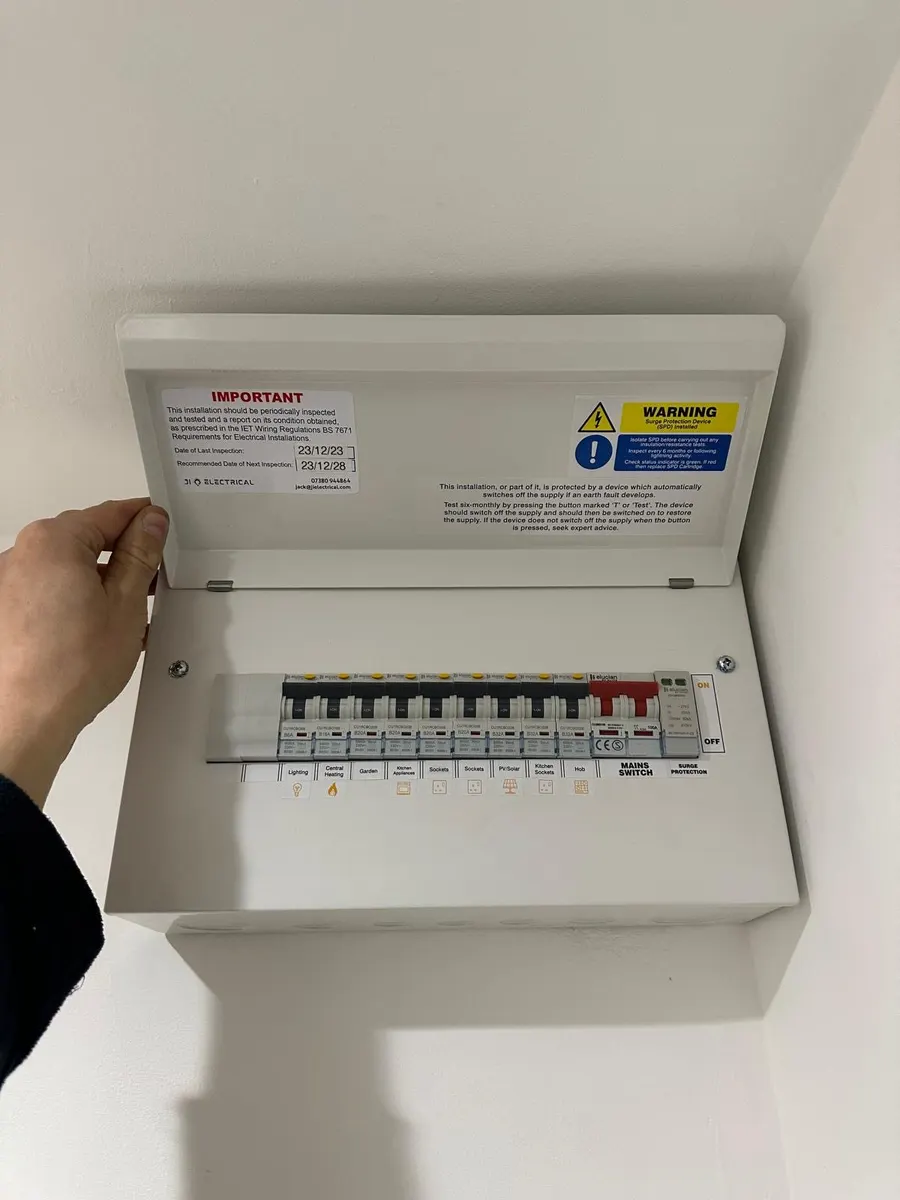
An EICR records the condition of the fixed installation at the time of inspection: the consumer unit, wiring, sockets, light fittings and permanently connected equipment, within the agreed extent and limitations. The C1, C2, C3 and FI guide explains how findings are graded, and the failed EICR guide explains what follows an unsatisfactory result.
- Consumer unit. Labelling, protection devices and condition. If the board is old, read the guide to whether a fuse box needs replacing and the consumer unit upgrade guide.
- Sockets and fittings. Damaged accessories and heat marks are easy for guests to spot and report.
- Outbuildings and outdoor supplies. These are often added over time and may not be on the original paperwork.
- Portable appliances. A fixed wiring report does not test kettles, toasters or lamps you supply. The appliance testing guide explains the difference.
Before you book
Ask for the interval and its reason.
A good report states when the next inspection is due and why, so your fire risk assessor and insurer can see it.
Ask for a quoteCall 07380 944864
A sensible plan for an owner
- Decide which of the letting patterns in the table matches yours, and write it down.
- Gather any previous reports, installation certificates and invoices for electrical work.
- Ask for an EICR with the interval and reason stated, and agree how the inspection fits between guest changeovers.
- Deal with any C1 and C2 observations before the next guests arrive, and keep the completion paperwork with the report.
- Put the next inspection and appliance checks in your diary and give your fire risk assessor a copy.
If you also let longer term, the landlord EICR guide and the renewal guide explain the five-year cycle in detail, and the letting agent checklist covers handover records. When you sell, the sellers’ certificate guide shows which documents buyers ask for.
Booking an inspection
Tell Jack the property type, the number of bedrooms, whether it has outbuildings or an outdoor supply, how often it changes hands and whether you hold a previous report. The guide to choosing an electrician lists what to ask any contractor, and the landlord certificate budget worksheet helps separate inspection, repair and return-visit costs. Ask for a fixed quotation for the inspection, then for remedial work separately once the findings are known.
Customer reviews
What customers say about Jack
Jack did a great job installing new spotlights in our kitchen. He turned up on time, worked efficiently, and everything was finished to a really high standard.
Jack and his colleague Freddie arrived on time, worked efficiently, and everything was completed to a really high standard. The price was fair and they left everything clean and tidy afterwards.
I contacted JI Eletrical within 24hrs with an issue and they came to fix it quickly and not had a problem since!
Holiday let EICR questions
Do I need an EICR for a holiday let in England?
The five-year landlord EICR regulations apply to tenancies where the occupier lives there as their only or main residence, and they do not name holiday lets. That is not a reason to skip inspection: the Fire Safety Order applies to paying guests and a report is practical evidence of the installation's condition. This is general information, not legal advice.
Does the Fire Safety Order apply to a self-catering cottage?
GOV.UK says the Order also applies if you have paying guests and names self-catering lets as an example. The responsible person must carry out a fire risk assessment and review it. The page does not itself require an EICR.
How often should a holiday let have an EICR?
There is no fixed holiday let interval in the sources checked. The inspector recommends an interval and gives a reason on the report, considering the installation, how it is used, test results and any change of use. Ask for the reason to be written down.
What if I let the property for holidays and for longer stays?
A longer let to a household that lives there as its main residence may be caught by the landlord regulations. If you switch between uses, keep a current report that would satisfy the stricter case and check the tenancy type.
Does an EICR cover the kettle and toaster I supply?
No. An EICR covers the fixed installation. Portable appliances you supply need separate attention, and the appliance testing guide explains the difference.
Sources checked on 30 October 2026
- Legislation.gov.uk: regulation 2, meaning of specified tenancy
- Legislation.gov.uk: Schedule 1, tenancies not covered
- GOV.UK: electrical safety standards in the private and social rented sectors
- GOV.UK: workplace fire safety, your responsibilities
- Legislation.gov.uk: Fire Safety Order, article 6
- Legislation.gov.uk: Electricity at Work Regulations, regulation 3
- Legislation.gov.uk: Electricity at Work Regulations, regulation 4
- HSE: electricity at work FAQ
- NICEIC: the interval to the next periodic inspection